
Note: This website was automatically translated, so some terms or nuances may not be completely accurate.
Interview with Takuma Takasaki "Creativity Never Betrays You" Part 3
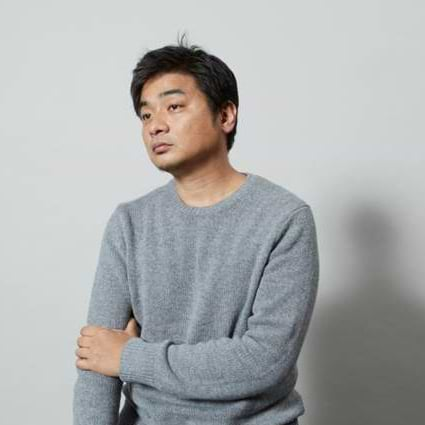
Takasaki Takuma
Words, visuals, sound—three core technologies
[Part 3] Walking Toward Greater Challenges, Transcending Your Own Limits
Things I couldn't even imagine myself doing
I participated in the final presentation in Buenos Aires. The moment President Rogge said "TOKYO!", I probably cried out and wept louder than I had since birth. My teammates and I embraced each other repeatedly. Twenty years ago, I never imagined I'd experience such a scene. But I didn't suddenly arrive there; I believe the communication skills I believed in and honed brought me there.
People often ask me what I want to do in the future. Probably because I'm involved in so many different things. But honestly, I've never really thought about it. I don't have any specific vision for five years from now or after I turn sixty. Setting a concrete goal feels like it would end me the moment I achieved it. Or maybe it's because I have such immense anticipation for whatever I'll encounter next. Tomorrow, I might find myself doing work I never imagined, meet someone unexpected there, and discover a part of myself I never knew existed. I want to keep feeling that way forever.
Also, while people see me as someone who does many different things, internally, it's all the same to me. It just happens that the output this time is a novel, or a film, or an advertisement. The reason I don't really care much about digital versus analog or qualitative changes in media might be because my interest lies more in the substance than the surface of expression.
A while back, while shooting in India with adventure photographer Naoki Ishikawa, I asked him: "How do you take such fascinating photos?" He replied, "I just go to places others don't go and press the shutter."
I was deeply moved. I think that's what creating things is all about. If you want to make something different from others, you go to harder places than others to make it. I believe that's the only way. The more difficult the project, the higher the chance it will be interesting. Because it's a project others won't do.
Take, for example, the project where we got Robert De Niro to appear in Avex Entertainment's "docomo d video" TV commercial. Normally, everyone would give up on that idea. "Yeah, it's great! But it's impossible, right?" The budget, the many uncertainties, the easily foreseeable problems. It's typical for that kind of project to get laughed off in the meeting room.
But then someone digs in their heels. Says, "Let's do it." And everyone starts figuring out how to overcome those risks. That's how you reach that level. Even I, despite saying all this, once chickened out and suggested, "Morgan Freeman seems like a nice guy, should we switch?" (laughs).
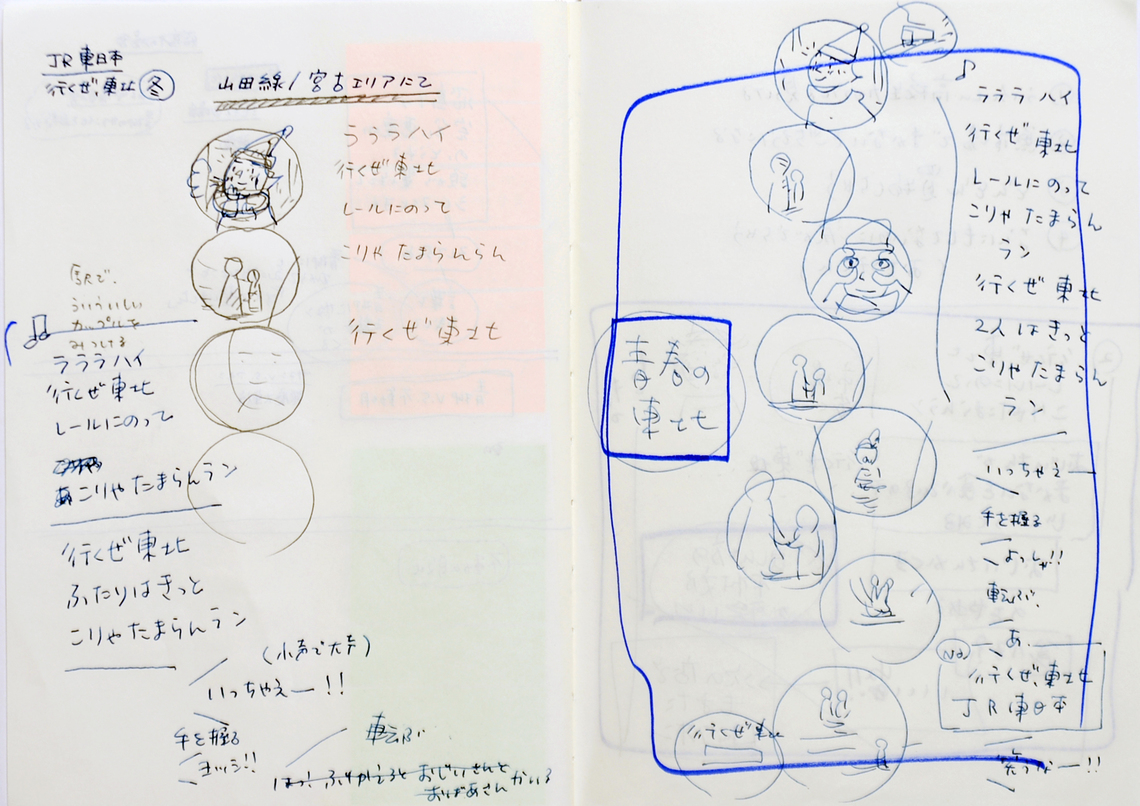
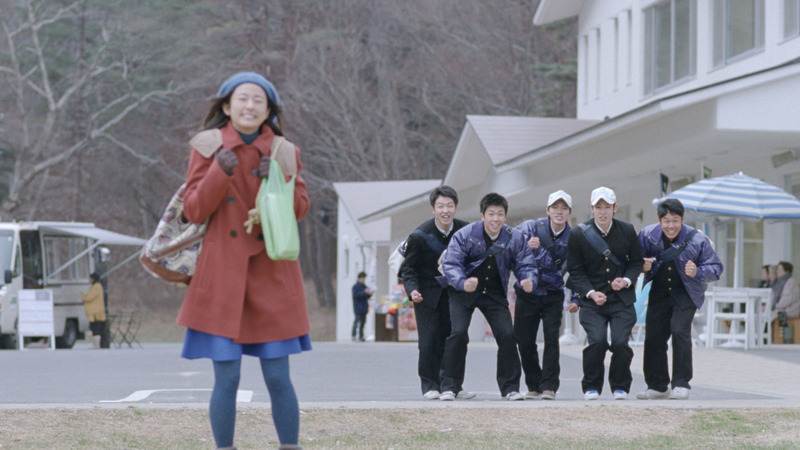
I'm often asked how to give a good presentation, but I believe there's no other way than creating a good plan. A good plan is one you're convinced benefits the client, benefits society, and benefits yourself. Once you find such a plan, the embarrassment disappears. As your desire to realize it grows stronger, your focus on the plan intensifies. When speaking in that focused state, you start to see the subtle reactions behind the client's words, and the amount of information you gather about what needs to be done to achieve the result should increase.
It's far more embarrassing to present an 80-point plan as if it were 120 points. If you work that way, I suspect the result won't even reach 50 points. What matters more than getting the plan approved in the presentation is identifying what's needed for that plan to emerge as a stronger advertisement in the world, and building trust through that dialogue. If they trust you on the core elements, they'll leave the details to you. Entering the field with freedom over the details allows you to make high-speed decisions that boost the score.
A good presentation is one that earns trust for the work that follows, right? When everyone shares their anxieties while working, it creates a false sense of security that risks are dispersed, but in reality, everything just becomes negative. Everyone just shrinks back. If you keep working that way, you'll never get results. If you earn trust first, you can respond quickly to risks, so there's no need to share anxieties.
So I think it's perfectly fine if your presentation is clumsy or whatever. My voice is hard to hear, it's quiet, and I don't think I've ever given a truly wonderful presentation. Yet somehow, it works out. Advertising has really helped me grow. I'm truly happy to have encountered such wonderful work. For the past 20 years, I've planned projects almost non-stop. When I say that, people get really put off, but well, it can't be helped. It's just too interesting.
〔 The End 〕
Was this article helpful?
Share this article


Newsletter registration is here
We select and publish important news every day
For inquiries about this article
Author
Takasaki Takuma
Joined Dentsu Inc. in 1993. Received numerous domestic and international awards, including his third Creator of the Year award in 2010, following previous wins in 2013. His publications include "The Art of Expression" (Chuo Koron Bunko), the novel "Auto Reverse" (Chuo Koron Shinsha), and the picture book "Black" (Kodansha). Hosts J-WAVE's "BITS&BOBS TOKYO." Co-wrote and co-produced the film "PERFECT DAYS," which won the Best Actor Award for Koji Yakusho at the 2023 Cannes Film Festival. Left Dentsu Inc. in March 2025.