
Note: This website was automatically translated, so some terms or nuances may not be completely accurate.
Interview with JOC President Takeda "Toward the 2020 Tokyo Olympic and Paralympic Games" Part 3
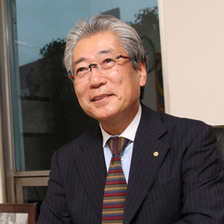
Tsunehisa Takeda
Discussing the Grand Design for the 2020 Games
"Creating a Movement Only Possible with a Second Hosting" - Part 3
Conveying the True Power of Sport to the World
―Chairman Takeda often speaks about the "social value of sports."
Takeda: The social value of sports refers to the various values recognized as "indispensable" not only within the sports field but broadly across society. It encompasses the inspiration and dreams that resonate with all people, regardless of gender or age. The courage it gives to people in disaster-stricken areas. The vitality that energizes a weary Japan. These are legacies, and they are precisely the social value of sport. In our bid presentation this time, a major theme for us was how to utilize sport and Olympic values for society and to communicate that. In other words, we wanted to convey the fundamental power of sport to the world.
―How do you envision the role of partner companies in achieving this Olympic Movement?
Takeda: Today, the Olympics cannot succeed without the cooperation of many companies. On the other hand, companies that cooperate will definitely receive benefits in return. It's a relationship of mutual give-and-take, and the JOC is fully committed to ensuring that cooperating companies receive proper benefits.
As I mentioned earlier, support for hosting the Games, which was once only 47%, reached 70% this past March. Subsequently, a Kyodo News survey showed 82% support, and a Ministry of Education, Culture, Sports, Science and Technology survey at the end of August showed a remarkable 92% support. It is rare for a social event to garner over 90% support. This means we must respond to the expectations and hopes of that many people. I believe this high approval rating has also attracted significant interest from companies. To maintain this fervent enthusiasm, I strongly feel that the future efforts of the JOC, the Tokyo Metropolitan Government, and all Olympic stakeholders are crucial.
As long as we keep going, we will surely get closer to our dream
—Your passion for the Olympics is palpable. Chairman Takeda himself was once an Olympian who excelled in equestrian events.
Takeda: I was one of the athletes who watched the 1964 Tokyo Olympics and dreamed of competing there. As a high school student, I actually watched the equestrian show jumping event and realized there was a world of skill I had never seen before. I wanted to hone my skills enough to reach that "higher world." That's what drove me to aim for the Olympics.
Fortunately, I achieved that dream of competing. In fact, I competed twice as an athlete. My results weren't particularly impressive, but beyond those results, I gained something far greater: a lasting "legacy." It was the mental fortitude to never give up and see things through to the end.
To be honest, when I was young, I thought about quitting after setbacks more than once or twice. If I had quit then, my life would have taken a completely different direction. There were many setbacks and walls, but I persevered to the end. As a result, I was able to compete in that "higher world" I once dreamed of.
As long as you keep going, you will always get closer to your dreams. This has become my life philosophy, and I felt it deeply during this Olympic bid campaign.
―An athlete with a "passion for the Olympics" eventually became a key figure in securing the bid for a second Games.
Takeda: No, that was more by chance, really. When I was an athlete, I never imagined I'd work for the JOC. After retiring, I coached and managed the equestrian team at my alma mater, Keio University. During my 12 years there, we won the All-Japan Student Championships twice. After that, the Japan Equestrian Federation offered me a job, which led to the International Equestrian Federation and then the JOC. I didn't actively pursue my current position.
What did I consistently prioritize as a coach? Well, having been an athlete myself, I always tried to think "athlete first." I put myself in the athletes' shoes and considered what I could do for them.
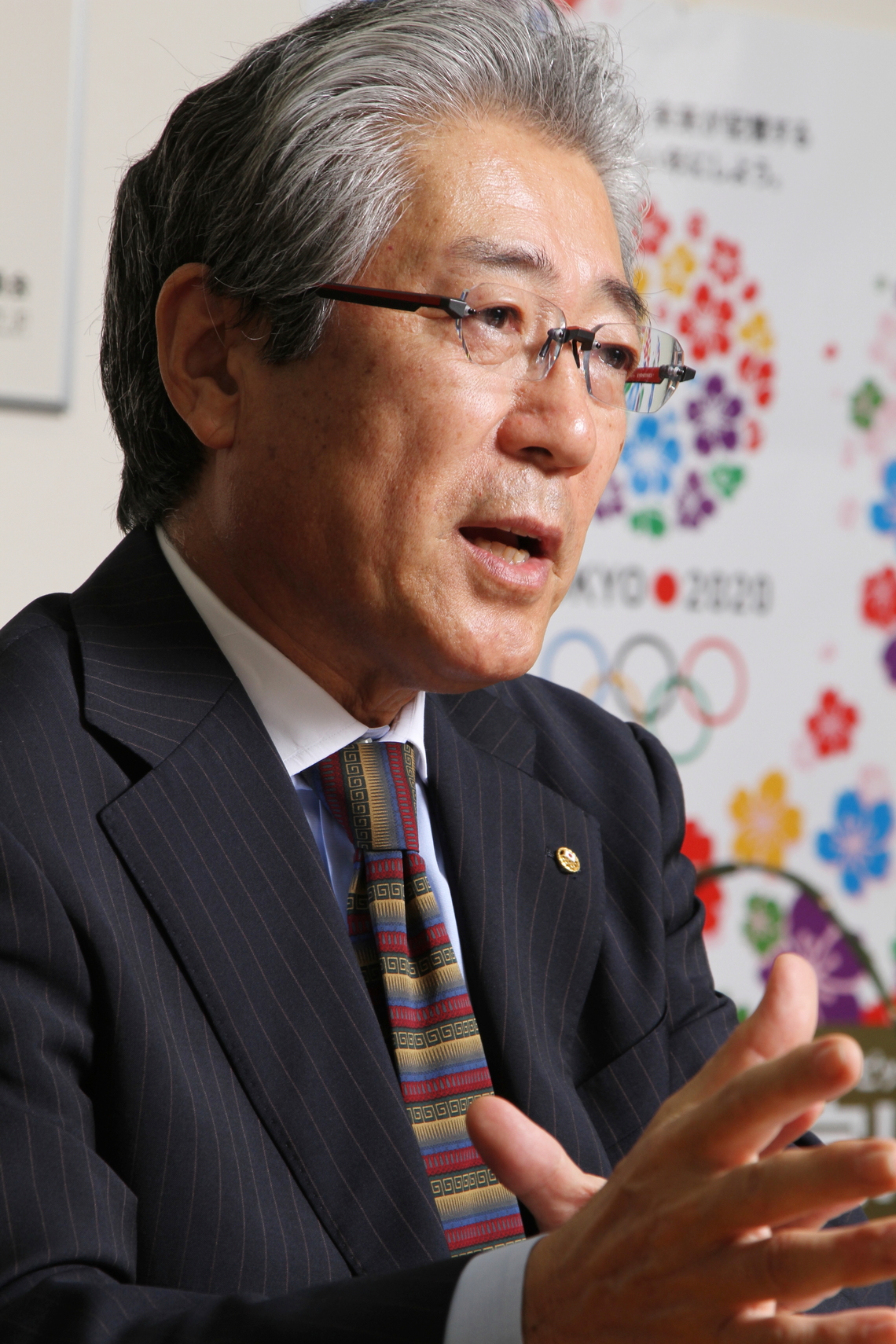
Feeling my father's passion for the Olympics
―Your father, Tsunehiko, also enjoyed horseback riding, served as JOC President, and as an IOC member, worked tirelessly to bring the 1964 Tokyo Olympics to Japan. Did you inherit any Olympic spirit from him?
Takeda: Actually, my father never really spoke about those things in front of me. He had once been a cavalry officer and was deeply involved in equestrian sports, even harboring dreams of competing in the Olympics at one point. But he never once told me, "Aim for the Olympics."
However, he had played many sports himself, so I believe he had a deep understanding and love for sports. Serving as JOC President and IOC member, he surely had a strong desire to dedicate his efforts to the world of sports. Seeing my father tirelessly working to secure the 1964 Tokyo Olympics, I certainly sensed his passion for the Olympics and sports in my own way.
―Finally, a message for the Japanese people.
Takeda: The 2020 Tokyo Olympic and Paralympic Games will undoubtedly serve as a catalyst to energize every Japanese citizen and the entire nation. I sincerely hope everyone looks forward to them. And I hope you will be involved in some way with this national—no, global—event. I earnestly request your support and cooperation. (End)
Chairman Tsunekazu Takeda and His Connection to the Olympics |
||
| 1964 | As a high school student, he watched the equestrian events at the Tokyo Games and dreamed of competing in the Olympics. | |
| 1972 | Competed as a member of the Japanese team in show jumping at the Munich Games. | |
| 1976 | Competed in the same event at the Montreal Games. | |
| 1984 | Served as acting coach for the equestrian team at the Los Angeles Games. | |
| 1988 | Served as coach for the equestrian team at the Seoul Games. | |
| 1992 | Served as head coach of the equestrian team at the Barcelona Games. | |
| 2000 | Served as an executive officer for the Japanese delegation at the Sydney Games. | |
| 2001 | Assumed the position of President of the Japanese Olympic Committee (JOC). | |
| 2004 | Appointed as Head of the Japanese delegation to the Athens Games. | |
| 2012 | Appointed as an IOC member. | |
| 2013 | Played a central role in the successful bid for the 2020 Tokyo Olympic and Paralympic Games. | |
Was this article helpful?
Share this article


Newsletter registration is here
We select and publish important news every day
For inquiries about this article
Author
Tsunehisa Takeda
Public Interest Incorporated Foundation Japan Olympic Committee (JOC) President
Born in 1947. Graduated from Keio University. Competed as a member of the Japanese equestrian show jumping team at the Munich and Montreal Olympics. After retiring from active competition, he served as coach (Seoul) and manager (Barcelona) of the Japanese national equestrian team. Became President of the Japanese Olympic Committee (JOC) in 2001. In July 2012, he became Japan's 13th International Olympic Committee (IOC) member.