Note: This website was automatically translated, so some terms or nuances may not be completely accurate.
The Current State of "Femtech" – Technology Solving Women's Challenges
Have you heard of the term "Femtech"? It's a portmanteau combining "Female" and "Technology," referring to products and services that use technology to address women's health challenges.
Interest in it has been growing in Japan in recent years, with the Liberal Democratic Party even establishing the "Parliamentary League for Promoting Femtech." Under the support of the Ministry of Economy, Trade and Industry, companies have begun pilot tests, and activity is intensifying across both public and private sectors. However, for those not directly involved in such initiatives, it might still be an unfamiliar field.
Therefore, this time we interviewed Ryo Okuda, who is promoting a project focused on femtech at Dentsu Inc. We heard "the real voice of someone promoting femtech." We hope this serves as an opportunity for many people to learn about the potential and challenges of femtech.
Changing the Preconception that "Femtech = For Women" is Crucial
Q. First, could you briefly introduce your career background?
Okuda: After graduating, I joined a consulting firm and worked there for about five years before changing jobs. I am currently based at Dentsu Inc.'s Kansai branch. My experience at the consulting firm led me to frequently engage in new business development and open innovation-related work. Through this, I built connections with startups, which have become a valuable resource for me now.
While my work often follows the consultant model of "acting after receiving a request," I've also actively pursued initiatives where I "set themes and take proactive action." Within this framework, in July 2019, when the term "femtech" was just emerging, I launched the Femtech Project with like-minded colleagues within the company, and it continues to this day.
Q. Currently, the femtech-related market is expanding in Japan, and its development is also expected to support SDG Goal 5: "Achieve gender equality." However, I don't think it received this level of attention just a few years ago. Why did you take an interest in "femtech" so early on?
Okuda: Before joining a consulting firm as a new graduate, I lived in the US for six years. After returning to Japan for work, I started working in Osaka five years later. During that time, I got married, had children, and became a working mother. Moving from the US to Tokyo to Osaka changed my living environment, and as my life stage shifted, I felt increasingly confined by the expectations placed on me as a woman. The stress grew significantly.
Amidst this, through connections with various startups, I learned about "Femtech" as a new technology category.I thought it was a very catchy and appealing term, but at the same time, I felt it might be a bit too "female-oriented." At that moment, I realized we needed to broaden the perception of "femtech" beyond just women and expand the scope of those involved in solving problems. This would create "femtech that isn't just for women," and I thought this was where Dentsu Inc. could step in. So, we launched a project to firmly establish our vision of "femtech" in the world.
Case Study ①: Intravaginal Sample Collection Uterine Flora CHECK KIT
Q. So, the project youandyour team startedisthis "Femtech and BEYOND." initiative. Could you tell us about this effort?
Okuda: Initially, this project started with four volunteers—both men and women—who were highly conscious of the challenges in this field. Later, we invited members passionate about femtech and women's issues, and our team has now grown to ten members.
The term "feminism" in Japan today often carries a slightly derisive connotation. That's precisely why we felt from the start that we must avoid creating more opponents of "femtech." We want to involve men, but if the emphasis is on "protecting women" or "for women," and men feel excluded or turn away, we risk alienating half the population.
However, from the women's perspective, there's a strong tendency to accept "enduring hardship as normal" or "accepting the inevitable as normal." Because of this, many issues aren't even recognized as problems. So, we started by clearly pointing out "these are the issues we face" and then began addressing them. Now, we're working with players from various fields on co-creation projects centered around "Femtech."
One example of our work is the marketing and creative development project for the "Intrauterine Flora CHECK KIT" – a collaborative effort between two startups, Varinos Inc. and Famione Inc.While many people may have heard of "gut flora," they likely don't know about the existence of "uterine flora." Recent research has revealed that bacteria also exist within the uterus, and that this bacterial environment influences factors like pregnancy rates and pregnancy continuation rates, thereby affecting the success of infertility treatments. In other words, examining the "uterine flora" makes it easier to understand whether the environment is conducive to pregnancy or poses a higher risk for sexually transmitted infections.
However, until now, the only way to examine this "uterine flora" was to obtain a sample directly from the uterus at a gynecologist's office for analysis. Visiting a gynecologist itself can be a significant hurdle for women, and the cost of the test is also high. Amidst this, I was involved in the marketing strategy and creative development for a test kit that allows women to collect a sample from the vagina at home and simply mail it in to learn about their "uterine flora" environment – a sample that previously could only be collected at medical facilities.
Okuda: There are many startups possessing cutting-edge, unique technologies. To make these accessible and easy to use for as many people as possible, the power of marketing strategy and creative development is essential. By supporting these areas, we are helping bring unprecedented products and services to the world.
Q. The term "fertility journey" has become quite established, but many women still struggle with the frustration of wanting to conceive but being unable to, right?
Okuda: In Japan, against the backdrop of later marriages and childbirth, the number of people struggling with infertility is increasing year by year. It's said many endure difficult fertility treatments. In this context, testing the "uterine flora" provides insight into one factor affecting whether the body is in a condition conducive to pregnancy. Even if the analysis indicates the uterine environment is not optimal for pregnancy, understanding this situation and consulting a doctor could lead to exploring improvement strategies.This could free more women from the situation of enduring infertility treatments without a clear understanding of the cause.
Moreover, for many women, even when experiencing physical concerns or minor worries, visiting a hospital can feel like a significant hurdle. It's often said that many cases, not limited to fertility efforts, involve people avoiding the doctor for minor discomforts, only to seek diagnosis when symptoms worsen—by which point it's often too late. Therefore, having a tool that allows for simple at-home sample collection and testing would surely be welcomed by many women. Considering these points, initiatives like this one are incredibly important.
Case Study ②: The Frying Pan for Days You're Not Feeling Well
Q. I also heard there are other cases where products are developed and sold through crowdfunding.
Okuda: We developed a product called the "Feminine Health Pan," or "The Pan for Days You're Not Feeling Well."
Many women who menstruate are said to be deficient in iron. However, until now, while there was awareness that they might be prone to anemia, it often wasn't perceived as a major problem. Now, though, various studies have shown that iron deficiency can have negative effects, such as increasing susceptibility to depression. And actually, Japanese women are iron deficient compared to women globally.
So how can we address this? While over-the-counter supplements are widely available now, not everyone can stick to taking them daily.Of course, the best solution is to improve through diet. But telling someone to "eat iron-rich meals every day" is easier said than done. So we asked ourselves, "How could we supplement iron without changing daily routines?" We focused on the age-old wisdom of "using ironware to supplement iron daily," and arrived at the "iron frying pan."
However, making a regular iron frying pan would result in issues like "heavy" or "difficult to maintain," ultimately making it inconvenient to use. Therefore, we collaborated with a highly skilled metalworking company in Osaka to develop a frying pan that prioritizes usability above all else: "extremely lightweight," "a handle that's very easy to grip," and "ready to use right out of the box with simple maintenance." For this project, we actively engaged not only in the marketing domain but also in the product design domain, successfully linking these efforts to product development.
What is needed for the future of Japanese femtech?
Q. It's been about three years since you started working on "Femtech and BEYOND." What have you found most challenging in your experience so far?
Okuda: While we've primarily collaborated with startups possessing unique technologies, I feel that expanding "femtech" further in Japan also necessitates partnerships with large corporations. Leveraging their production capacity and distribution networks allows for broader awareness and actual product access. Therefore, I strongly believe advancing product development and communication within large corporations is crucial.
However, how exactly do large corporations perceive this "femtech" domain? For instance, if the decision-makers are male, they might struggle to truly grasp the market potential of femtech-related products. In such cases, even if prototypes are developed, reaching the stage of full-scale commercialization can prove difficult.
Furthermore, there's the reality that topics addressing "women's issues" often become controversial. If a product is positioned as "for women who experience X," it might face criticism like, "It's wrong to imply this product should solve that problem." Each time this happens, risk management concerns about potential backlash kick in, leading to a tendency to launch products as quietly as possible.
However, last year in Japan, for example, several well-known brands launched sanitary shorts with absorbent functionality, generating significant buzz. When things like this happen, you really feel the market is changing. It was a case that reaffirmed how important it is for large corporations to enter the market to bring about significant change in Japanese society.
Q. You've been tackling these challenges for three years. Are there areas you want to strengthen or approaches you want to pursue more in the future?
Okuda: Above all, I believe we must increase the "related population" engaged with femtech. To achieve this, expanding our target audience beyond just "women" is crucial.
For example, consider cases where people are struggling with "trying to conceive." From a femtech perspective, the scenario becomes: "What can we do for women who want to get pregnant?" Then we start imagining new business opportunities for the people around them: "What can we do for their male partners?" "What can we do for their parents?" After that, we consider what technology and communication can achieve. We've started initiatives like this.
As I mentioned earlier, if femtech is perceived as "only for women," there's a risk many people will dismiss it as irrelevant.To positively transform society as a whole, we need as many people as possible to empathize with the challenges. While supporting women facing these challenges is essential, it's paramount to create technology and communication that also resonates positively with men who may not directly experience these issues, women without these specific challenges, and everyone else. Achieving this requires the collective strength of diverse companies, which is why we aim to actively expand our partnerships.
Okuda's point that while femtech is "technology to save women in the future," it doesn't mean "it doesn't concern men" carries significant implication. Not limited to femtech, any initiative to solve problems or help those in need carries the risk of "alienating others" depending on how it's perceived. That's precisely why "increasing the number of people who feel connected" is so important.
This perspective may be vital for any business. While recent marketing trends emphasize that mass markets are disappearing amid diversifying preferences, making precise targeting crucial, this also means that the more specific the preference, the smaller the market becomes. Consequently, decisions to not invest are often made.However, by first capturing a specific need and then considering "how to engage the people around it," we might uncover new needs and ideas that were previously invisible.
Even if you feel "femtech has nothing to do with my current business," why not deliberately imagine "what if I were to venture into the femtech space?" That very imagination could become a powerful force driving transformation.
The information published at this time is as follows.
Was this article helpful?
Share this article


Newsletter registration is here
We select and publish important news every day
For inquiries about this article
Author
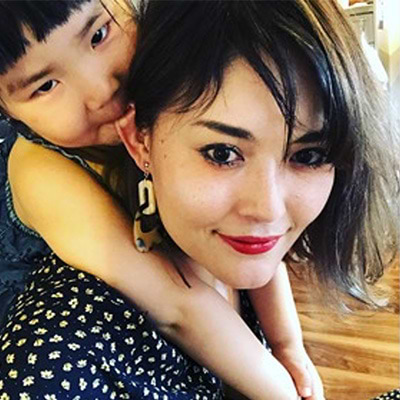
Ryo Okuda
Dentsu Inc.
Marketing Division 7
Consultant
Member of Femtech and BEYOND. Graduated from California State University with a major in Communication Design and a minor in Computer Science. From 2005 to 2010, worked as a consultant at a consulting firm, providing consulting services to a wide range of companies, including telecommunications firms and major manufacturers, across both B2C and B2B sectors. From 2010 to present, has built a track record in marketing consulting and branding consulting. Leveraging experience consulting for major corporations, has participated in numerous business creation projects for clients in new business domains.