Note: This website was automatically translated, so some terms or nuances may not be completely accurate.
Aiming for "Divine Hand" Level Surgery with "Pneumatic Control". What Future Does Next-Generation Robotics Open for Healthcare? (Part 1)
Kotaro Tadano
Riverfield Co., Ltd.
Hayashi Tsuyoshi
Dentsu Medical Communications Inc.
Japan faces a worsening doctor shortage. Simultaneously, significant challenges include disparities in medical care between urban and rural areas, large hospitals and smaller facilities, as well as imbalances in medical specialties.
One solution gaining attention is the use of robots in healthcare. "Surgical assistance robots," where doctors remotely operate robots while viewing 3D images to perform surgery, have seen dramatic global advancements and are now widely used in many settings.
This time, Mr. Hayashi Tsuyoshi, President and Executive Officer of Dentsu Inc., a company known for its strength in conveying specialized medical and healthcare content in an accessible manner, visited Mr. Tadano Kotaro, President and Representative Director of Riverfield Inc., a company bringing fresh momentum to the field of surgical assistance robots.We had an in-depth conversation with Mr. Tadano about his journey to successfully develop a robot utilizing "pneumatic pressure" to enable smoother and more precise surgeries, as well as the potential for technology utilization in the medical field.
A surgical support robot equipped with proprietary technology that controls air pressure in 1/1000th of a second increments
Hayashi: Dentsu Medical Communications specializes in the medical and healthcare field, providing various solutions to help improve the lives of everyone, including patients and their families. Therefore, I deeply resonate with your company's efforts to support patients and medical professionals through the development of surgical assistance robots, and I was very much looking forward to speaking with you. Thank you for your time. To get started, I understand that the surgical assistance robot being developed by Riverfield Inc. incorporates technology using pneumatic pressure.
Tadano: Yes. Our company was established in 2014 as a venture originating from Tokyo Institute of Technology and Tokyo Medical and Dental University, and we have been developing surgical assistance robots.In 2015, we released "EMARO," the world's first endoscope holder robot using pneumatic technology, in Japan. In traditional endoscopic surgery, an assistant physician must hold the endoscope and move it according to the surgeon's instructions. This robot takes over that assistant's role. The surgeon wears a headset, and the endoscope moves in sync with their head movements, enabling stable visualization through intuitive operation.
Following the release of "EMARO," we continue developing robots to support minimally invasive surgery (surgery using endoscopes and other tools that reduce physical burden on the body). We plan to launch our latest minimally invasive surgical support robot in 2023. All incorporate our proprietary technology for precision control of pneumatic systems.

Hayashi: So this is a world-first technology implemented only in your company's robots. How does your surgical assistance robot, utilizing pneumatic control technology, differ from other robots?
Tadano: While conventional surgical assistance robots typically use electric motors, our robots employ pneumatic control. Pneumatic control accurately transmits haptic feedback to the surgeon, enabling smoother, gentler, and safer surgical procedures.
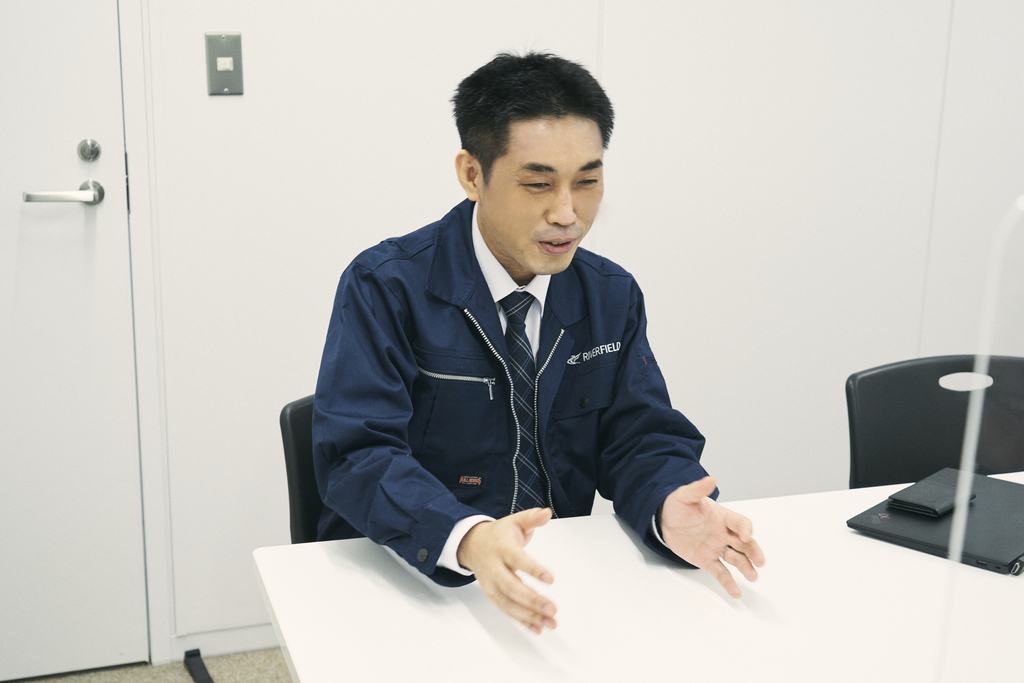
Hayashi: Earlier, I actually experienced operating the robot myself. Even though I was holding objects with forceps, I was surprised by how much it felt like I was grasping them with my own hands.
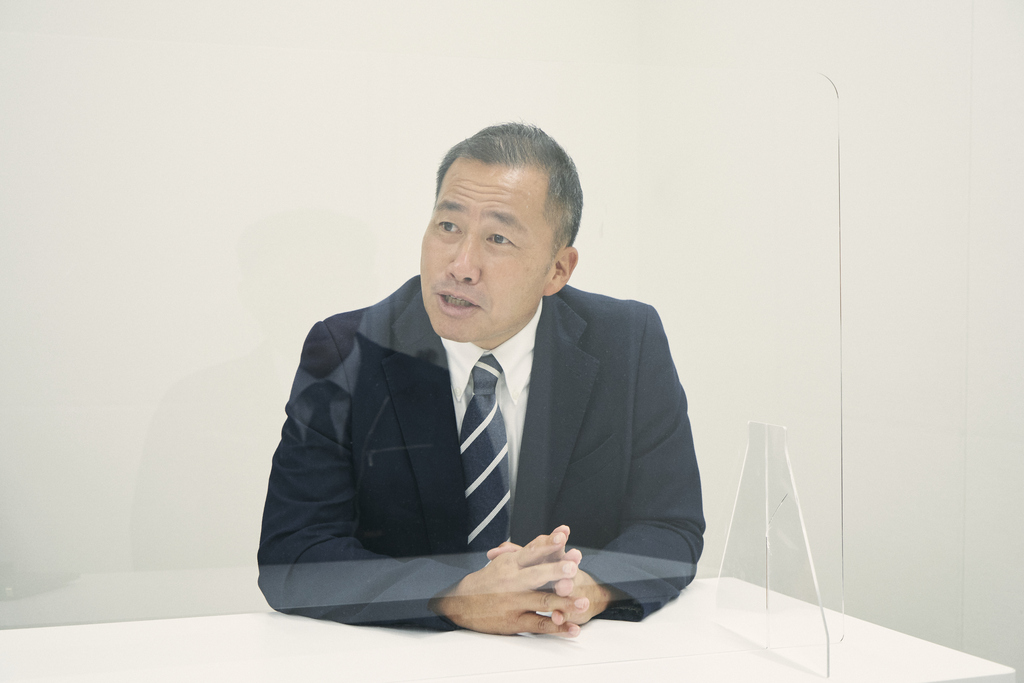
Tadano: The sensation of something being rough or cold when touched is called "tactile sensation." However, this robot focuses on "force feedback." By refining the perception of force—the amount of pressure and weight felt upon contact with an object—it achieves a more realistic sense of touch.
With existing surgical assistance robots, while you can see the surgical field (the visible area during surgery) on a monitor, the lack of force feedback forces surgeons to rely solely on visual information. This means they cannot detect abnormalities outside their field of view. There's a risk that forceps could unknowingly hit surrounding organs, causing massive bleeding and potentially leading to the patient's death.
Hayashi: So the presence of "tactile feedback" is the biggest advantage. Could you explain the technology's mechanism in a bit more detail?
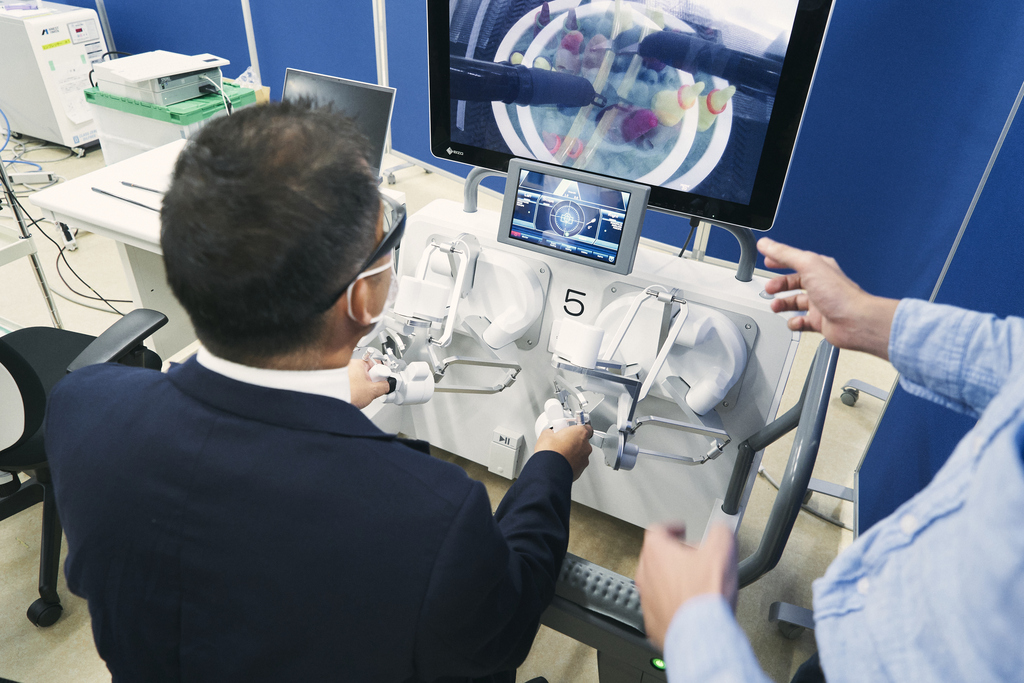
Tadano: The technology for precisely controlling air pressure might be easier to understand if you imagine a bicycle pump. Inside the cylinder is a piston; when air is pumped in, the piston is pushed, and that force drives the robot. Sensors detect the resulting pressure changes and transmit them to the surgeon's hand.The robotic forceps, acting as the surgeon's hand, grasp organs or tissues. The system provides a highly sensitive feedback of the exact force applied during grasping. This allows for a surgical experience that closely mimics the feel of manual techniques.
In other words, the system reads pressure information and the position of the forceps via sensors, organizes this relationship, and precisely controls the robot's movements by finely adjusting the amount of air delivered. Currently, it reads the air pressure state in units of 1/1000 of a second, repeatedly making minute adjustments to the movements during operation.
Until now, pneumatic robotics have been commonly used in simple tasks like "pushing objects to move them," but applying them in the medical field was considered difficult. This is because the medical field requires control that is orders of magnitude more precise and complex. Many would likely think applying pneumatic control mechanisms to surgical assistance robots is impossible. However, through accumulating diverse insights and dedicated development efforts, our company has made it possible.
Providing better medical care and addressing the surgeon shortage—benefiting both patients and doctors
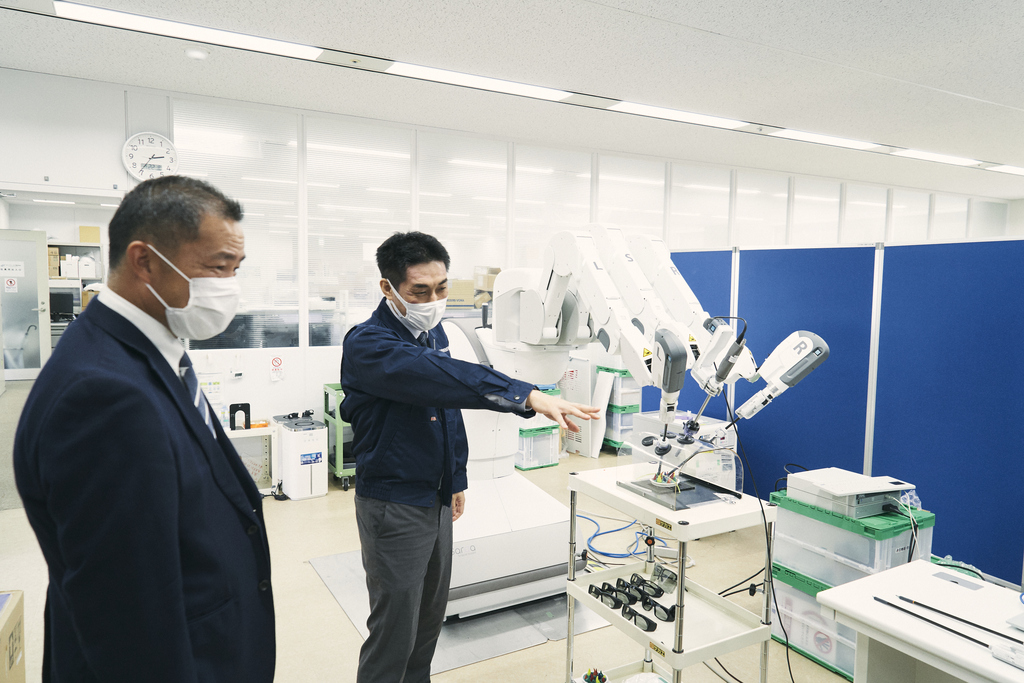
Hayashi: By the way, what prompted your company to focus specifically on developing this technology? President Tadano was a university researcher, so could you also tell us about the journey that led to founding the company?
Tadano: Our founding team consisted of four members. One of them, Kenji Kawashima, who now serves as our Executive Advisor, was my academic advisor at university. At that time, there was a growing atmosphere at both Tokyo Medical and Dental University and Tokyo Institute of Technology to promote collaboration between medicine and engineering. This led us to expand our research focus from our previous work on air and fluid dynamics to surgical assistance robots.
I started this research in my master's program, earned my doctorate, became hooked on the fascination of research, and eventually became a faculty member myself.Initially, I thought about having some company take the results cultivated through my research, commercialize them, and put them to use in the world. So, I talked with various companies. However, there seemed to be concerns about the risks involved in the medical field and whether profits could be made, and ultimately, the talks didn't come to fruition. It was during this time, when I was wondering what to do, that the opportunity came up: the Ministry of Education, Culture, Sports, Science and Technology's "START" project, which supports university-spinoff ventures. Being selected for that project was the catalyst for starting the company.
Hayashi: I understand Professor Kawashima's lab originally focused on air and fluid research. Was the idea to repurpose that research into a surgical assistance robot using pneumatic technology?
Tadano: Yes, research applying pneumatic technology to robots had already begun. At that time, it was focused on robots for remotely operating construction machinery, not surgical robots. One reason for shifting to surgical assistance robots was that we were seeking a new research theme within that framework. Additionally, a major catalyst was Professor Kawashima gaining the opportunity to speak with a specialist in the Da Vinci surgical robot.The "Da Vinci," developed by Intuitive Surgical in the US, is a pioneer in this field, boasting a significant global market share. Through that dialogue, I became interested in robot development for surgery and the surgical field.
Personally, while researching pneumatic systems, I increasingly thought, "Pneumatics might be well-suited for detecting and controlling force." These scattered ideas connected into a single thread, leading me to decide to try using pneumatics in surgical assistance robots.
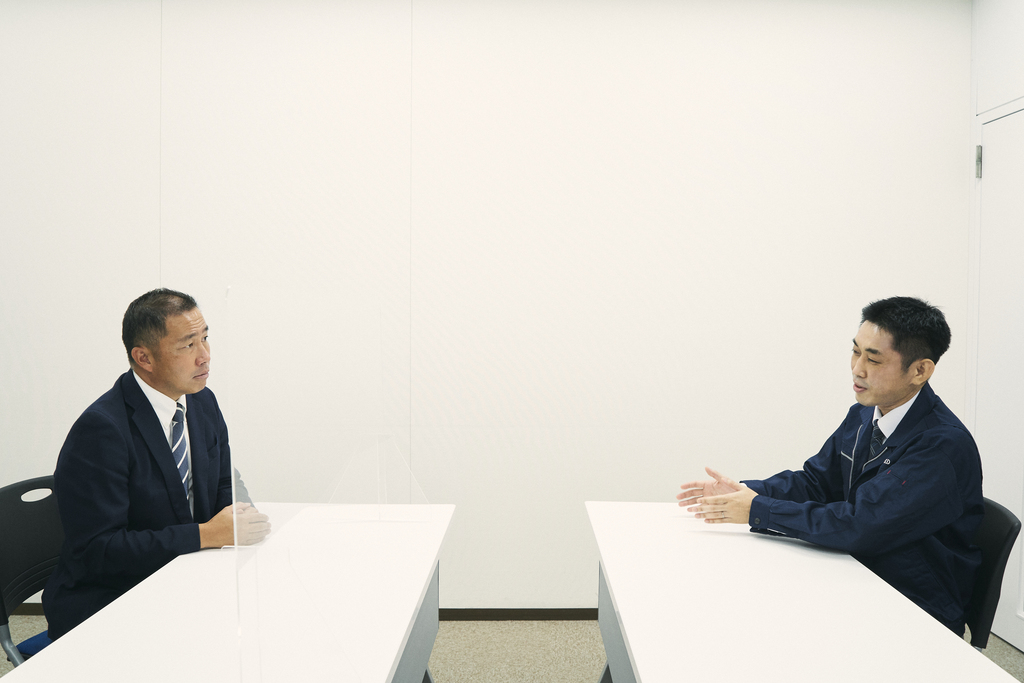
Hayashi: I see. So various circumstances intertwined, leading to the start of developing a surgical assistance robot using pneumatic technology, which then led to starting a company. It's exciting to hear. By the way, in Japan today, is the introduction of robots into the medical field commonplace?
Tadano: In the past, many doctors would say things like, "Robots? No thanks." But now, they're widely recognized, and we hear a lot of requests like, "We want one at our hospital too." Japan currently faces a shortage of surgeons, leading to excessive burdens on surgeons and medical staff. I believe robots can make a significant contribution in reducing that burden.
Recently, we've also seen increasing requests from patients themselves saying, "I want robotic surgery." That surely indicates growing trust in robotic surgery. In fact, the field of laparoscopic surgery—where machines act like magic hands to operate in areas inaccessible to the surgeon's hands—has proven that using robots makes procedures simpler and more reliable.
Hayashi: If surgical procedures become easier through robotic advancements, patients' burdens will be further reduced. What are the direct factors behind the widespread acceptance of surgical assistance robots?
Tadano: The expansion of insurance coverage for robotic surgery was a major factor. As the number of surgeries using surgical assistance robots increased and solid evidence accumulated, the scope of insurance coverage broadened, leading more hospitals to want to adopt them.
Hayashi: How does the adoption of surgical robots overseas compare to Japan?
Tadano: The United States is the birthplace of the Da Vinci, the leading surgical robot. The approval process there tends to be relatively shorter than in Japan, so robots are used in many more scenarios. In Europe, too, many manufacturers are developing medical robots. It's safe to say the global demand for surgical robots is growing.
Hayashi: Among these, the technology that enables surgery by using pneumatic pressure to obtain "force feedback" is unique to your company, isn't it? I'm truly impressed by its significance.
Amidst the global increase in robot utilization within the medical field and remarkable technological innovation, Mr. Tadano's words conveyed just how revolutionary Riverfield's surgical assistance robot truly is. If robot-assisted surgery becomes commonplace in the future, wouldn't it bring increased benefits to both medical staff and patients, leading to the creation of a better healthcare society?
In the second part, we will delve deeper into the barriers hindering the adoption and widespread use of surgical assistance robots, as well as President Tadano's vision for the future.
The information published at this time is as follows.
Was this article helpful?
Share this article


Newsletter registration is here
We select and publish important news every day
For inquiries about this article
Author
Kotaro Tadano
Riverfield Co., Ltd.
President and CEO
Completed doctoral studies at Tokyo Institute of Technology in 2007. Appointed Associate Professor at the same university in 2013, specializing in robotics and engaged in research and development of surgical assistance robots, human-machine systems, and pneumatic systems. In 2014, he joined as a founding member of Riverfield Inc., a company dedicated to the research and development of surgical assistance robots. Building upon the technologies cultivated at the university, he has vigorously pursued the development of surgical assistance robots. In 2020, he assumed the position of Representative Director at Riverfield Inc. His goal is to contribute to healthcare and society by providing domestically produced, safe, and reliable surgical assistance robots within the global growth market of minimally invasive surgery.
Hayashi Tsuyoshi
Dentsu Medical Communications Inc.
President and CEO
After joining Dentsu Inc., he worked in the Sales Division handling pharmaceutical companies, travel agencies, and others. He served as Department Manager and Assistant Bureau Chief. In 2018, he joined the newly established Business Transformation Division as General Manager, engaging in growth initiatives for startup companies. In 2020, he became President of Dentsu Medical Communications. He actively pursues his work with the motto "Supporting Life."