
Note: This website was automatically translated, so some terms or nuances may not be completely accurate.
"Broadcasting Cool Japan from Regional Origins to the World" Part 4 Mr. FROGMAN
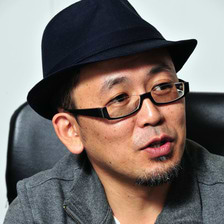
FROGMAN
FROGMAN, who gained significant attention by distributing "Sugai-kun and Family Stone" created with Adobe Flash from Shimane, where he relocated from Tokyo. He then achieved massive success with "Secret Society Takanotsume." He spoke about regionally-based creativity, his own works, and his approach to ideation.
Episode 4
Thinking from After-Reading Impressions: Translating Ideas into Stories Through Backward Thinking
People often ask me, "What's the FROGMAN way of thinking?" Honestly, I don't have anything special to share with others. One thing I've decided for myself is not to keep a notebook for ideas. I did keep one for a while, but I guess I'm forgetful, because when I looked back later, I couldn't even remember what I meant when I wrote things down. That's one big reason. Maybe just writing it down in the notebook made me feel secure.
Instead, I believe it's better to train your ability to instantly come up with something interesting when given a theme, like "baseball" and "rain," and told to combine them. It's like the feeling comedians have when they do one-off gags using objects. Also, since you never know what kind of topic might come up, keeping a notebook is pointless anyway.
I'm not sure if you can call it a method, but when I think about something, I try to work backwards. For a movie, I start with the end credits after the main story ends: "What feeling do I want the audience to have?" Do I want them to leave feeling unsettled, angry at this contradictory society? Do I want them to leave thinking it was fun, exhilarating, wanting to be friends with these characters? Or do I want them to leave with a bittersweet, heart-fluttering feeling, wishing they could experience such love? I begin by considering what kind of "aftertaste" I want them to have.
For a hero-centric work where even the bad guys find redemption in the end, leading to a happy-ever-after conclusion—if we want that impression, we think about what specific ending would achieve it. Then, working backwards, we set up the hurdles needed to reach that point. To make people around twenty think this product is "cool," I first consider what things people around twenty find cool. Then I weave that into the story, like "Secret Society Talon Claw (Talon Claw)" can do this or that.
Working backwards makes it easier to organize ideas. If you start from the beginning, you'll often hit a dead end later on. It's the same with stories. People emotionally demand a sense of logic; when that logic breaks down, some will lose interest, while others will get angry, thinking "this is impossible." That's why working backwards makes it easier to build a story and lay down foreshadowing.
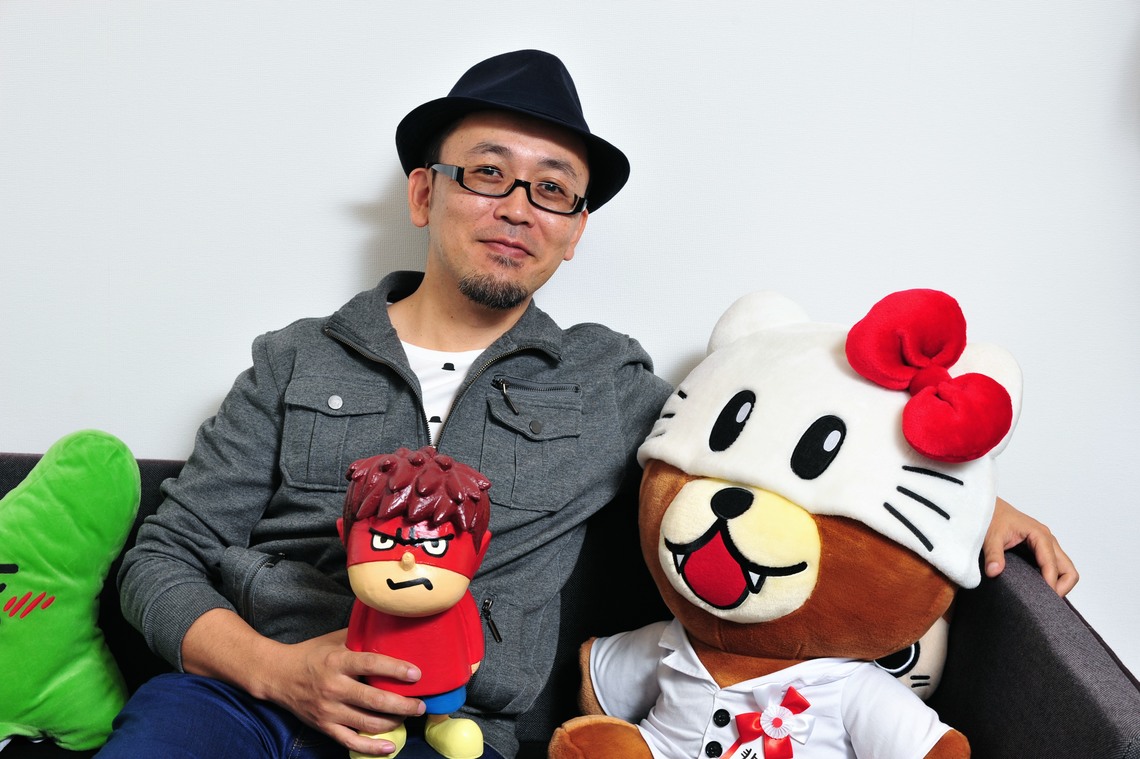
Yamamoto Shūgorō's works, which greatly influence story creation
While I do care about the originality of expression, I might not be overly concerned with the originality of the basic story itself. This is because I believe human emotions themselves haven't changed since Shakespeare's time, or even further back to the Jomon period. In any era, in any world, breaking up with her is sad, and a parent and child reuniting is joyful. Those emotions are universal and cool. Even if there are slight differences in the details, I don't think the process leading up to that feeling of coolness changes much.
When I first entered the film world, the first book I was given was by Shugoro Yamamoto. "You haven't read Yamamoto Shūgorō's works? That's impossible," they said. "Everything about the subtleties of human emotion is packed into these books. Just read them." And so I was made to read them. I think that was incredibly valuable. While some parts feel dated, they show exactly what makes people cry. What makes them happy. Yamamoto Shūgorō's novels contain all the archetypes of human emotion. I learned a great deal from them.
When I watch movies with that awareness, I always find they fit into some formula from Yamamoto's works. "Taka no Tsume" is a comedy, but despite being a short film, it has a story, and the parts that make you cry really do make you cry. That kind of praise owes a lot to Yamamoto's influence. Saying something like this might get me in trouble with Shūgorō fans, though.
As for the future, personally, I've always wanted to write novels. Novels are the ultimate "low-calorie content," and I'm fascinated by worlds that exist solely through words. Of course, beyond that, I dream of adapting my own novels into films. (End)
Was this article helpful?
Share this article


Newsletter registration is here
We select and publish important news every day
For inquiries about this article
Author
FROGMAN
Real name: Ryo Ono. Born in Tokyo in 1971. After working as a TV and film production staff member, he relocated to Shimane Prefecture. His Adobe Flash project "Sugai-kun and the Family Stone," conceived as "regional video distribution," garnered significant attention. His schedule became extremely busy following the breakout success of "Secret Society Takanotsume," and he currently divides his time between Tokyo and Shimane.