Note: This website was automatically translated, so some terms or nuances may not be completely accurate.
Reflecting on "AdTech Tokyo 2013" ~ The Future of Digital Marketing
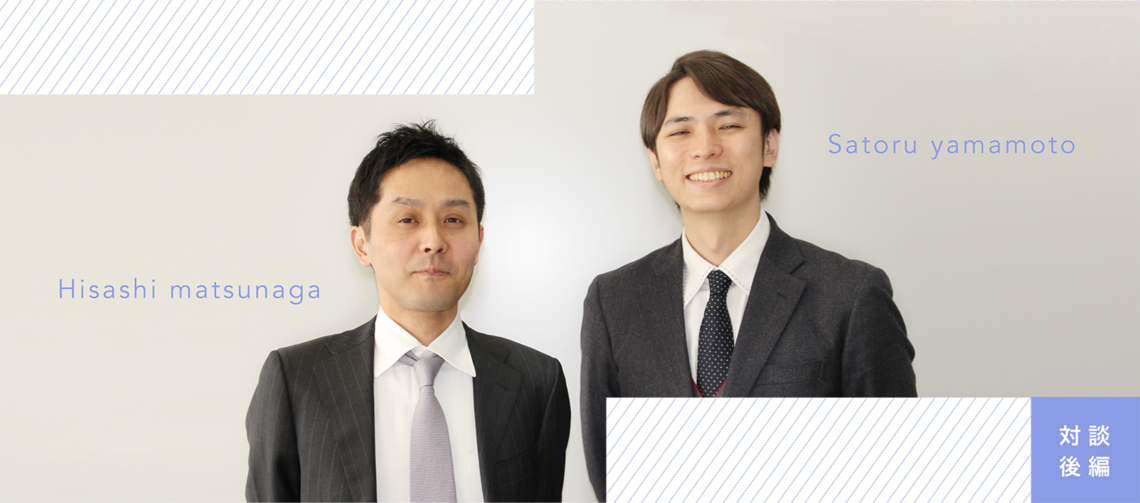
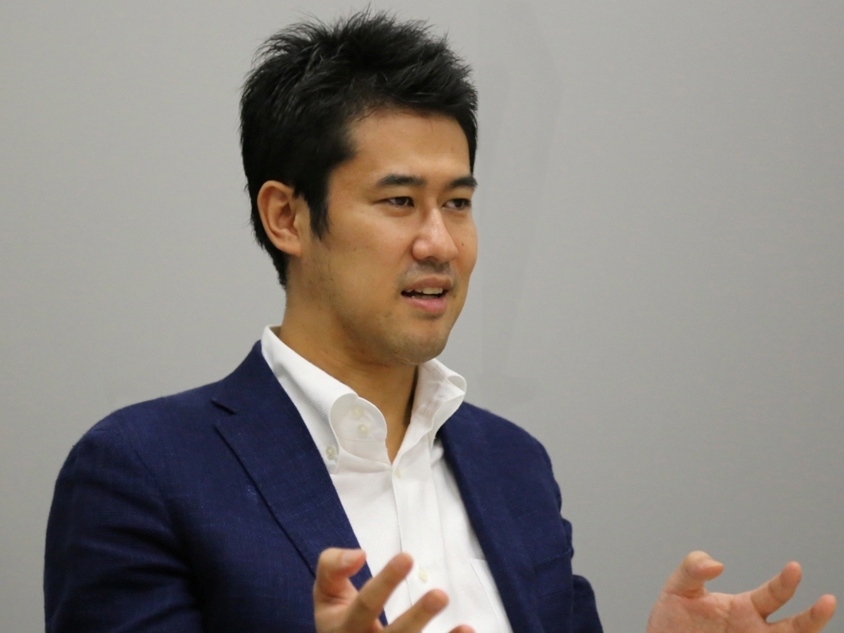
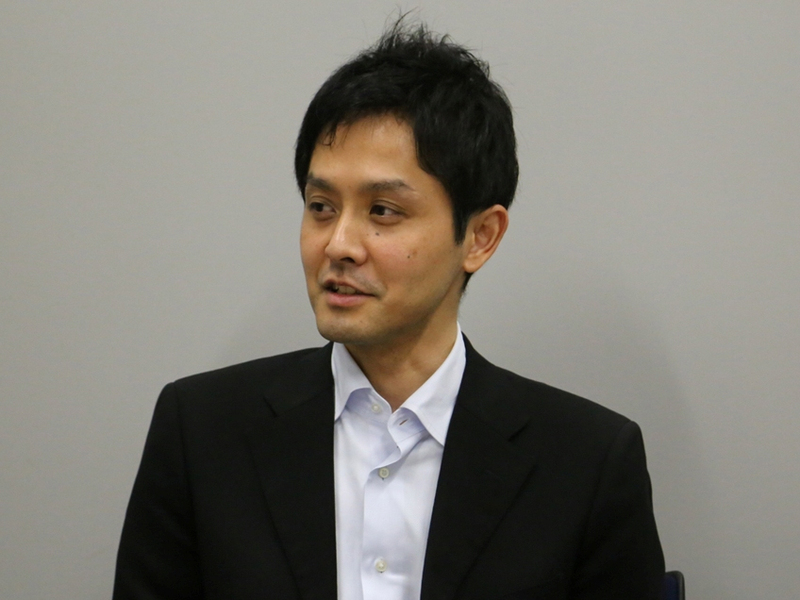
The international digital marketing conference "AdTech Tokyo 2013" was held on September 18 and 19 at the Tokyo International Forum in Marunouchi. Tomohiko Sugiura, President of Nextedge Dentsu, and Hisashi Matsunaga, Chief Analyst of Dentsu Group's Data Strategy Office, who participated in the official session representing the Dentsu Group, discussed the current state and future of digital marketing as seen through AdTech.
Digital Marketing Moving Toward "Maturity"
Sugiura: At this year's AdTech, I participated in a session titled "The Effects and Sales Generated by Attribution Analysis." Attribution analysis (measuring media-specific contribution to purchases) was also a topic last year, but discussions then primarily focused on the "potential" of the technology. While it remains a highly prominent topic this time, I felt the discussion was moving toward a more fundamental level, with the emphasis now clearly on "effectiveness." I also think social media is shifting from a "let's just try it" approach toward a focus on how to ultimately achieve results.
Matsunaga: Yes, I agree. I was at the session titled "What Consumer Needs Can We Read from Big Data Analysis?" Despite the broad theme of big data, the discussion focused on what needs to be done to achieve results, which aligns with what we just discussed. Even companies considered advanced in the big data field struggle to clearly prove that their big data analysis actually translates into sales, making it difficult to secure budgets. On the other hand, from the perspective of vendors providing marketing tools and advertising agencies offering support, it was noted that there still aren't many cases where solid outputs are being delivered. One reason for this is that clients themselves often lack clarity on what their actual challenges are and what KPIs (Key Performance Indicators) they should be using. The possibilities of what can be done with data are expanding daily. However, data is ultimately just a means to an end. There seems to be a lack of focus on the essential question: how to use these means to solve problems. Tool vendors and support providers themselves may also be focusing solely on tool usage, without fully addressing the selection and implementation of tools.
Sugiura: Going forward, the world of digital marketing will likely move toward "maturity" rather than the emergence of new technologies. Even at AdTech seminars, themes like the processes, organization, and talent needed to master tools were increasing, rather than just "what can be done."
Matsunaga: It's essentially the "box" evolving. Like master data management, which focuses on how data is connected, adjustments through the business layer for data utilization will advance. I believe this aspect will inevitably evolve as businesses expand.
One-to-one marketing will test marketers' skills
Sugiura: Participating in AdTech this time reaffirmed that the world of digital marketing still holds dreams. Attribution analysis, DMP (Data Management Platform), and O2O (Online to Offline) are all heading towards one-to-one advertising based on data—meaning delivering the optimal ad to each individual. Traditional CRM (Customer Relationship Management) only did this for customers who provided personal information. Now, it's becoming possible at a mass scale. We can now design, down to the finest detail, who to target, when, where, and with what message—by understanding the browsing history and preferences of every potential customer navigating the web. For those with a strong curiosity and drive to master and evolve marketing, it's an exciting world. It's an environment where skill is tested, or rather, where intelligence enables even more precise execution.
Matsunaga: In terms of accessing big data, everyone is now operating in a similar environment. Since AdTech is also a platform for startups to showcase their vision, I got the impression many are starting to raise their hands, saying, "We want to build a DMP that connects everything—TV, web, CRM—and we're going to do it."
Sugiura: While the possibilities of technology are expanding, there's an absolute shortage of people who can effectively utilize it. Both clients and advertising agencies are now facing the challenge of talent. For advertising agencies especially, the work requires meticulous tasks that differ in nature from their previous work. I feel the challenge lies in the scarcity of leaders willing to take the initiative and dive into this area. We have our share of statistics specialists, but unless they actually connect that data to media planning or creative work, it just ends up as mere analytical output. What's truly needed is to generate solid insights at the right intervals, right where the practical work happens.
Matsunaga: I agree. Working with data makes it clear that analyzing the same data can yield different results. That's where the "human" factor comes in. How you interpret the data is crucial, and you must then consider what specific actions to take based on that interpretation. To finely tune mass media based on data analysis results, or conversely, to take challenges identified in mass media and translate them into digital solutions, we need people who can build and design each step properly.
Our mission is to build systems that bridge mass media and digital.
Matsunaga: Going forward, the ability to translate vast amounts of analysis into actionable strategies will be incredibly important. But because things move so fast, you might end up in a situation where "even if we get answers three months later..."
Sugiura: That's right. For campaigns and promotions, the traditional approach was "Let's run the campaign first, then survey after three months." Now, clients expect to see data daily during the campaign and ask, "Can we swap out the creative?" Among leading companies, the trend toward "real-time marketing" is strengthening—they no longer rely solely on ad agencies but employ in-house analysts to deliver quick results. Agencies that can respond to this real-time demand will likely be the ones chosen. Now, consumer needs are diversifying even more, and media is fragmenting. We have to focus our wisdom on meticulous approaches within this environment.
Matsunaga: In my case, I've always been in the analytics field, from mass media to digital. When you properly analyze the data, it still shows that mass media centered around TV has very strong effectiveness. However, if you run TV and web campaigns separately, it won't lead to sales. Going forward, I think we should consider using digital not to take budget away from mass media, but to refine mass media planning. As advertising agencies, we see our role as leveraging our accumulated expertise to propose seamless communication strategies and optimal tool utilization—spanning mass media, digital, and physical retail touchpoints.
Sugiura: That's right. Trying out digital marketing is fairly easy. But the real rewards lie only after embedding it, repeatedly verifying and improving it, and upgrading it. That's where the real challenge lies. While an exciting world awaits, we intend to continue tackling this with the resolve to see it through to the end.
Was this article helpful?
Share this article


Newsletter registration is here
We select and publish important news every day
For inquiries about this article
Author
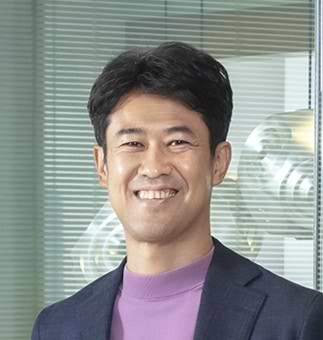
Tomohiko Sugiura
dentsu Japan/Dentsu Digital Inc.
CX President / Executive Vice President
President, Dentsu Japan CX; Executive Vice President, Dentsu Digital Inc. Visiting Researcher, Columbia Business School's Center for Information Technology and Innovation (CITI), 2009. Participated in launching Dentsu Fuse and Dentsu e-marketing One, overseeing web consulting and online advertising ROI management.Primarily engaged in customer acquisition support for financial/insurance and e-commerce companies, as well as e-marketing strategy planning and PDCA operations for the IT and automotive industries. Concurrently led the development of unique digital marketing optimization tools, including methods for mass advertising × web integrated analysis, online advertising planning optimization, and attribution analysis. Served as President and CEO of Nextedge Dentsu Inc. in 2013.



Hisashi Matsunaga
Dentsu Group Inc.
dentsu Japan Growth Officer
After joining Dentsu Inc., he worked on planning and consulting for client companies utilizing data, as well as developing Dentsu Inc.'s planning systems. He was involved in numerous new business development initiatives with media companies, retailers, and digital platform operators. From 2016, he worked at the Dentsu Data & Technology Center, responsible for formulating Dentsu Inc.'s data strategy and developing its data infrastructure. In 2023, he was appointed Growth Officer/Chief Data Officer at Dentsu Japan. He is responsible for formulating Dentsu Japan's data strategy, forming alliances with data holders and digital platform operators, and developing solutions and products leveraging data and technology (Ph.D. in Engineering).