
Note: This website was automatically translated, so some terms or nuances may not be completely accurate.
JOC President Takeda Interview: "Toward the 2020 Tokyo Olympic and Paralympic Games" Part 1
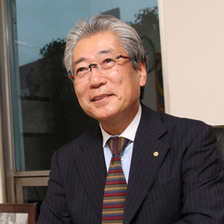
Tsunehisa Takeda
Discussing the Grand Design for the 2020 Games
"Creating a Movement Only Possible with a Second Hosting"
Two months have passed since September 8th, when all of Japan erupted in joy. Japan Olympic Committee (JOC) President Tsunekazu Takeda has energetically begun running toward the "seven years hence." As JOC President, as an International Olympic Committee (IOC) member, and as an Olympian who once competed in equestrian events, what grand design is he envisioning? We interviewed him about his thoughts.
The Smiles of Children in Disaster-Stricken Areas Spurred the Re-Challenge
―Looking back on the bid campaign for the 2020 Tokyo Olympic and Paralympic Games, what was the most challenging part?
Takeda: One major struggle was the conflict I felt after 3/11. As you know, Tokyo's bid for the 2016 Games was unsuccessful. After that, there was debate about whether Tokyo should bid again or if another city should step forward. Personally, I believed that since our competitors weren't other Asian nations, if we bid again, there was definitely a path to bring the Games back to Tokyo. I felt we should challenge ourselves.
However, the Great East Japan Earthquake struck in March 2011. Under those circumstances, I agonized deeply over whether Olympic bid activities were even possible or appropriate. While I hesitated, I also felt that precisely at such a time, the sports world could make a difference. Immediately after the disaster, I met with the governors of the three Tohoku prefectures, exchanged views, and gained their support for the bid campaign.
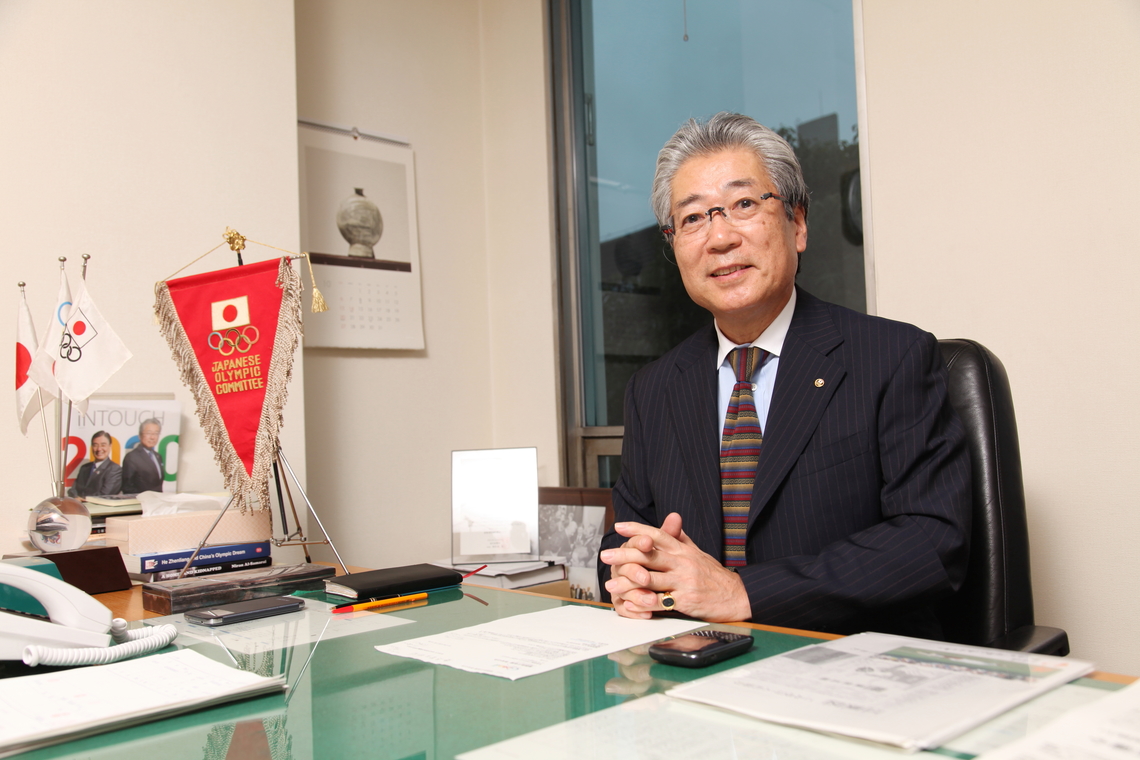
Then, starting in October 2011, we launched the "Olympic Day Festa"* across Tohoku as a form of recovery support. This event brought top athletes into contact with people in the disaster-affected areas, hoping to offer some encouragement. Many Olympians and athletes participated, not only from Japan but also from overseas.
I attended several times myself, and what truly moved me was seeing children who had endured immense hardship, their eyes shining brightly as they worked up a sweat alongside the athletes. Witnessing that, I felt deep in my heart, "Sports truly possess incredible power." And I became convinced: "The Olympics absolutely must be held." I wanted to host an Olympics that would become a symbol of recovery and give courage to everyone in the disaster-affected areas. That desire helped me overcome the lingering conflict within my heart.
*Olympic Day Festa... Held as part of the JOC's "Ganbare! Nippon!" Project launched to support recovery from the Great East Japan Earthquake, under the slogan "Smiles born from sport." It continues to be held regularly.
When I saw the IOC's evaluation report, I thought, "We can do this."
Takeda: Another hurdle we had to overcome was how to increase public support. This was the most challenging aspect of our previous bid campaign too. This time, to achieve a truly all-Japan effort, we absolutely had to make the public understand the significance of hosting.
To achieve this, we established a council within the bid committee to support the bid efforts and function as advisors. We invited top figures from various sectors, including politics, business, and organizations with nationwide reach, to serve as council members. They spearheaded diverse activities to gain public understanding. This council also served as a platform for building the All-Japan system and proved highly effective.
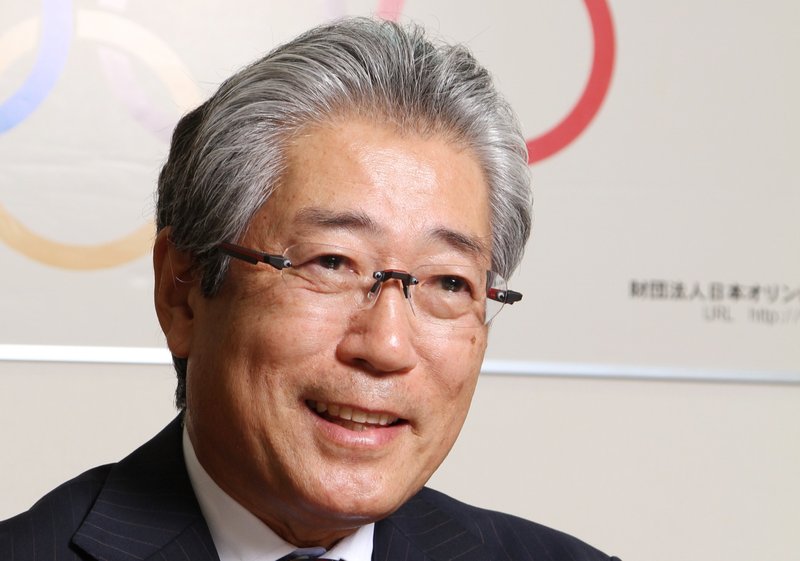
―When did you start to feel a positive response?
Takeda: In March this year, the IOC survey reported that 70% of Tokyo residents supported the bid. Then in June, the IOC released its evaluation report on candidate cities, and Tokyo received extremely high marks. Seeing that report, I felt strongly, "We can do this." We were also in frequent contact with IOC members, and the feedback was positive. In my mind, that feeling of "we can do this" turned into conviction.
However, just before the final presentation in Buenos Aires in September, the contaminated water issue arose and was covered daily by international media. This was unforeseen, and while I wasn't entirely without anxiety at first, we were able to overcome it through the "power of all Japan," led by Prime Minister Abe.
An Olympics that will become a model for future Games
―Now that the bid has been successfully secured, the next focus is on how to proceed over the next seven years. As JOC President, what do you see as the major challenges?
Takeda: To secure this hosting right, we made various commitments to the IOC. Fulfilling every single one of these commitments is the fundamental prerequisite. During the bid campaign, we strongly emphasized "Safety, Security, and Reliability." Regarding "Safety and Security," the contaminated water issue arose, which requires full-scale national backing. As for "Reliability," we must devote our utmost efforts to developing facilities and infrastructure, such as constructing the main stadium.
The Organizing Committee is scheduled to be established early next year. Experts from various fields will gather to tackle the numerous challenges. For the JOC, a major mission will be to strengthen the Japanese national team with an eye on the Games seven years from now, while also coordinating with the IOC and international sports federations to develop the facilities. We will establish a system where the JOC provides full support, with the cooperation of the national government, for tasks that individual sports federations cannot adequately handle alone.
(Continued in Part 2 )
Was this article helpful?
Share this article


Newsletter registration is here
We select and publish important news every day
For inquiries about this article
Author
Tsunehisa Takeda
Public Interest Incorporated Foundation Japan Olympic Committee (JOC) President
Born in 1947. Graduated from Keio University. Competed as a member of the Japanese equestrian show jumping team at the Munich and Montreal Olympics. After retiring from active competition, he served as coach (Seoul) and manager (Barcelona) of the Japanese national equestrian team. Became President of the Japanese Olympic Committee (JOC) in 2001. In July 2012, he became Japan's 13th International Olympic Committee (IOC) member.