
Note: This website was automatically translated, so some terms or nuances may not be completely accurate.
Mr. Hiroshi Osaki: "The Essence of Yoshimoto is 'Family-Like,' and It Will Remain So for the Next 100 Years" Part 1
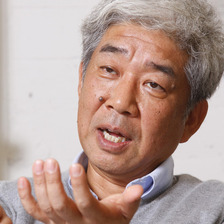
Hiroshi Osaki
Yoshimoto Kogyo Co., Ltd.
This year marks the fifth year in office for Yoshiaki Ohsaki, President of Yoshimoto Kogyo. Leading this "long-established comedy company" that has surpassed 100 years since its founding, he is launching new projects one after another with an eye on the "next 100 years." How does he envision the future of the content business in the entertainment world? While describing himself as an "ordinary person," his keen sense of the times and his view of humanity shine with the exceptional brilliance of a top leader. The secrets to harnessing the power of laughter for business. Presented in three parts.
[Part 1] Everyone Wants to Work in a "Good Vibes" Environment
Three Keywords for the 100th Anniversary
Last year, as Yoshimoto Kogyo celebrated its 100th anniversary, I established three keywords: "Digital," "Regional," and "Asia."
Regarding "Digital," its importance goes without saying. In the entertainment business, both music and video are entering an era of "from packaged goods to streaming." The world of comedy is no exception. Yoshimoto Kogyo has established a digital content production company and a record label to prepare for this "streaming era."
While the content business involves complex issues like rights management for creators and performers, using our own talents and artists to build content from scratch allows us to leverage our advantage as content holders. Yoshimoto Kogyo has 800 registered comedians. This is the publicly stated number, but in reality, including those earning annual incomes of just a few hundred yen, the figure is closer to 4,500. If we consider people as content, they are undoubtedly a significant asset.
The frustration of not seeing "regional" focus even when visiting regional areas
On the other hand, while "regional areas" and "Asia" differ in terms of being within Japan or overseas, I believe they share similarities in the context of regional business. Regarding "regional areas," I have a strong personal attachment, partly based on my own experiences.
Back when I was a manager, I often traveled with talent to regional business events. I think I was in my late twenties. Sitting on the bullet train, gazing at the cityscapes and rural landscapes of regional towns, I suddenly wondered, "What kind of lives do the people living here lead?" I vaguely imagined things like "Maybe there are a lot of part-time farmers?" but the problem was what came next. I couldn't picture the faces or figures of the people actually working there. I couldn't realistically imagine it. This was a shock.
Thinking back, I was born in Osaka, a major city, spent my time there through university, and transferred to Tokyo within two or three years of joining Yoshimoto Kogyo. While I did have many trips to regional areas, they were mostly overnight round trips. I rarely had the chance to truly feel the essence of those places. If I even thought about the "regions," it was only when deciding, "Which ekiben should I get?" on the way back.
I still vividly remember feeling utterly pathetic back then. I think I must have carried that sense of inferiority in the back of my mind all along.
That vague unease lingered, but one day, while idly watching TV, I saw a news report about "students in regional areas struggling to secure jobs." That's when it hit me: "Ah, this is it!"
A local hiring manager like a rogue samurai. I got a little choked up at that company's entrance ceremony.
There are no places for young people in the regions to work. So, couldn't Yoshimoto Kogyo be of some help? That thought gave me a little push, and that's how the "We'll Live in Your Town" project began. It was also positioned as a special project for Yoshimoto Kogyo's 100th anniversary.
One young comedian with ties to each of Japan's 47 prefectures would settle there and engage in community-rooted activities. Events, TV or radio appearances – anything goes. Even in Tokyo or Osaka, they don't have that much work anyway. So, this is their chance to make a splash back home. I immediately approached young talent candidates.
"You're from Nagano, right?"
"Uh, yeah."
"Is your childhood room still there?"
"Um, it's still there, but..."
"Alright, got it. Starting tomorrow, that place is a Yoshimoto office."
That's how the project began.
Meanwhile, the managers were locally hired. One per each of Japan's 47 prefectures meant 47 hires. While it didn't create hundreds or thousands of jobs like a major corporation, they played a vital role: working as one with the comedians to revitalize the regions where they were born and raised. That held immense significance.
What really struck me was when we gathered the 47 locally hired managers in Tokyo and held the company's entrance ceremony with them and the dozen or so new college graduates hired that year. The locally hired group were all mid-career hires, looking like wild warriors. When they gave their greetings, they declared, "We'll protect Yoshimoto's signboard and banner! We'll work hard for the regions, for my hometown!" Their energy level was astonishingly high. In fact, that year's ceremony took place less than a month after the Great East Japan Earthquake. Naturally, some of the 47 were from Tohoku, and they too declared their resolve in loud voices. Hearing them, my eyes welled up uncontrollably.
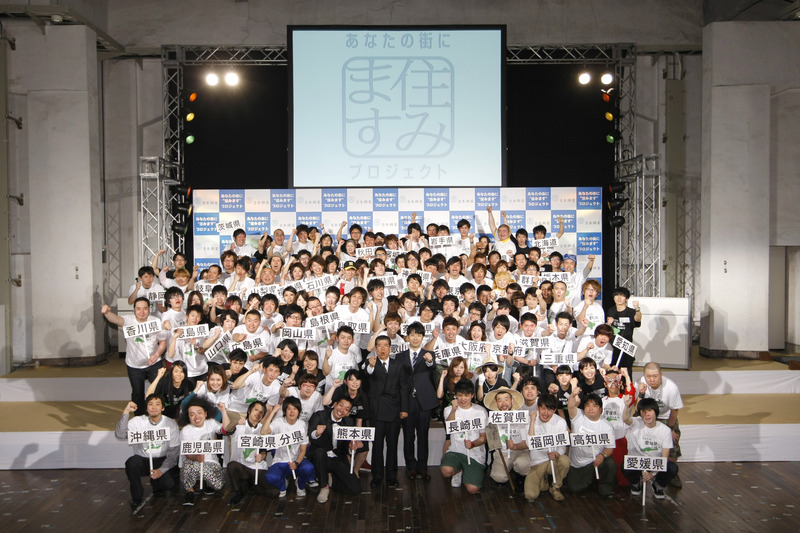
" The "Resident Project" is now in its third year, and the comedians' activities are yielding results in various places. In Aichi Prefecture, the manzai duo "Sam Times" settled in Inuyama City. They pulled rickshaws around the castle town of Inuyama Castle, getting featured on TV and in newspapers. They started attracting local attention too. It's impressive that annual visitors to Inuyama Castle, which had temporarily dropped below 200,000, suddenly surged past 400,000.
Comedians from other regions are also putting in the effort. While comedians may rotate out after about a year, 222 have been appointed as local tourism ambassadors and are actively contributing to regional revitalization.
Everyone works for the sake of their loved ones.
Watching the "resident comedians" and the locally hired staff working alongside them, I found myself reflecting anew at this age on what work fundamentally means.
It's said that after 3/11, more people became acutely aware of family bonds and connections. But fundamentally, the act of "working" is an endeavor that inherently strengthens those family bonds. And here, "family" naturally includes diverse forms of family, unconstrained by blood ties or gender. Whether it's someone at an ad agency, the uncle or auntie at the greengrocer's, or even comedians and their managers, they're all working for people they love or hold dear. Even if single, they might be pouring themselves into serving customers or working tirelessly for their bosses or subordinates. Ultimately, it's about sweating it out for someone else. Isn't that the very essence of work?
When you think about it that way, work should be a very "good feeling" endeavor, both for the person working and for those who benefit from it. Don't you agree?
Watching the comedians and staff of the "Living Project," you really feel that positive vibe radiating from everyone. Young comedians who hadn't yet made it on their own in Tokyo or Osaka returned to their hometowns and found unexpected joy through their work. When they visit the grandpas and grandmas in the shopping district and say, "We're from Yoshimoto," they're welcomed with, "Huh? That Yoshimoto came?"
They can casually drop by the mayor, city mayor, or governor's office with their Yoshimoto business card, saying "Excuse me!" We adults, bound by societal norms, could never pull off such things. But for them, it's just "cool." And the places where they can work like this keep expanding. "Oh, Yoshimoto? Actually, I've been wanting to do this—can you help me out?" "Sure thing!" They respond immediately. They must deeply feel the joy of working while being cherished by the local community.
Working for people you care about, and the more you work, the more people appreciate you. That's the ideal form of "work." When I first started working, my mother, who has since passed away, often told me, "Hiroshi, work in a way that makes everyone like you." But the reality after joining the company? Well, partly because I was a bit of an outsider, I didn't get that affection easily (laughs). Still, no matter what, I think I'm here today because I managed to work in my own "good way."
Was this article helpful?
Share this article


Newsletter registration is here
We select and publish important news every day
For inquiries about this article
Author
Hiroshi Osaki
Yoshimoto Kogyo Co., Ltd.
President
Joined Yoshimoto Kogyo in 1978. Served as manager for numerous talents. Launched the "Shinsaibashi-suji 2-chome Theater" as a producer in 1986, which produced many popular talents. From 1997, as Chief Producer, launched numerous new ventures including music and publishing, sports management, digital content, and film businesses. Appointed Director in 2001, Senior Managing Director in 2005, Vice President in 2006, and assumed his current position in 2009.