Category
Theme

Note: This website was automatically translated, so some terms or nuances may not be completely accurate.

Published Date: 2022/11/09

The Current State of DOOH: Its Evolution and Outlook Beyond the Pandemic (Part 2)

For a long time, OOH (Out-of-Home) advertising has been a beloved advertising format. Did you know that technological innovation has evolved it into "DOOH = Digital OOH," utilizing digital signage and similar technologies?This time, we interviewed Mr. Wataru Kawaguchi, Mr. Shota Geno, and Mr. Haruki Kobayashi from LIVE BOARD, Inc., a company specializing in digital OOH. In Part 1, we introduced the strengths of digital OOH, such as "real-time information targeting."

In this concluding second part, we explore practical examples of digital OOH usage, focusing on aspects like "data utilization," while also delving into LIVE BOARD's vision for the future of advertising.

Data utilization significantly expands the scope of OOH planning and strategy

Q. To revisit the question: How has the digitization of OOH enabled new ways to utilize data, and what capabilities has it unlocked?
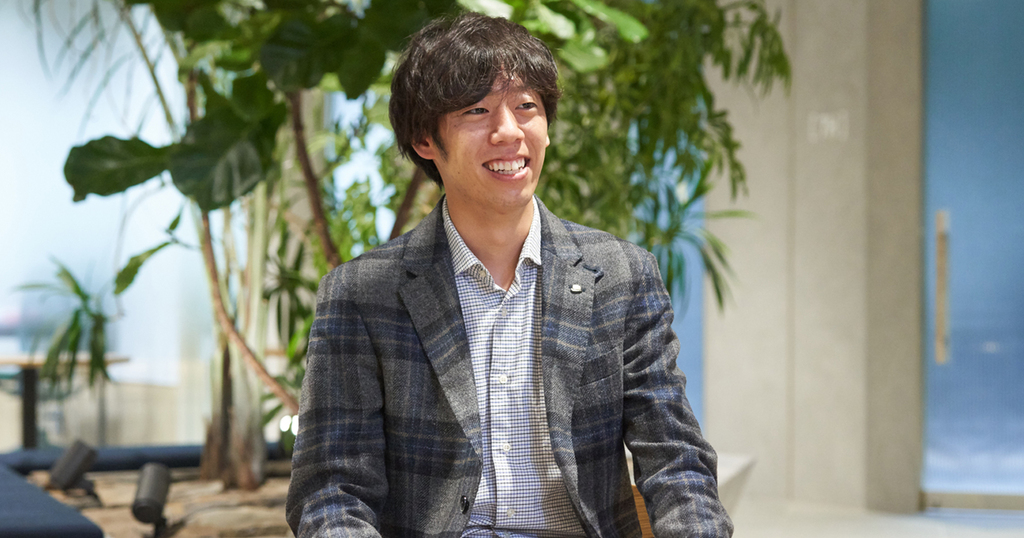
Haruki Kobayashi, LIVE BOARD, Inc.

Kobayashi: I believe it can be summarized into three main points.

First, it has greatly addressed a longstanding weakness of OOH: the difficulty in accurately grasping "who," "what," and "how much" people are seeing.

Previously, we could only estimate ad effectiveness by surveying traffic volume to gauge the number of people passing by an ad and their approximate profiles, or by extrapolating from questionnaires. Now, we can visualize this in real time. We utilize carrier data from NTT DOCOMO, Inc. to visualize reach based on location information and other factors.

The second point is the ability to verify planning effectiveness. This ties into the first point, as we can now see whether people who were exposed to an ad actually visited the store. This allows us to verify not only the value of "where the medium is located and who sees it," but also "what actions people took after being exposed to the medium."

Third is the advancement of delivery methods. For example, messages can be triggered in sync with news events—like when a sports team wins—or linked to weather conditions—such as when temperatures rise.For beverage companies, this enables exposure "only during these high-temperature hours" or "only during peak sales times." While this offers significant benefits for operators, it's also positive for consumers. We're seeing a shift toward "seeing what you need, when you need it."

Q. It's clear that digitalization has driven a dramatic evolution in OOH. What examples do you all consider the most easily understandable cutting-edge cases?
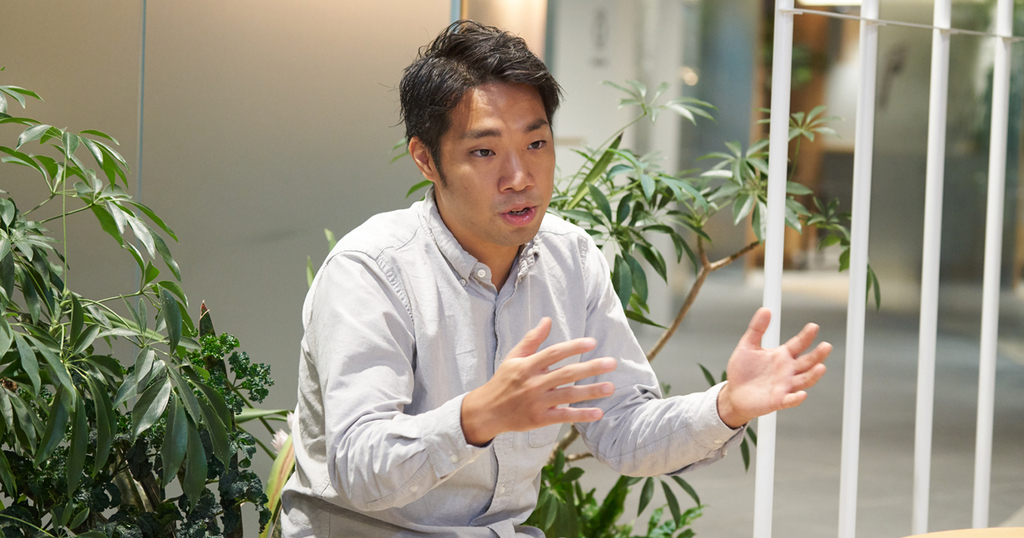
Gen'en: As mentioned in the first part, the most visually clear example in advertising creative is probably 3D expression. This is a global trend, and the giant cat in Shinjuku became quite the talking point, right? Since 3D is spreading globally, the key point now is "how to make it even more interesting while utilizing 3D."

On the other hand, what interests us more than visible trends is what lies "behind" them.The shift to digital OOH has made effectiveness measurable. Consequently, we sense growing client interest in how to combine mass advertising with digital OOH, and what the optimal budget ratio with TV advertising should be. In other words, this measurable effectiveness necessitates a fundamental rethinking of planning itself. As we integrate all initiatives into comprehensive planning, it's becoming increasingly crucial to clearly define the role and appropriate scale of digital OOH within that mix.

LIVE BOARD, Inc. Shota Gen'en

Overcoming COVID-19 Challenges with Data Power, Aiming for "Triple Screen"

Q. OOH has been significantly impacted by the pandemic, hasn't it? There was even a period when it seemed pointless to use OOH because people stopped going out. But the situation has gradually changed since then. What is your outlook for the future?

Kawaguchi: As you pointed out, OOH was significantly impacted by the COVID-19 pandemic. From our observations, OOH advertising volume dropped by roughly 30%. While it is recovering, it hasn't returned to pre-pandemic levels all at once. However, looking at specific areas, there are some positive trends. For example, taxi ads (ads placed inside taxis) actually grew during the pandemic.Also, impactful campaigns like large-scale station displays are recovering quickly. The same goes for 3D advertising. There's high expectation for OOH as a tool to generate buzz, so I believe recovery will gradually come from these areas.

Furthermore, new media formats are continuously emerging. These include deploying creative content in the air using drones, or installing digital signage on golf carts and in restrooms. This enables previously unattainable expressions and creates new touchpoints with customers. I believe the potential of digital OOH is expanding rapidly.

Within this landscape, we at LIVE BOARD aim to expand our network. Simultaneously, we must evolve beyond merely offering "advertising across various formats." We must become a partner capable of proposing integrated communication strategies that leverage the triple screen approach: "TV" × "Digital" × "OOH."

LIVE BOARD, Inc. Wataru Kawaguchi

Q. There are many players specializing in digital OOH. Where do you see LIVE BOARD's strengths?

Gen Kawauchi: Our strength lies in our ability to leverage NTT DOCOMO, Inc.'s carrier data. Focusing on this point, no other player possesses a larger volume of data than we do, which alone constitutes a significant advantage.We can measure visibility, deliver highly accurate reach, plan for the target audience, and execute delivery—all in an integrated manner. This end-to-end capability is unique to us. Furthermore, since we also own our own advertising inventory, we can experiment and expand our offerings in this area depending on the situation.

On the other hand, what we must consider is how to stand on equal footing with players outside the OOH space. With corporate advertising and campaign budgets limited, we must convince them to deliberately choose digital OOH. Our challenge is demonstrating value that holds its own against major media companies and platform providers.

Kawaguchi: Along similar lines, we want to position our high precision as a key selling point – specifically, our ability to plan campaigns that encompass reach and frequency (ad exposure frequency) when compared to other players. We want to clearly communicate that we don't just focus on simple metrics like foot traffic.

Q. Recentefforts inthe"metaverse" are expanding. In other words, "virtual spaces" are rapidly growing. How do you envision the future of OOH within this context?
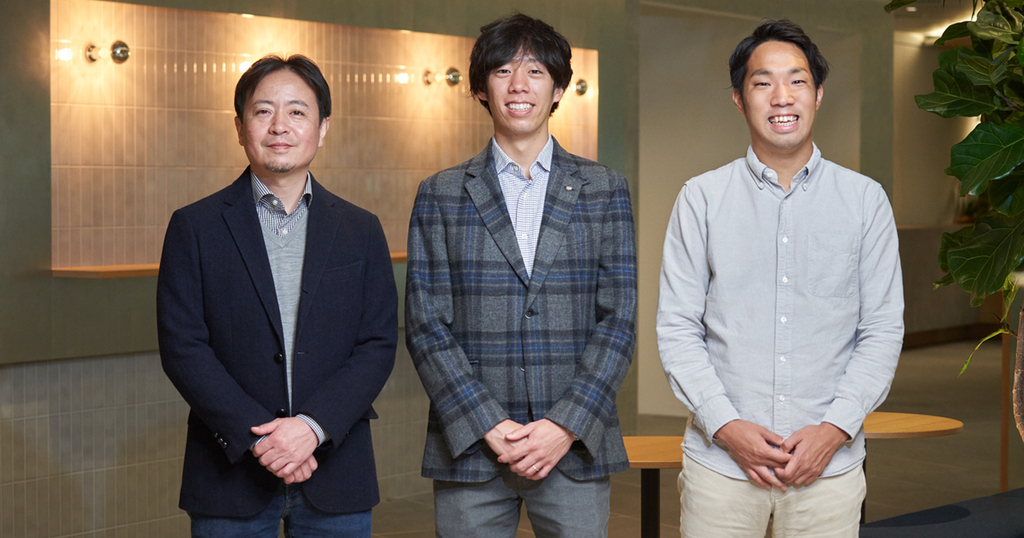
Gen'en: Certainly, the "metaverse" is also a space, and as its user base grows, advertising slots will inevitably appear there. We'll need to adapt eventually. However, I believe the approach will differ significantly depending on whether we're looking 2-3 years ahead or 10 years ahead.

In the near term, I see the metaverse more as a "testing ground" – a place to develop new media formats within cities or experiment with unprecedented forms of expression. We can test whether these approaches work, then roll out the successful ones in the real world.Rather than focusing on expanding within the metaverse itself, we should utilize the metaverse to enhance real-world expansion. Eventually, the metaverse will become widely adopted, and expansion within it will naturally grow. That's how I envision it.


Digital OOH has brought about a truly revolutionary change. It's not just that display surfaces became screens or vision panels; the shift to data delivery dramatically enhances the immediacy, flexibility, and precision of ad placement. This not only addresses the weaknesses of traditional OOH but also strengthens the unique advantages that only OOH can offer. The potential of digital OOH will likely continue to expand significantly.

Furthermore, the proliferation of technologies like the metaverse will expand our "living spaces" beyond traditional boundaries, blurring the lines between online and offline. Wherever people gather and live, OOH will be present. New media development will also advance rapidly. This is another area well worth keeping an eye on.

The information published at this time is as follows.

Was this article helpful?

Share this article

Author

Wataru Kawaguchi

Wataru Kawaguchi

LIVE BOARD, Inc.

Director, Strategy Department

Director

Joined NTT Mobile Communications Network, Inc. (now NTT DOCOMO) in 1998. Engaged in mobile phone agency sales, corporate advertising and promotion, and new business development. Founded LIVE BOARD, Inc. in 2019 and was seconded to the company in February of the same year. At LIVE BOARD, serves as Director and Head of Strategy, overseeing management strategy, public relations, and human resources and general affairs.
Shota Gen'ōen

Shota Gen'ōen

Posterscope

Account Manager

I have been with the OOH Division for approximately six and a half years since joining the company. For the past five years, the OOH Division has operated an exchange program with Posterscope, DAN's OOH specialist brand. As the third assignee under this program, I have been working at Posterscope since 2019. My team members come from diverse nationalities (including the UK, France, Brazil, Australia, and Vietnam). I strive daily to advance the OOH business while engaging with a variety of perspectives.


Haruki Kobayashi

Haruki Kobayashi

LIVE BOARD, Inc.

Insights Department

Manager

After joining Dentsu Inc., I worked in the Out-of-Home Media Division developing "OOH LIQUID," an OOH effectiveness verification method utilizing location data. I was subsequently seconded to LIVE BOARD Inc. At LIVE BOARD, I support the development of planning tools utilizing Docomo data (Mobile Spatial Statistics® and other location data), and handle data-driven planning and effectiveness verification. (※"Mobile Spatial Statistics" is a registered trademark of NTT DOCOMO, INC.)

Also read