Many companies likely face similar struggles: "We want to advance DX, but lack the talent to lead it" or "We want to hire excellent engineers, but don't know where to find them." Amid Japan's rapidly digitizing society, the engineering field faces a critical talent shortage. Supporterz, Inc. is working to increase the number of talented individuals in Japan who have the power to change the world. They do this through career support for engineers and matching services with companies.
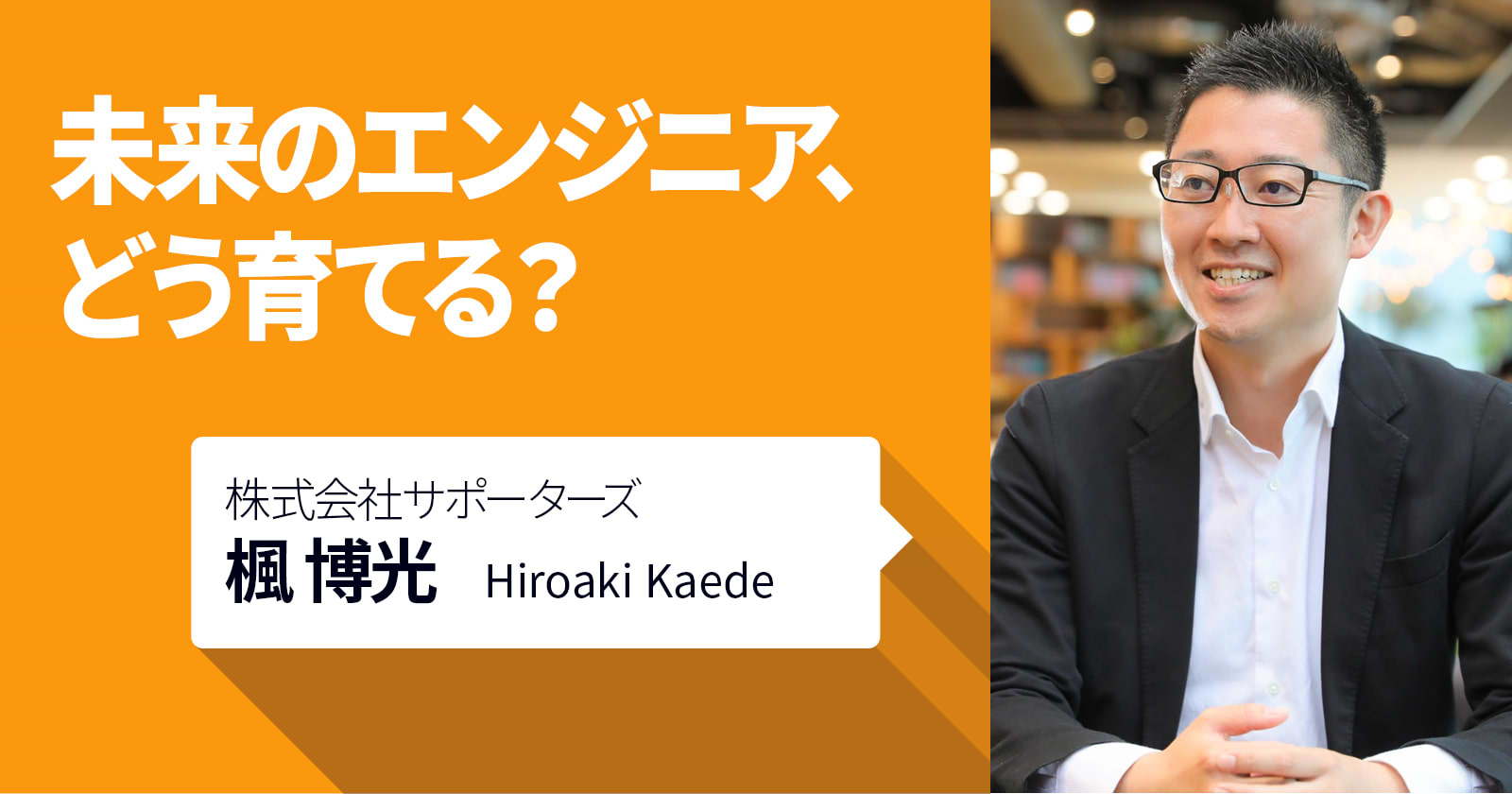
Continuing from Part 1, we interviewed CEO Hirokazu Kaede. We asked about what's essential for nurturing engineers, the challenges they aim to overcome, and their future outlook.
Successfully Cultivating Top DX Talent Through Unique Projects
Q. What is needed to solve the engineer shortage in Japan?
Kaede: I believe we need to cultivate many highly productive, excellent engineers. Currently, only about 20,000 students per year aspire to become engineers, and among them, only about 10% (calculated from Supporterz, Inc. student profile data) actively engage in hands-on creation and development during their student years. We aim to increase this 10% to 20-30%, and eventually to around 50%.
Simply learning programming or writing code as instructed in school won't produce excellent engineers. Students need the experience of thinking for themselves about why they are building something and how to build it, then actually getting their hands dirty and creating it. This hones their skills and helps them realize the value and enjoyment of what they are learning. Therefore, our focus is on providing students with as many opportunities as possible to do just that.
Q. What kind of initiatives does Supporterz, Inc. undertake to achieve this?
Kaede: For about three years now, we've been running the " Technical Education Project " (Geek Project). The name combines "cultivating engineers" (technical education) with the English slang "GEEK" (meaning someone with exceptional knowledge). It aims to nurture future engineers by providing diverse students with opportunities for both "input" (acquiring specialized skills) and "output" (applying them), fostering this cycle.
The project is built on four main pillars. First is "Geek CAMP." We hold monthly hackathons (events where participants intensively focus on programming tasks) and study sessions, giving participants the experience of enjoying making things.Second is the "Tech Education Exhibition," a pitch contest providing the experience of creating and presenting something of value to society. Third is the "Tech Education Festival," one of Japan's largest tech conferences for students, featuring guest speakers including renowned researchers and engineers. Finally, there is the "Tech Education Expo," a networking event where student groups aspiring to become engineers gather to share their activities.
By accumulating these experiences while still in high school or university, students become DX talent capable of producing hundreds of times more output than typical engineers when they enter the workforce.
Q. So students get to experience things typically encountered only after entering the workforce. Do you feel the "Tech Education Project" is genuinely nurturing young talent?
Kaede: It's been about three years since the project started, and I definitely feel they are developing. I also feel it's having an impact that can change a student's life.For example, one student became interested after seeing a friend present at the Tech Education Exhibition and joined the project. They then repeatedly challenged themselves in the Tech Education CAMP hackathons, involving their friends along the way. They steadily built their skills and eventually grew to win the top prize at the Tech Education Exhibition. After that, they received job offers from renowned companies during their job search and were able to pursue their desired career path.
While this is just one example, such cases are indeed increasing. The Tech Education Project is becoming a gateway for students to enter society as DX talent. Hearing stories like this from students gives us a real sense of accomplishment, confirming that all our efforts have been worthwhile.
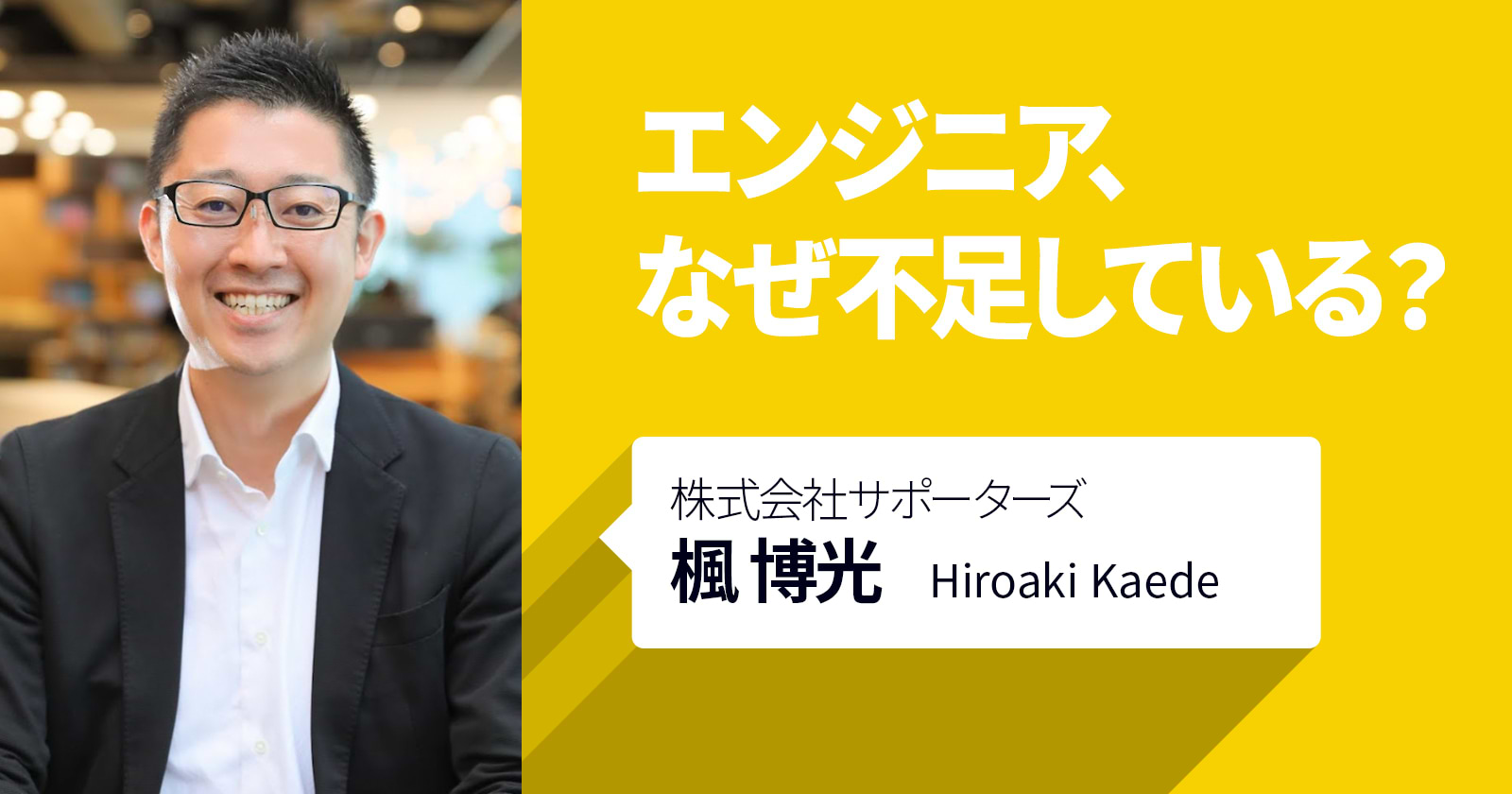
Mr. Hiromitsu Kaede, Supporterz, Inc.
Changing how we're perceived from the outside will transform the world of engineering
Q. It's wonderful that this initiative not only addresses the engineer shortage but also positively impacts students' individual "lives." Could you share Supporterz, Inc.'s future vision and the world you aim to create?
Kaede: We want to expand this to more students and more companies. Since corporate cooperation is essential for activities like this, we aim to increase opportunities for companies and students to connect – like having companies host conferences or serve as mentors and judges at "Technical Education CAMP."Many companies may focus heavily on recruitment but feel they can't spare resources for nurturing students. However, I believe that if they're advancing DX, cultivating engineers is so crucial it should be considered a "management issue."
Currently, our main target is job-hunting students on the verge of entering society. However, we also envision nurturing budding engineers at an earlier stage in the future. This means that while our focus is currently on high school and university students, we must eventually extend our outreach to elementary and junior high school levels.On the other hand, learning after employment is also vital. Creating an environment where people continue learning and honing their skills even after becoming working professionals is also part of Supporterz, Inc.'s role. However, this is an area where our company alone faces challenges, so we want to collaborate with businesses to tackle it.
Q. Hearing all this, it's clear that engineering is an attractive profession with the potential to change the world. Yet, it seems this reality isn't widely recognized among students yet. What is Supporterz, Inc. doing to address this challenge?
Kaede: You're absolutely right. I believe we must first change how engineers are perceived. Making engineers stars, creating an image that it's a cool job, is extremely important. While engineers might be seen more as the unsung heroes working behind the scenes, it's crucial to tell students aspiring to be engineers, "You are the talent who can shine right at the center stage." We also need to communicate this message to society at large.
We want to leverage the power of companies and the nation to cultivate engineers and create environments where they can thrive, turning this into a major wave of change, a significant transformation for Japan. It's said that by 2030, there will be a shortage of 800,000 IT professionals. We are committed to dedicating our efforts to solving this major societal problem facing Japan.
Developing IT talent is not a small challenge that can be solved by a single company's project. It is a major issue for Japanese society that requires proactive solutions from each company and the nation.
If any executives or HR managers are grappling with concerns like "We lack IT talent" or "We can't attract top engineers," adopting a "develop talent" perspective might be one approach. While it may not provide a quick fix, looking at the medium to long term, it could bring positive change to the future of their company.
The information published at this time is as follows.
While attending Keio University, he co-founded Reseo Inc., a company providing job-hunting support. After graduating, he joined a major advertising agency, working in sales. He then moved to a venture company, worked in HR, and founded Supporterz, Inc. in 2012. Currently, while operating Japan's largest recruitment support service for engineering students, he also engages in development initiatives like the "Technical Education Project," which aims to cultivate future "technical" professionals. To date, he has supported over 70,000 engineering students in their job searches and assisted approximately 1,000 companies in hiring new graduate engineers.