Category
Theme

Note: This website was automatically translated, so some terms or nuances may not be completely accurate.

In recent years, there has been a growing demand for governments, local authorities, and companies to engage in ESG (Environment, Social, Governance) initiatives to achieve a sustainable and prosperous society. For companies in particular, ESG management has become an indispensable element for mid-to-long-term growth, partly due to its impact on market valuation.

However, ESG management encompasses a vast array of areas, making selection extremely difficult. Against this backdrop, efforts are underway to analyze and visualize the effects of ESG management.

Collaborating on this research are Dentsu Inc. (ISID) Open Innovation Lab (InnoLab) and ITID, Inc. (ITID). For this article, we interviewed Kuniharu Sakai, Director of InnoLab; Fumiichi Matsuyama, Senior Consultant; and Jun Kanie, who at the time of the interview served as Unit Director of ITID's R&CD Unit.In Part 1, we introduce each company's initiatives and the background behind starting ESG management analysis.

Starting more precise and effective ESG management research from client company interactions

Q. First, could you each introduce the organizations you belong to, InnoLab and ITID?
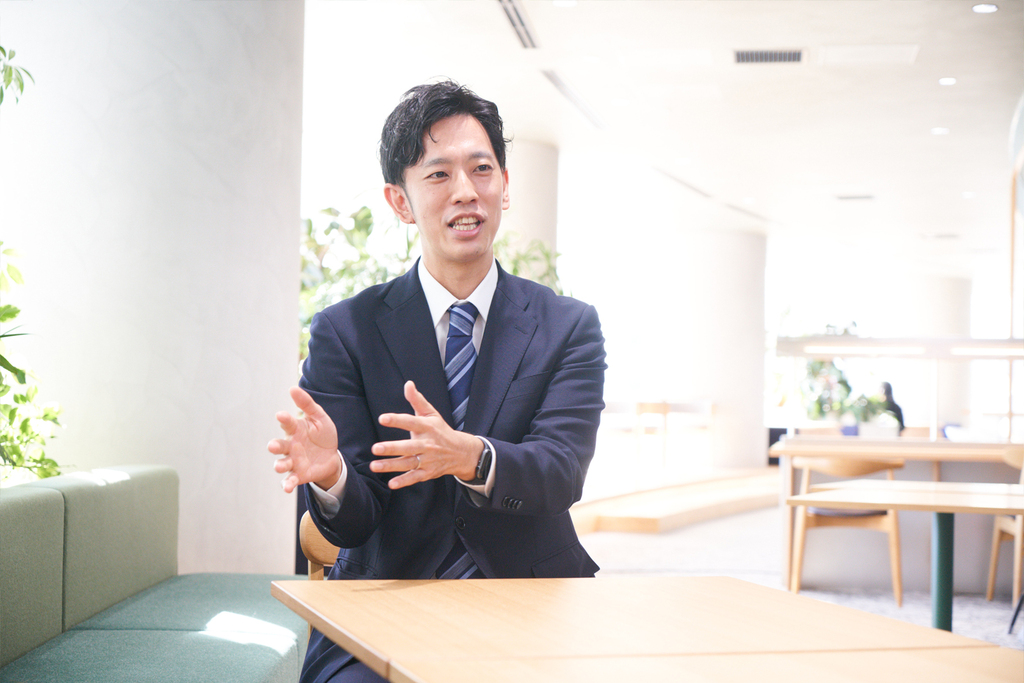
Sakai: InnoLab, where I serve as Director, has always worked with various external partners—not just within the company, but also with businesses, local governments, universities, and others, as the name "Open Innovation" suggests. Our core activities focus on solving high-public-interest social issues like ESG. We actively tackle challenges that existing business divisions often struggle to innovate around.

Kuniharu Sakai, Dentsu Inc. International Information Services Co., Ltd.

Matsuyama: I conduct research activities at InnoLab under Sakai. My background involves research in economics and statistics at academic institutions both domestically and internationally. Consequently, at InnoLab, I apply my economics and data analysis skills to tackle social challenges. My primary focus is mathematical research and development, such as mathematical optimization using quantum computers.

Dentsu Inc. (ITID) - Mr. Fumiichi Matsuyama

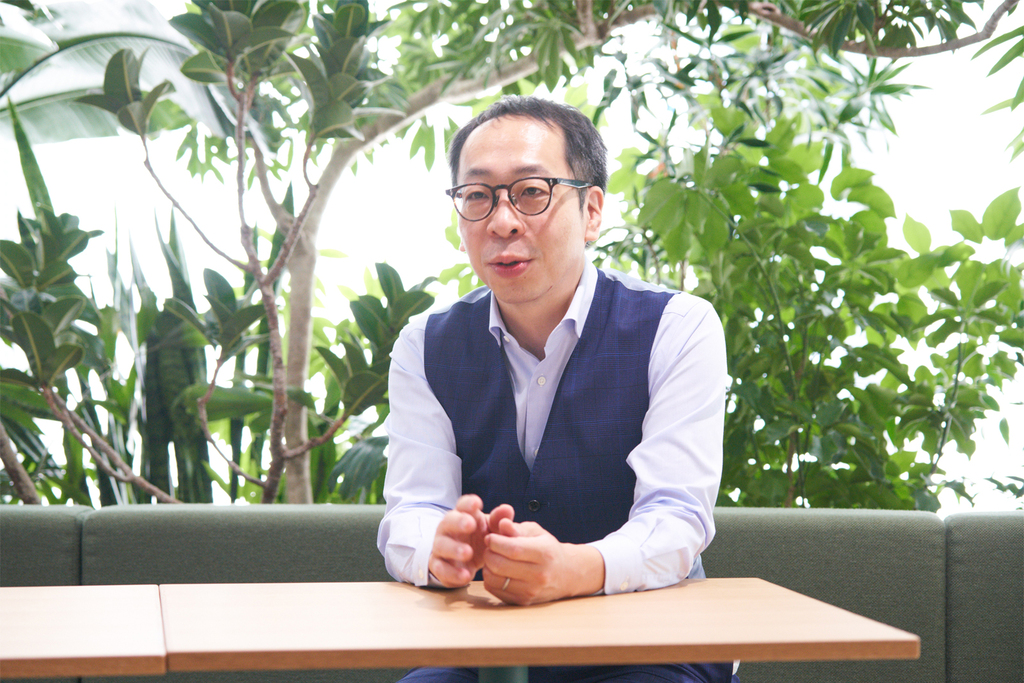
Kanie: At ITID, we tackle corporate management challenges such as creating compelling products, streamlining business processes, and developing talent. As a Unit Director in the R&D department, my role involves providing logical justification for the solutions we deliver.

Q. Why did you all, who were engaged in R&D for corporate system development and consulting, start focusing on ESG?
Sakai: At Inolab, we closely observed trends across various client companies through building systems that support their operations. While interest in sustainability and social contribution has grown significantly in recent years, we felt our existing business offerings couldn't provide effective solutions for this trend.Amidst this, a fundamental question arose: "What tangible effects do ESG initiatives, such as CO2 reduction and human capital utilization, actually have on corporate performance?"

We thought our expertise in AI could be useful for analyzing such causal relationships. With concrete analytical data, we could provide hints for ESG management to our client companies. That's when we decided to give it a try, and research and development began.

Kanie: In our R&D department, as ESG became a major trend, ESG-related initiatives gradually increased starting around 2021.

Amidst this, the issue of "ESG washing" – where companies engage in ESG activities to enhance their social reputation, even if the actual substance doesn't match, or promote themselves to appear more ESG-friendly – began receiving significant attention. The fact that such problems were arising made us realize ESG already held substantial social influence. This was the background that led us to formally begin our own ESG initiatives.

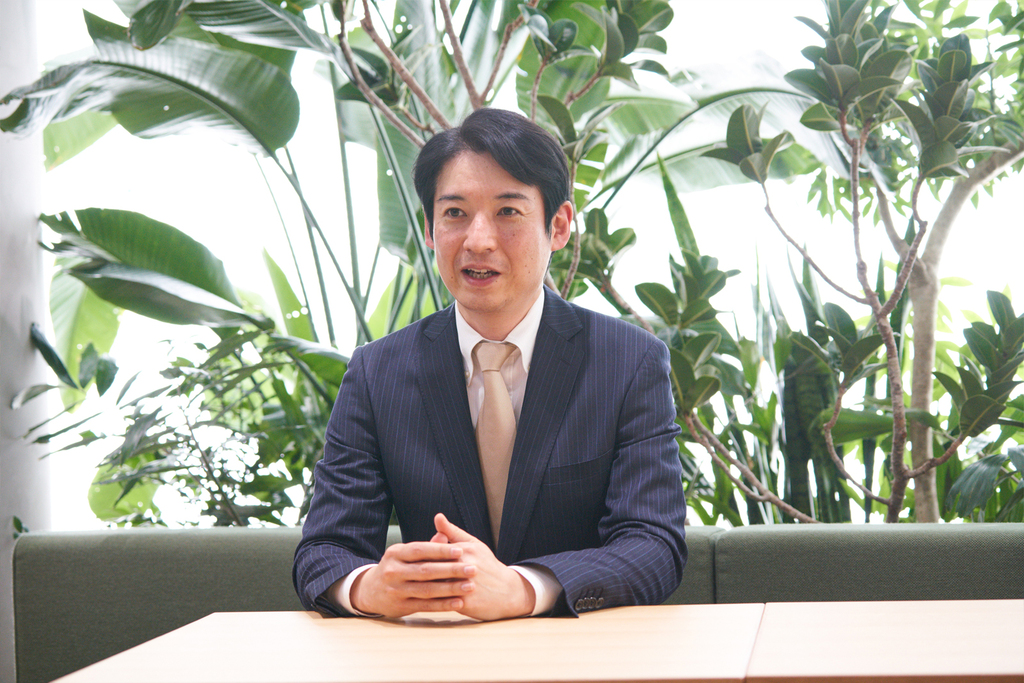
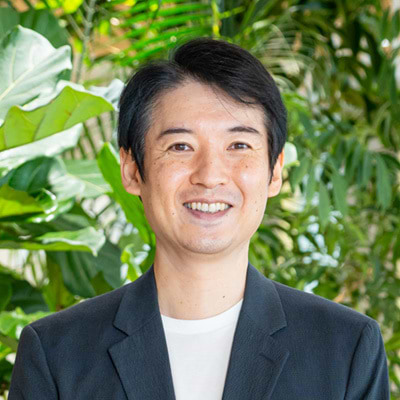
Mr. Atsushi Kanie, ITID Co., Ltd.

Sakai: There were already existing ESG research methodologies. For example, the "Yanagi Model" (developed by a visiting professor at Waseda University Graduate School, who previously served as CFO of a major pharmaceutical company, quantifying ESG value) is well-known as a methodology for linking ESG value to corporate value. Building on these existing analytical approaches, we considered whether we could develop something more universally applicable using our AI-powered data analysis.

The challenge of leveraging AI technology to decipher vast amounts of data and complex causal relationships related to ESG management

Q. Regarding the initiative to visualize the impact of ESG on corporate management, how was this specifically approached?
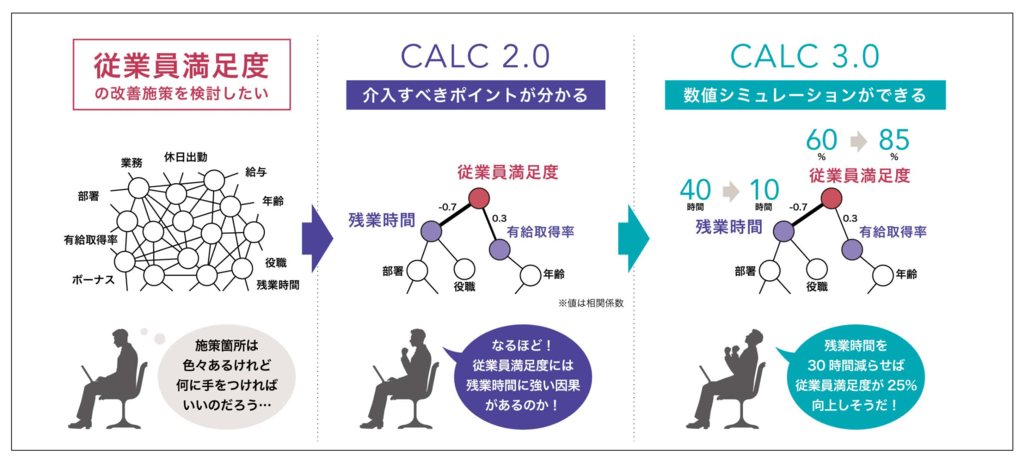
Matsuyama:We used a tool called CALC (※) for this initiative. CALC is an AI technology that employs unique theory, methodology, and algorithms to infer highly accurate causal models from large-scale, diverse data. Using CALC clarifies the correlations between various relational factors within the data that were difficult to estimate with conventional analytical methods.

Before starting this initiative, we had been utilizing CALC since 2018 to support business strategy development. For example, consider the challenge: "We want to explore measures to improve employee satisfaction." There are numerous potential factors to improve, such as "bonuses," "paid leave utilization rates," "job titles," "overtime hours," and "job responsibilities." As a manager, it's unclear where to begin.Using CALC, we first analyzed the factors most strongly correlated with "employee satisfaction." This revealed deep relationships with "overtime hours" and "paid leave utilization rate." Furthermore, numerical simulations with CALC allowed us to predict: "Reducing overtime by 30 hours could improve employee satisfaction by 25%." We decided to apply this CALC-based analytical approach to ESG as well.

Q. How did the joint research begin?

Kanie: While there's a growing demand to expand ESG initiatives among our client companies, various hurdles exist. Generally, many ESG efforts tend to negatively impact short-term financials, making them difficult for companies to undertake. We thought that if we could present ESG activity themes that also yield financial benefits, it might encourage our client companies to take action.While "introducing precedents from other companies" is one approach, its effectiveness isn't always high because each company's unique circumstances significantly impact outcomes.

Therefore, we embarked on the challenge of deriving universal solutions through data analysis. However, this requires analyzing extremely large volumes of data and complex causal relationships. I had known about ISID's CALC for some time, so we approached each other with the idea of collaborating, and that's how our joint research began.


In recent years, ESG has become a critical issue for many companies. Yet, it has been challenging to see how it contributes to performance or whether their own initiatives are truly yielding results—the causal relationships were often unclear. This new challenge of using AI to visualize such causal relationships could be the key to solving these traditional problems and further deepening companies' ESG efforts. In the second part, we will delve deeper into the results of this work.

*CALC is a registered trademark of Sony Group Corporation.
※CALC is a technology developed by Sony Computer Science Laboratories, Inc.

The information published at this time is as follows.

Was this article helpful?

Share this article

Author

Kuniharu Sakai

Kuniharu Sakai

Dentsu Inc. International Information Services Co., Ltd.

X Innovation Division

Head of Technology & Innovation Unit and Director of Open Innovation Lab

After serving as the planning manager for digital business initiatives supporting advanced technology development in the automotive industry, he assumed the role of Open Innovation Lab Director in 2022. Within the company-wide R&D department, he focuses on implementing cutting-edge technologies through real-world social verification, creating new value through cross-industry open innovation, and fostering new businesses rooted in solving societal challenges. He has held his current position since 2023.
Fumikazu Matsuyama

Fumikazu Matsuyama

Dentsu Inc. International Information Services, Inc. (ISID)

X Innovation Headquarters Technology & Innovation Unit Open Innovation Lab

Senior Consultant

I began my career as a researcher in economics and statistics at academic institutions both domestically and internationally, and have held my current position since 2018. I engage in research and development to solve societal challenges by applying my skills in economics and data analysis. In recent years, I have been interested in understanding the relationship between non-financial and financial data, as well as mathematical optimization using quantum computers. I spend my days immersed in a sea of data and code.
Jun Kanie

Jun Kanie

DENTSU SOKEN INC.

Consulting Division Future Business Development Unit

Unit Leader

With extensive experience in strategic planning and business transformation/BPR (Business Process Reengineering) across diverse industries including manufacturing, publishing, and restaurant chains, he also has broad involvement in solving people and organizational issues such as talent management and organizational revitalization. He transforms businesses by addressing both the value creation process and the human/organizational aspects, supporting clients in enhancing their value delivery capabilities. In recent years, he has intensified his focus on advancing sustainability management, economic security, and cybersecurity initiatives.
Also read

Visualizing the Effects of ESG Management: An Attempt to Unravel Complex Issues with AI (Part 1)