Note: This website was automatically translated, so some terms or nuances may not be completely accurate.
 Active Learning: How About This? Research Institute ~ 10th Anniversary Relay Column [1/1]
What's the Difference Between "Praise" and "Recognition"?
Combining education and creativity to make Japan's original education exciting.
The Active Learning "How About This?" Lab was established within Dentsu Inc. by a group of copywriters, art directors, creative directors, marketers, and others. To commemorate its 10th anniversary, we present a relay column series where each member shares discoveries and changes they've observed through their involvement in education.
<Table of Contents>
▼10 Years of "What About This?" in Creative × Education
▼Praising Based on Standards. Recognizing Each Child's Individuality
▼Supporting Children's Curiosity to Create Free Research Topics
▼An Elementary Student's Research: "A Tear-Inducing Strategy for Locating Nerves in the Body"
▼How About Creating "Freedom" Through "Constraint"?
10 Years of "What About This?" in Creative × Education
The impetus for establishing the institute came from a primary school teacher I worked with, who said: "I was searching for concrete methods for deep thinking and collaborative decision-making. I found them in the advertising industry."
To nurture the next generation equipped with the ability to think creatively, collaborate globally with diverse people, and forge their own futures in an era without clear-cut answers. We developed programs in creativity, ideation, design, presentation, and global education, conducting classes and workshops at over 100 elementary, middle, high schools, and universities nationwide. In recent years, we've also focused on developing education-related services and adult training programs for corporations and local governments.
Both children and adults value "not seeking one fixed correct answer" and "incorporating various people's opinions to create something new." While holding these values dear, each member has continued their own small educational approaches, asking "What about this?"
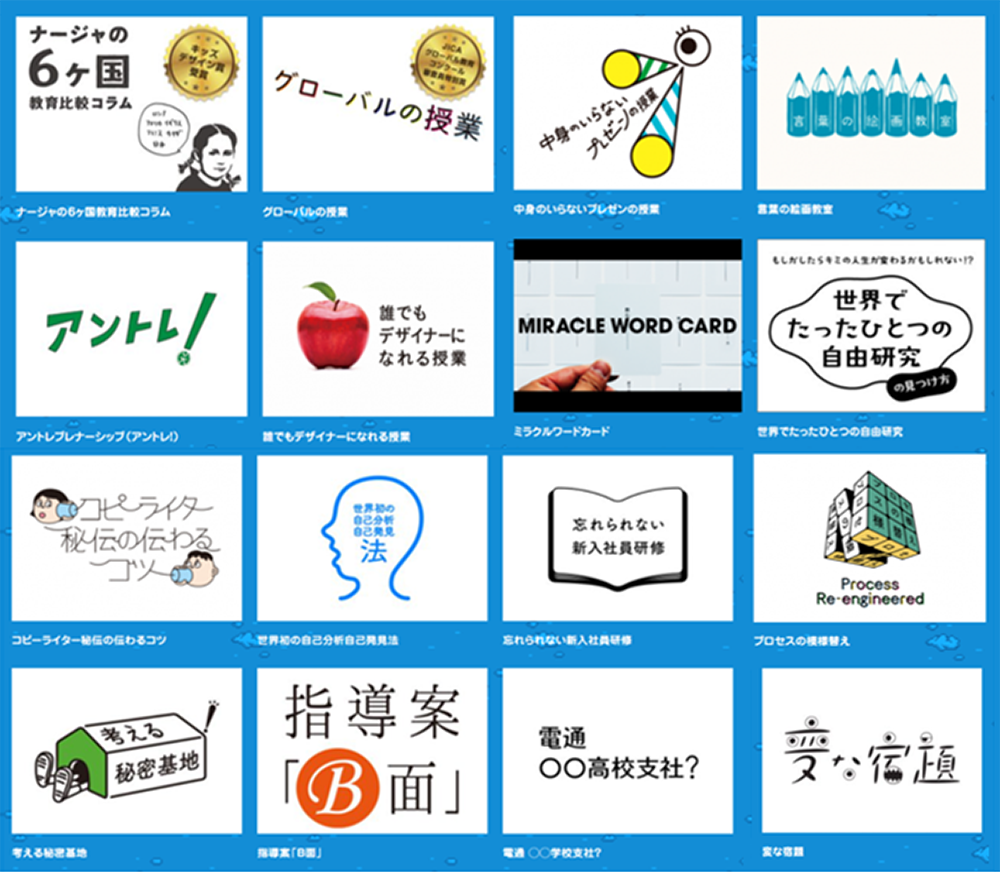
Our original educational programs, with quirky names like "Word Painting Class," "100-Point Idea Drill," "Anyone Can Be a Designer Class," "Miracle Word Cards," and "Presentations Without Content Class," have grown to dozens of varieties.
Praise based on standards. Recognize each child's uniqueness.
An advertising agency employee, an outsider to education, gets involved. When I started this institute, I made a personal commitment: to support bringing out each child's unique self.
The root of this idea stems from an experience when I was in junior high school. An art teacher saw something I made and praised me, saying, "This shows a side of you that hasn't come out before." I was truly happy. It's a phrase I still hold dear as an adult.
Why did it make me so happy?
Wondering about this, I shared the story with Professor Masashi Okuma (Superintendent of Education, Koganei City Board of Education, Tokyo), an education expert and my research partner at the institute. He explained, "That wasn't praise; it was recognition." So, how do "praise" and "recognition" differ?
According to Professor Okuma:
■ Praise = Evaluating someone based on a standard (measure) when they exceed it.
■ Recognition = Accepting someone's true self as it is. Acceptance of their existence.
Hearing this explanation made me realize something. As a middle schooler, what felt fresh and joyful wasn't receiving evaluations like "good" or "well done," but having my entire self—my uniqueness—acknowledged.
Every child has their own unique way of thinking.
When I engage in education from now on, I want to help draw out each child's original thoughts and expressions. I want them to discover their own uniqueness themselves. And I want to create a space where they can be accepted by those around them. That's what I thought.
Supporting children's curiosity to create their own free research topics
Did you do independent research projects as a child? Did you like them? I absolutely hated them. I'd grumble, "What's 'free' about this?" or "They're just dumping it on us," then half-heartedly put together a report on a topic I had zero interest in. It was a so-called "free" research project in name only.
And now, I regret it. I realize free research projects were a huge chance to broaden my own interests.
Looking at the free research materials lined up in bookstores, many just list (adult-created) themes. When I talked to school teachers, it seems quite a few kids just copy directly from these materials.
That's such a waste!
For kids who have interest and curiosity but struggle to freely generate ideas or express themselves right away. We want to support them in creating original, free themes starting from their own interests and questions. That's why we developed the "How to Create the One and Only Free Research Project in the World!" workbook.
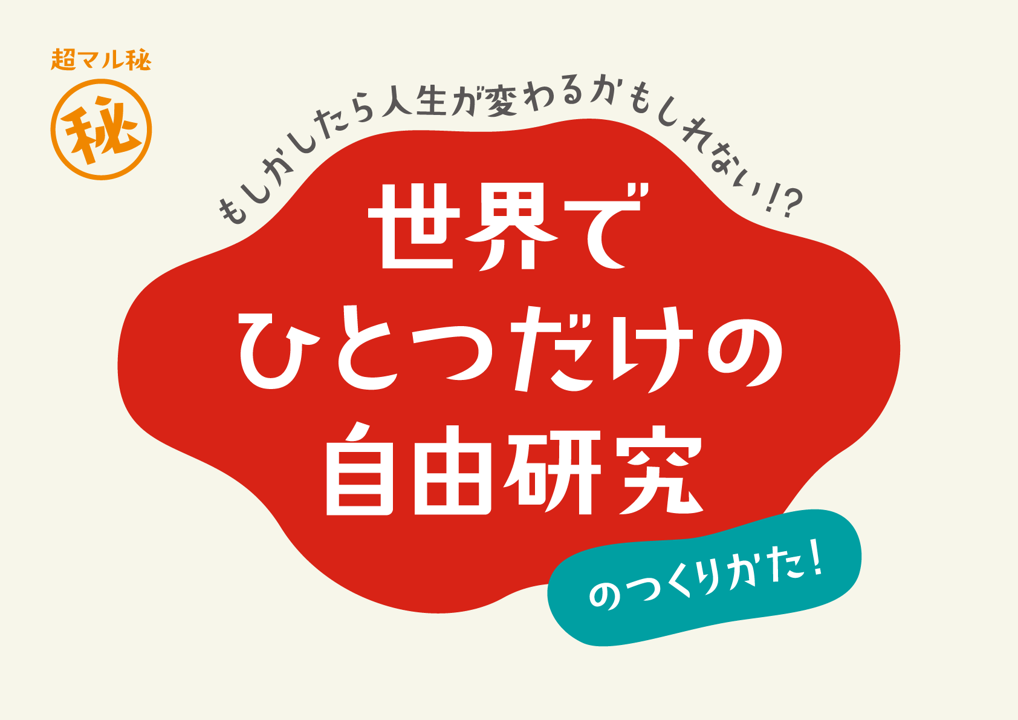
The theme creation process has three steps.
① Gather your "seeds of interest" by answering detailed questions.
② Combine those seeds of interest with "magic words" to create multiple themes.
③ Choose the theme that appeals to you the most.
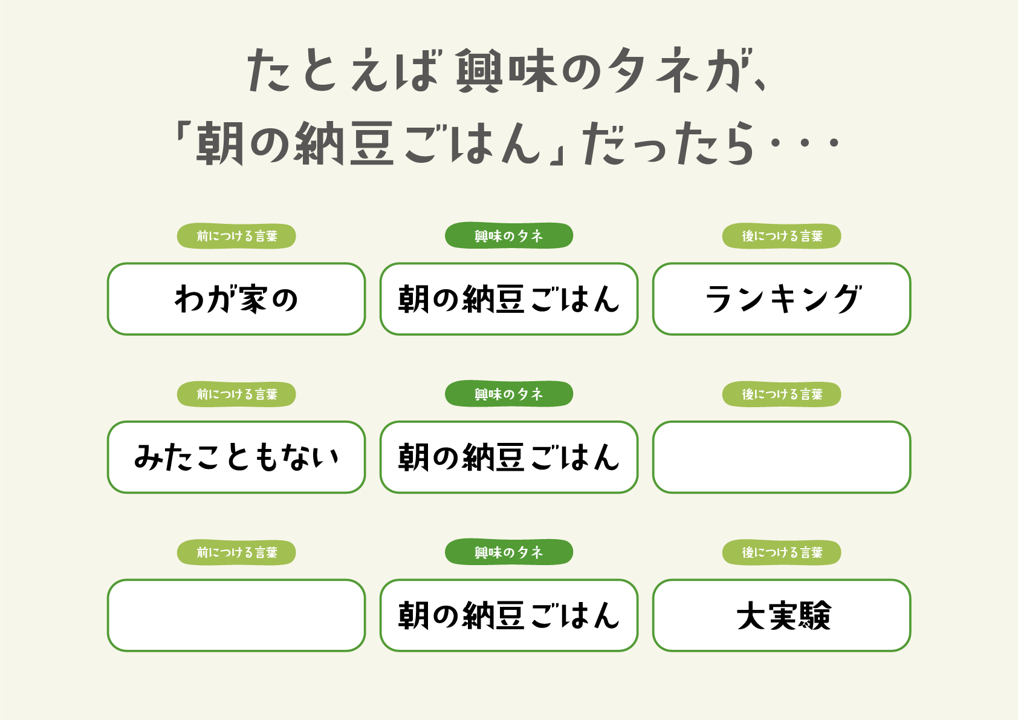
For example, if your seed of interest is "morning natto rice," combining it with dozens of "magic word" cards before and after it creates themes like "My Family's Morning Natto Rice Ranking."
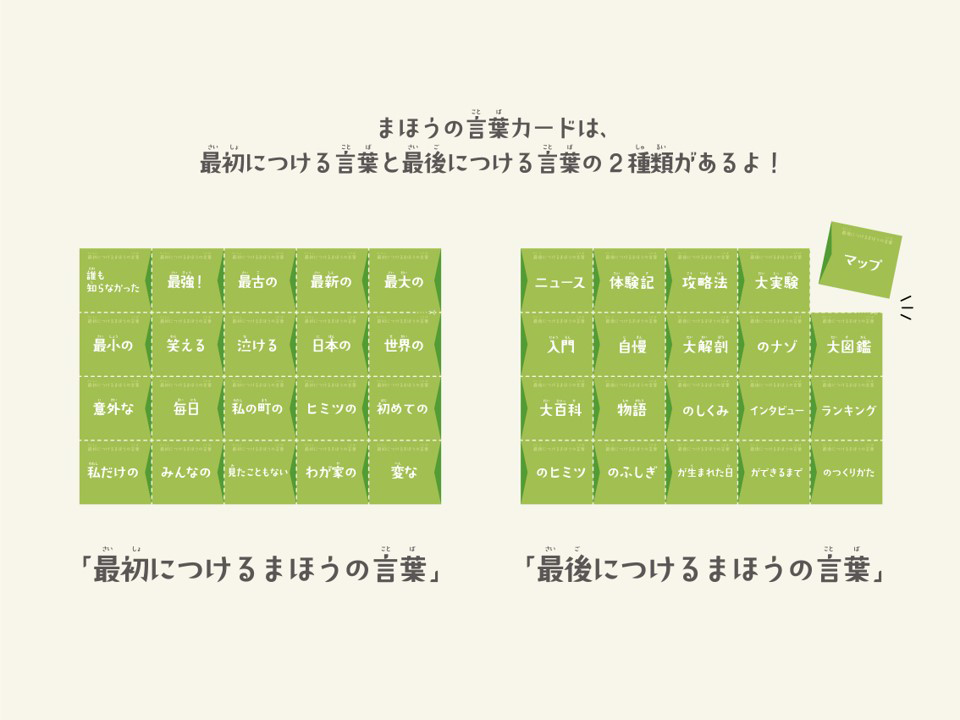
These "magic words" are key. By combining dozens of variations of prefixes like "The World's," "My Family's," or "Weird" with suffixes like "Secrets," "Great Encyclopedia," or "How It's Made," you can explore and pinpoint your direction of inquiry.
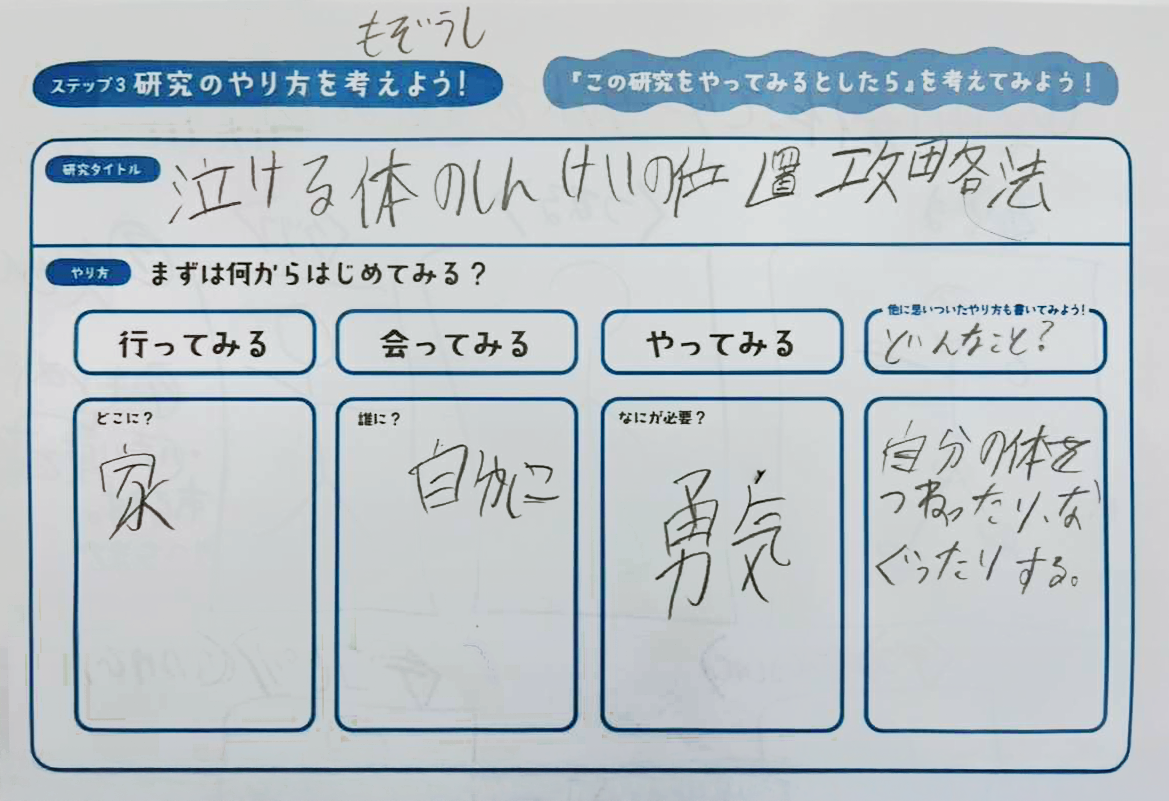
Elementary students' research: "A Guide to Locating the Nerves That Make You Cry"
Through workshops using this material at elementary schools and events for elementary students hosted by companies and local governments, unique themes have been continuously born.
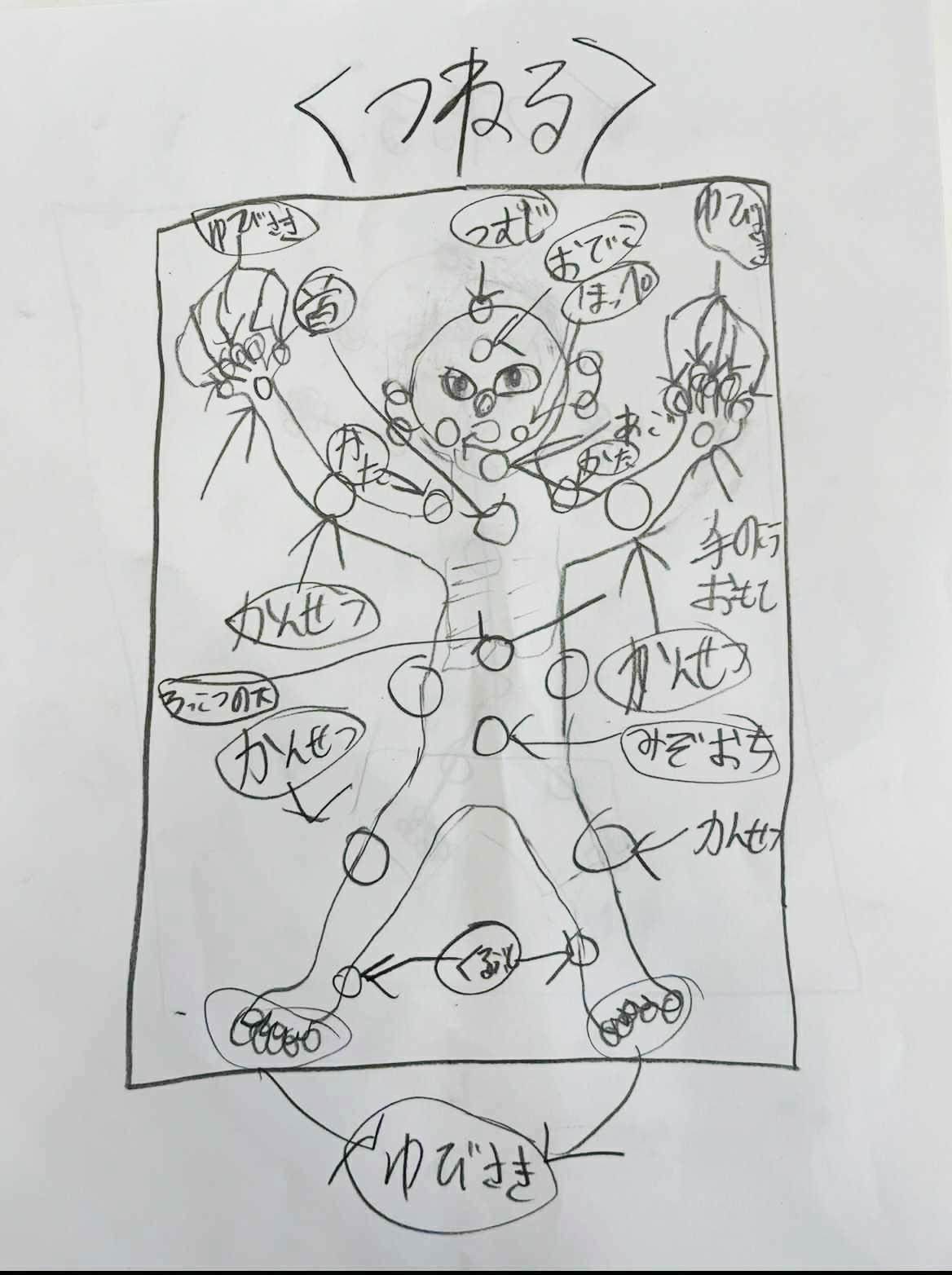
One elementary student created the theme "Strategy for Locating the Body's Crying Nerves." It involved pinching various parts of their own body and ranking the "pain level" with stars. Apparently, the only thing needed for this research was "courage" (laugh).
I'll never forget the boy's passion when he presented this theme, the roaring laughter it sparked, and his delighted face.
Many other highly original themes have emerged: "The Mysteries of the Heart Sutra Nobody Knew," "Strategies for Waking Up Early Every Day," "The Mystery of Patterns Seen When Closing Your Eyes," "Japan's Pitch-Black Tales," and more.
Hundreds of children have created themes so far, and not a single one has been the same. Each one truly reflects the child's personality and is genuinely fascinating.
How about creating "freedom" from "constraint"?
I remember struggling with this myself. I hear many children freeze up when told to "think freely." Over the past decade, I've received increasing inquiries from school teachers about "Comprehensive Learning (Exploration) Time"—questions like "How can we help children formulate their own unique questions?" and "How should they approach problems with no single right answer?"
It's difficult for children to suddenly come up with ideas that are truly their own based solely on vague prompts like "Think freely" or "Think carefully."
In such cases, how about creating "freedom" through "constraint"?
Not the kind of constraints that suppress or rob a child of their individuality. Rather, deliberately creating helpful constraints (guidelines) to sharpen their focus on questions like: "Where are the veins of my curiosity? How can I expand them?"
Our "How to Create the World's Only Free Research Project!" resource includes detailed questions to uncover interests: "What was fun?" "What surprised you?" "What do you actually dislike?" "What do you want to do once in your life?" Furthermore, to define the direction of inquiry through small steps, we introduced constraints like using dozens of "magic words." This "positive constraint" encourages unique, free thinking.
For both children and adults. To lower the barriers to generating ideas and expressing one's true self. To make questions without clear answers a little more enjoyable. We will continue to explore various auxiliary lines for ideas and propose new forms of education that ask, "How about this?"
※ "How to Create the World's Only Unique Free Research Project!" also offers an adult version for business professionals to generate new business ideas. Interested parties may contact us via the institute's inquiry form.
Active Learning "How About This?" Research Institute Website
https://www.konnano-dodaro.jp/
Related Series:Active Learning " How About This?" Reports
Was this article helpful?
Share this article


Newsletter registration is here
We select and publish important news every day
For inquiries about this article
Author
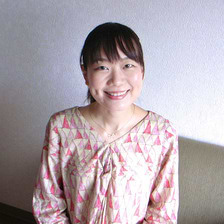
Megumi Tatebayashi
Dentsu Inc.
第2クリエイティブプランニング局
Copywriter
Born in Okinawa Prefecture. Director of the Active Learning "What About This?" Research Institute. Participated in planning and production of "Pythagora Switch" during university. While working as a copywriter in advertising, develops and implements classes on ideation at the institute. Responsible for developing materials for Dentsu Inc.'s social contribution activity "Advertising Elementary School."