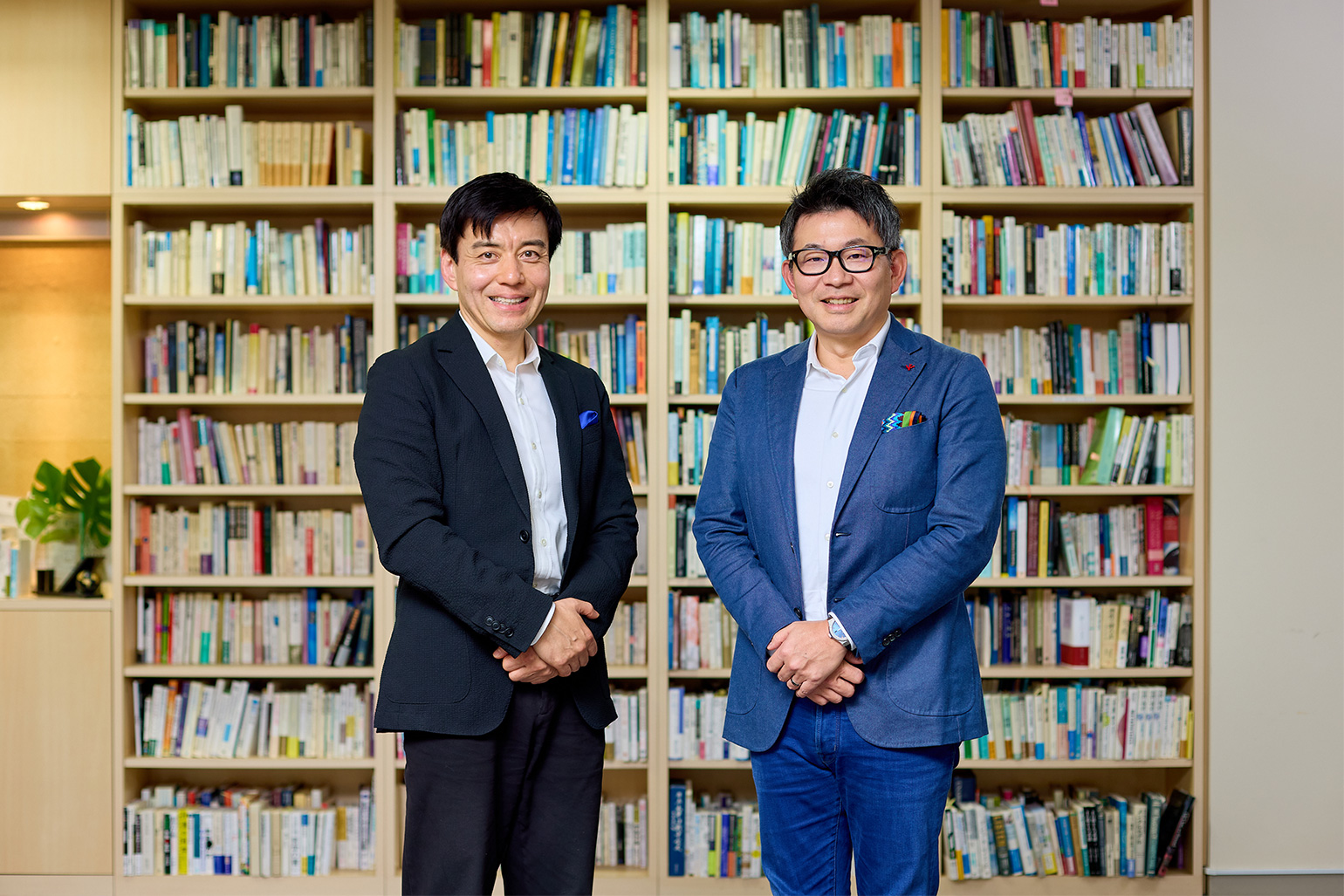
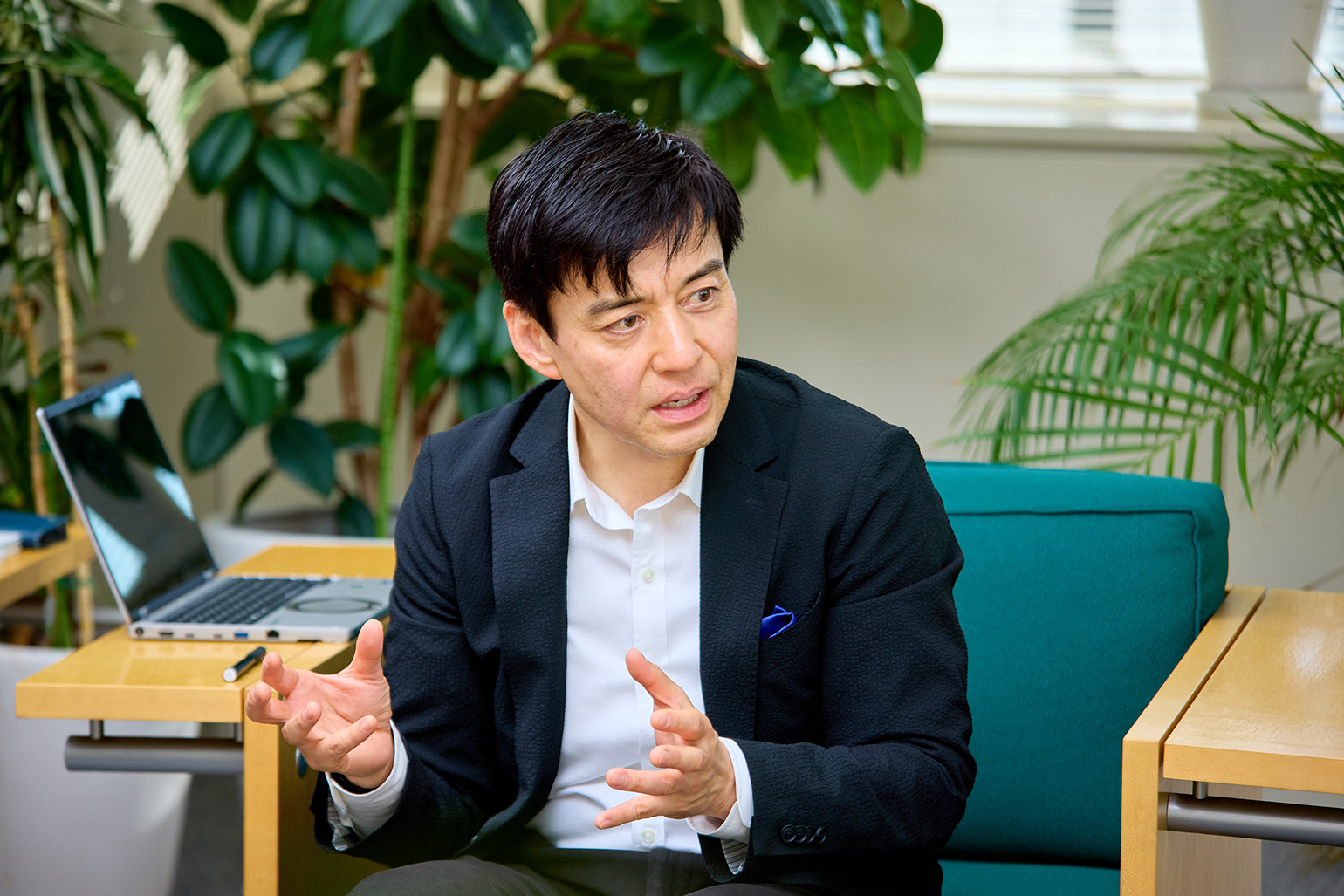
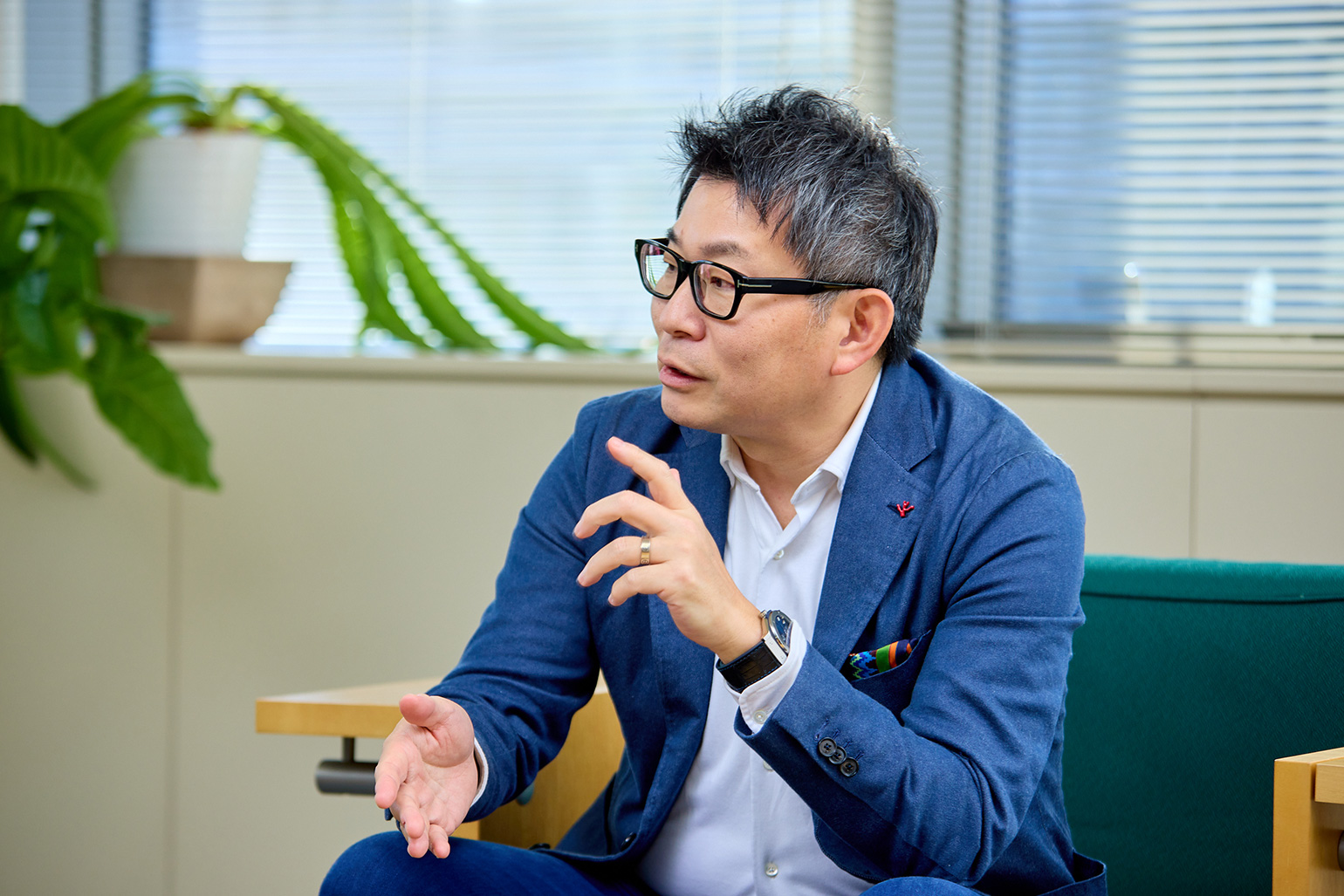
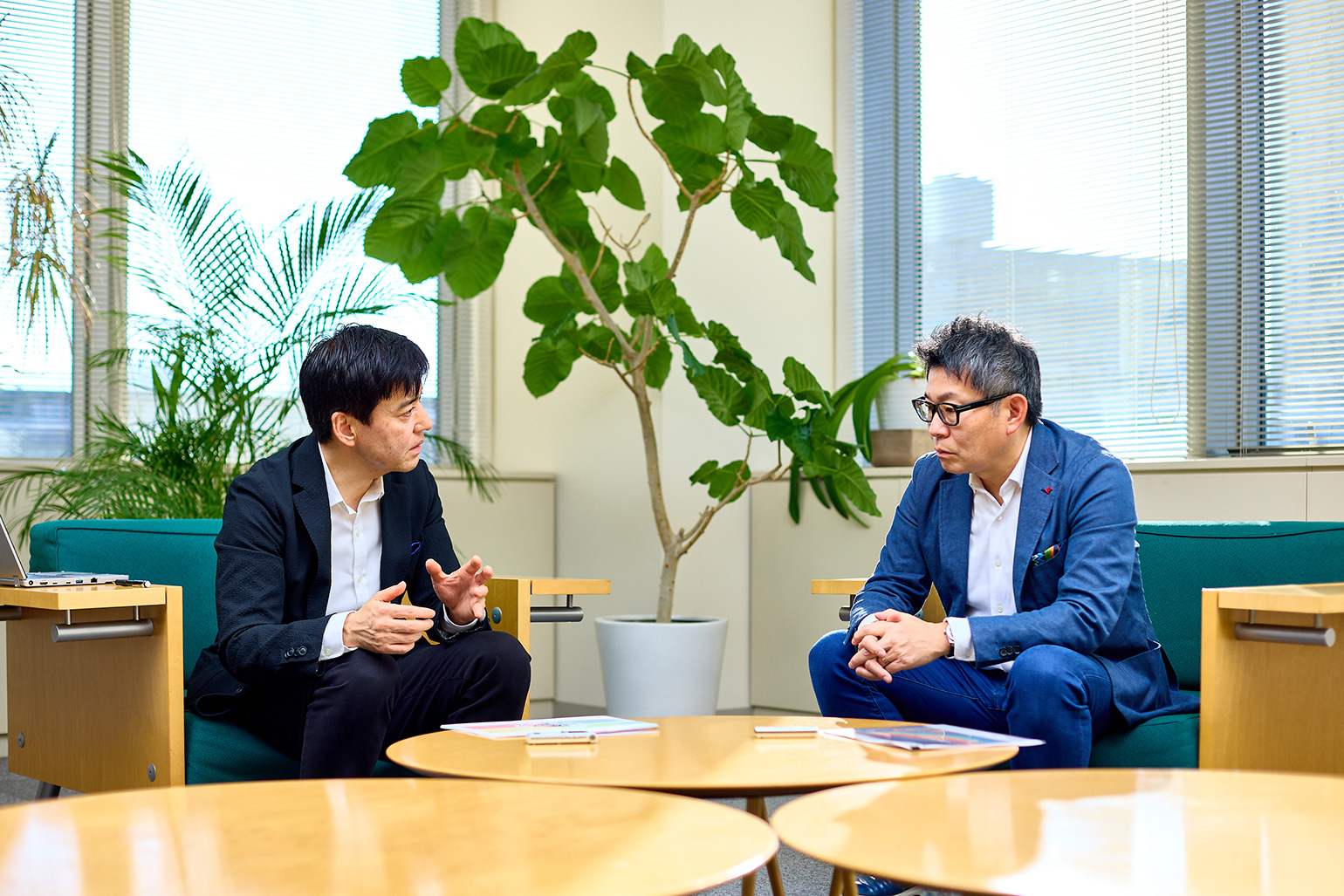
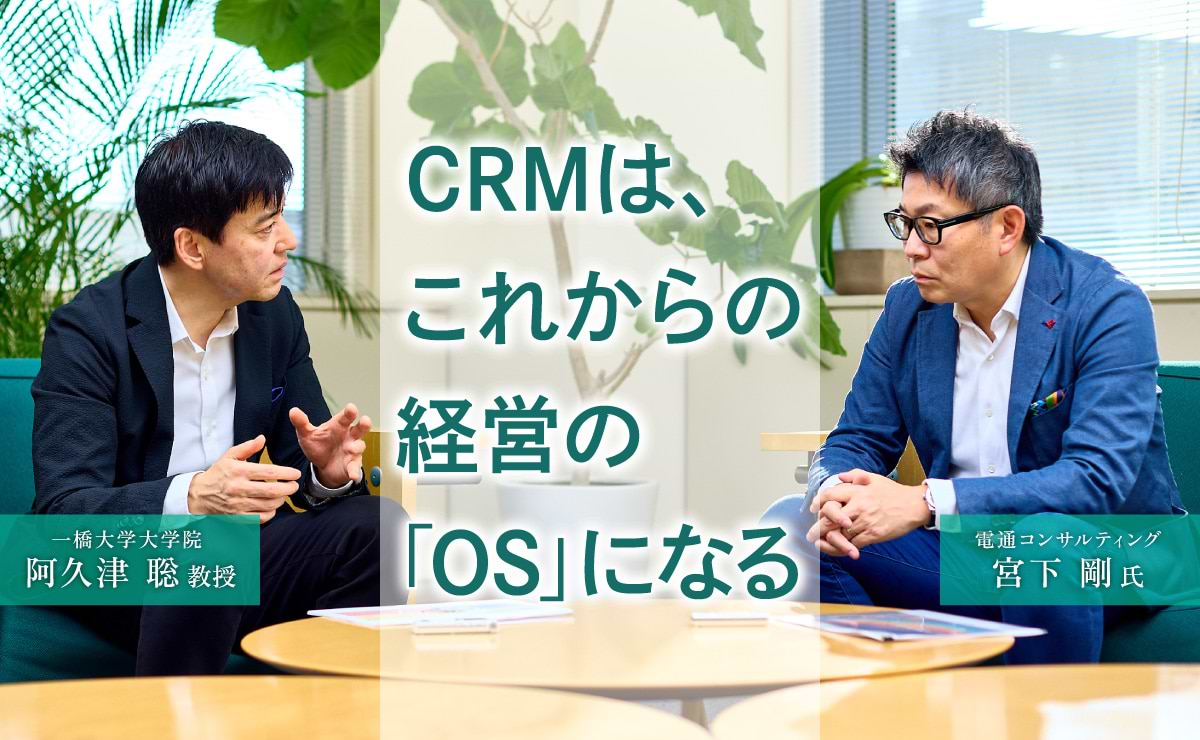
(From left) Professor Satoshi Akutsu, Hitotsubashi University Graduate School; Tsuyoshi Miyashita, Dentsu Consulting Inc.
The advancing digitalization is rapidly changing the environment surrounding business. Among these changes, the penetration of AI is arguably the most significant factor, drastically transforming every business scenario from marketing to sales.
However, the reality is that many companies have yet to find answers from a management perspective, such as "How should we leverage AI to redesign the entire customer experience?"
In June 2025, four companies—Dentsu Inc., Dentsu Digital Inc., Dentsu Consulting Inc., and DENTSU SOKEN INC.—launched " Biz CRM For Growth." This initiative, starting with CRM (Customer Relationship Management), supports not only customer experience but also business and organizational transformation.
In this article, Professor Satoshi Akutsu of Hitotsubashi University Graduate School, who researches marketing as a management scholar, and Tsuyoshi Miyashita, Senior Partner at Dentsu Consulting Inc., engage in a multifaceted discussion on the essence of marketing, branding, and CRM in the AI era.
They delve into how AI can be leveraged to create competitive advantage for companies and why "Biz CRM for Growth" is indispensable for management.
What Does Marketing Research in the AI Era Entail?
Miyashita: Today, I'd like to discuss marketing in general, but the biggest topic is undoubtedly AI. Society is undergoing a major transformation due to AI's rapid evolution and widespread adoption. The relationship between companies and customers is also changing. Professor Akutsu, who researches marketing and corporate branding, how do you perceive the changes brought about by AI's emergence?
Akutsu: AI is impacting every facet of society. However, its evolution is incredibly rapid. There's a challenge: if we try to apply it simplistically to a specific field like marketing, we quickly face the issue of the technology becoming obsolete. Among us researchers, there's a relatively strong sentiment that rather than rushing to discuss AI, we should continue our research and observe the situation calmly.
This aligns with your earlier point, Mr. Miyashita. Precisely because of this, we believe it's essential to return to more fundamental questions rather than focusing solely on individual tools or case studies. One such question is: "How does AI influence human psychology and decision-making?" Consequently, many recent studies are adopting a psychological approach.
Miyashita: Tools for CRM used by companies are also starting to incorporate AI agents. Does this research connect to the use of interactive AI agents between companies and consumers?
Akutsu: Yes. For instance, scenarios where AI assists sales representatives or customer support. As foundational research relevant to this, there's the theme of "What psychological reactions do people exhibit when communicating with AI?"
In fact, overseas cases have been reported where children developed serious issues after repeated conversations with AI, leading parents to sue the AI companies. Such cases raise questions about how victims' emotions differ depending on whether the perpetrator is AI or human. Another question is how people perceive it when AI-equipped robots, so-called physical AI, face social sanctions.
In Japan, the android Kannon statue "Minder," unveiled at Kodaiji Temple in Kyoto, became a topic of discussion. Psychological research also examines how people's trust and sense of belonging change when religious or moral entities are AI.
All these questions converge on a common theme: "To what extent do humans treat AI as a social agent?" Fundamental research into human psychology regarding AI aims to systematically understand these core cognitive and emotional frameworks. Whether or not this understanding exists significantly alters the design philosophy companies adopt when integrating AI into customer touchpoints.
The examples cited here are not presented to argue specific pros and cons, but rather as thought experiments to consider how AI might influence human judgment and emotions.
Miyashita: In business settings, the focus often shifts to "catching the latest technology trends and how to apply them timely to marketing operations." By researching the fundamentals of the relationship between AI and humans and adopting a bird's-eye view, I felt it allows us to grasp the essence, including challenges we will likely face in the future.
Akutsu: Generally, research follows cutting-edge practice. While the reverse isn't impossible, we researchers often start by giving meaning to various new initiatives in the field and verifying their effects. We're frequently inspired by practitioners' cases, but I hope we can continue to apply these insights for future use by layering different perspectives.
Miyashita: While that perspective exists, you yourself also engage with generative AI in your daily work, right?
Akutsu: Yes. However, I feel there are still significant difficulties and challenges in utilizing AI for research. A typical example is hallucination (where AI generates information not based on facts). It often seems to anticipate what we want to know and produces non-existent results or information.
Miyashita: In practical applications too, accuracy is a critical consideration when using generative AI. At this stage, it's essential to assess risks appropriately based on the specific purpose.
Akutsu: I think this is a crucial point to watch. Trade-offs and prioritization—sacrificing one function to enhance another—definitely exist in AI development.A well-known example is the trade-off between G (Generation) and R (Retrieval). G, meaning naturalness and flexibility in dialogue generation, has been a highly valued feature in recent generative AI overall. On the other hand, R, meaning the improvement of information retrieval and search functions that ensure the freshness and accuracy of information, seems to have been sacrificed. In research, of course, and also in marketing practice, R is fundamentally the more important function.
That said, the conflict between G and R is reportedly being mitigated by search-augmented generation technologies like RAG (Retrieval-Augmented Generation), which are increasingly used in combination. With time, it is possible to elevate both capabilities simultaneously.
Taking marketing as an example: as improvements in G make AI chat interactions more natural and drive adoption, companies will inevitably need to invest next in advancing R to accurately respond to customer needs. In other words, the very choice of AI technology itself becomes a business decision that influences customer experience and investment allocation.
Developing in-house AI tailored to customer needs
Miyashita: That's fascinating. What I'd like to ask Professor Akutsu today is about the theme of "how companies should utilize AI." When I ask CxOs about their management challenges, they almost always mention AI adoption. While they can implement localized uses like "using AI for this task to improve efficiency," many companies still seem to be experimenting when it comes to the broader perspective of "how the entire company should engage with AI."
Akutsu: You're absolutely right. AI can take on surprisingly different personalities depending on the developer's philosophy, design principles, and how it's fine-tuned. That's precisely why companies need to go beyond just "implementing" it; they must engage with AI while anticipating how it will evolve in the future.
Above all, the most crucial perspective is for each company to "cultivate its own AI." Here, "cultivating" doesn't just mean training it on proprietary data. It means continuously designing, at the management level, what experiential value you want to provide to your customers, which decisions to entrust to AI, and where humans should take the lead.
Take the earlier example of AI chatbots in customer service: customer satisfaction is heavily influenced by the appropriateness of the AI's dialogue and the quality of its problem-solving. Furthermore, if the input gained from customers during this process can be integrated and leveraged alongside other behavioral and purchase data, it can lead to proposals for new products and services that customers truly value.The character of your company's AI will change significantly depending on how you design it—which customer experiences you prioritize and what learning you enable the AI to perform. In other words, it's also about management choosing "what kind of company we are in terms of which customer relationships we grow."
Miyashita: Indeed, simply implementing AI in the same way as every other company makes differentiation difficult. What sets your AI apart from others will likely be your company's unique know-how, tacit knowledge, results from past initiatives, and the reasons behind those outcomes.
By designing "how to utilize AI in the first place" and then training the AI with proprietary data, customer understanding deepens. Furthermore, analyzing larger volumes of data with higher precision improves the quality of customer interactions, leading to differentiation from competitors and ultimately significantly transforming the company's core value.
Akutsu: That's right. Companies should partner with AI firms to build "the AI they need" according to their own objectives. Especially in B2B2C businesses, it's crucial to design AI based on understanding what the end-users beyond the client company actually want.
Furthermore, I believe that being able to clearly and persuasively explain to client companies and partners, "This is how we are developing our AI, and these are its characteristics," builds trust.
Miyashita: Furthermore, I was reminded that engaging with AI requires not only the on-the-ground perspective of keeping up with constantly evolving technology but also an essential bird's-eye view to grasp the big picture.If cultivating a company's unique AI is the source of differentiation, the points to consider are multifaceted. Understanding the AI's characteristics, training it with proprietary data, enhancing user proficiency, and avoiding risks like hallucinations. It seems necessary to approach AI customization with these multiple perspectives.
Akutsu: I agree. It's precisely this kind of sustained accumulation that leads to differentiation from competitors.
In the AI era, is having a CEO enough for companies?
Miyashita: AI is impacting various areas of corporate activity. Focusing specifically on marketing, what changes do you think the proliferation of AI is bringing about?
Akutsu: Rather than AI creating something entirely new and unimaginable in the marketing world, I think the current situation is more about enabling things we envisioned but couldn't achieve before.
For example, one-to-one marketing—marketing optimized for each individual customer—was possible without AI, albeit limited, if you invested significant money and effort. The major change brought by digitalization and AI at this point is "the ability to do this at low cost, high speed, and on a large scale."However, the impact of this "low-cost" and "high-speed" capability is extraordinarily large. Depending on how we perceive this, I feel there is ample potential for something entirely new to emerge in the future.
Miyashita: Sales representatives used to spend all their time visiting client companies. But with the automation of decisions like "this is the right person to sell to right now," it seems we'll need to rethink how we allocate time and costs across the entire customer communication process.
Akutsu: However, the trust built through actually visiting clients, meeting face-to-face, and sharing meals remains a human task that AI cannot easily replace. The feeling of "I want to work with these people" stems from human relationships.
At least for the foreseeable future, while entrusting practical marketing and sales tasks to AI, it's crucial for human managers to thoroughly understand the nature of those tasks and grasp what's happening. Building relationships with clients alongside AI should be the next important step.
Miyashita: I felt the need to redefine how we engage with customers. Next, regarding corporate branding, what changes are occurring?
Akutsu: Fundamentally, a brand is a vessel for achievements and a source of trust. Everyone has experienced buying something because "it's this brand." Over time, word-of-mouth became the primary source of trust. The mindset shifted to "I've never heard of this brand, but if someone I trust recommends it, it must be trustworthy." Recently, AI has entered this equation. People are starting to buy because "AI says so," with AI becoming a guarantor of trustworthiness.
Miyashita: So how should companies respond? In the era when brands themselves were trusted, companies focused on enhancing the quality of their own communications to build brand value. Then we moved into an era where improving customer experience satisfaction generated word-of-mouth. But now that AI is becoming a judgment criterion, I feel a new challenge arises: how should companies acquire, maintain, and enhance credibility?
Akutsu: That's a very interesting theme. If "trustworthiness," considered the most influential factor in purchasing decisions, becomes supplemented by word-of-mouth and AI, the nature of brands will likely change. The key will be how to gain trust through these customer touchpoints: word-of-mouth and AI.
Miyashita: We need to consider the customer experience more than ever before. We must view the customer experience not as fragments but as a single continuous line, ensuring trust by enhancing satisfaction. I believe we are entering an era of "customer experience perfection." To achieve this, I feel it's essential for departments to align their perspectives at the management level, rather than operating in isolation.
Akutsu: Previously, a Northwestern University researcher studying AI's impact on marketing stated, "CMOs and below will eventually be replaced by AI."While extreme, the point here isn't that humans will become unnecessary. Rather, it's that the roles humans should shoulder will become more clearly defined. Such discussions aren't meant to diminish or eliminate human roles, but to clarify the value creation domains humans should occupy in the AI era.
AI only functions when given a purpose. In that sense, creative domains like decision-making, goal-setting by CEOs, and launching new ventures will likely remain human roles.
Humans should concentrate their resources precisely on the areas where AI struggles: "What do we want to achieve?" and "Why are we doing this?" I believe this is what will lead to competitive advantage for companies in the AI era.
What does it mean to "make CRM a management agenda"?
Miyashita: Based on what we've discussed so far, it seems that what's being asked in the AI era isn't a technical question of how to use AI, but rather a management question of how to redesign customer relationships.
To restate today's discussion from a business perspective: Entering the AI era, the very nature of customer engagement—from marketing and sales to corporate branding and even customer service centers—will transform. That's precisely why companies must redesign the process of building customer relationships.
This is where CRM becomes crucial for us. We believe CRM should evolve beyond a mere sales tool into a new operating system for business management.
Historically, CRM has often been siloed within individual departments, or even when started with a holistic vision, it tended to fragment into isolated initiatives over time. However, as mentioned earlier, the perspective of viewing customer experience as a continuous journey rather than isolated points will become increasingly crucial. A siloed, department-specific CRM approach will no longer suffice.
Dentsu Group's "Biz CRM For Growth" program was designed based on the concept that CRM should be viewed as a management agenda, not just a field initiative. Professor Akutsu, what are your thoughts on this idea of "making CRM a management agenda"?
Akutsu: I find it an interesting perspective. However, the stakeholders involved in CRM, the touchpoints, and the data exchanged vary significantly between companies. That's precisely why I believe it's crucial to first properly map out "your own company's customer journey" and then clearly define the KPIs.
Taking universities as an example, the primary customer journey begins with prospective students considering applications, progresses through exam preparation, taking the entrance exams, admission and enrollment, then continues with classes, seminars, on-campus extracurricular activities, internships, and job hunting. Furthermore, even after graduation, the relationship with the university continues through homecomings, alumni gatherings, donations, and more. Visualizing this entire flow makes it clear what the university should manage through CRM and which relationships it should strengthen.
Miyashita: As a company, what do we want customers to do? What kind of relationship do we want to build with them? Clarifying these objectives and positioning them within the CRM is becoming increasingly important. I feel it's necessary to continuously enhance CRM by comprehensively and multifacetedly grasping the entire customer experience.
Akutsu: In the past, the only KPI directly impacting a company's top line was "getting customers to purchase products." Recently, however, more companies are incorporating actions like "getting positive word-of-mouth" or "getting customers to refer others" into their KPIs. This means the customer data we need to analyze can no longer rely solely on information from the point of purchase. We must holistically capture interactions across all customer touchpoints.
For example, one car dealership reportedly sets different KPIs for each phase of the customer journey: not just "getting them to buy a car," but also "getting them to test drive," "getting them to entrust us with post-purchase maintenance," and "getting them to refer other customers." On top of that, they integrate and analyze everything—from customer support data to sales representatives' call logs with customers. This would be a daunting task for humans, but leveraging AI makes it achievable efficiently.These examples represent true business transformation starting from CRM, right?
Miyashita: Exactly. As the term "Revenue Operations" (*) also highlights, the need to holistically manage KPIs across all customer touchpoints is growing. We've discussed AI adoption from a "company-wide perspective," and achieving these goals is what we mean by CRM that provides a bird's-eye view of management.
Revenue Operations: A concept focused on strengthening collaboration and management among profit-generating departments to achieve corporate revenue growth.
Hitotsubashi University Graduate School of Management (ICS)
Professor
Graduated from Hitotsubashi University Faculty of Commerce; completed Master's program at Hitotsubashi University Graduate School of Commerce. Earned MS (Master of Science in Management Science) and Ph.D. (Doctor of Philosophy in Business Administration) from UC Berkeley Haas School of Business. Served as a researcher at Haas and as a full-time lecturer at Hitotsubashi University Faculty of Commerce before assuming current position.Specializes in marketing, knowledge management theory, experimental economics, and cultural psychology. Major publications include: "Social Economy" (co-authored, Shoeisha, 2012), "Brand Theory" (translated work, Diamond Inc., 2014), "Quick Guide to Business Literacy: Marketing" (supervised, Shinsei Publishing, 2023), and "Brand Strategy Scenarios" (co-authored, Diamond Inc., 2002).
Tsuyoshi Miyashita
Dentsu Consulting Inc.
Senior Partner, Chief BX Collaboration Officer
アクセンチュア、IBM、デロイト トーマツ コンサルティングを経て現職。30年以上のコンサルティング経験を有する。前職ではCRM組織を立ち上げ、執行役員/組織責任者として10年連続成長をけん引。その後、Deloitte Digital Japan Lead、CMO、スポーツビジネスグループリード、デロイト トーマツ デザイン メタ・マニエラ代表執行役等を担当。専門のCRM領域は、業界横断的に戦略立案、業務設計、システム導入まで幅広く従事。また、CRM、デジタルの知見を生かした社会課題解決、地方創生、エンターテインメント、スポーツビジネスなど新たな価値創造も推進。

 Thinking with the Right Brain and Left Brain: The Future of Advertising Agencies and Consulting Firms [12/12]