Note: This website was automatically translated, so some terms or nuances may not be completely accurate.
 A resident of the marketing world peeked into the world of art. [14/14]
【Awareness】
Tanabe-san from Borujuku. "I want to eradicate the phrase 'someone like me.' I wish all women in the world could respond with 'Well, yeah' when praised." She tweeted this once. I happened to learn about it last year. "Well, yeah." That seemingly boastful gag was, on the other hand, a sincere expression of her will. How brilliant.I'm a man, so I'm probably outside Tanabe-san's original target audience, but it felt like unexpectedly receiving a wonderful gift, and I found myself feeling happy about it.
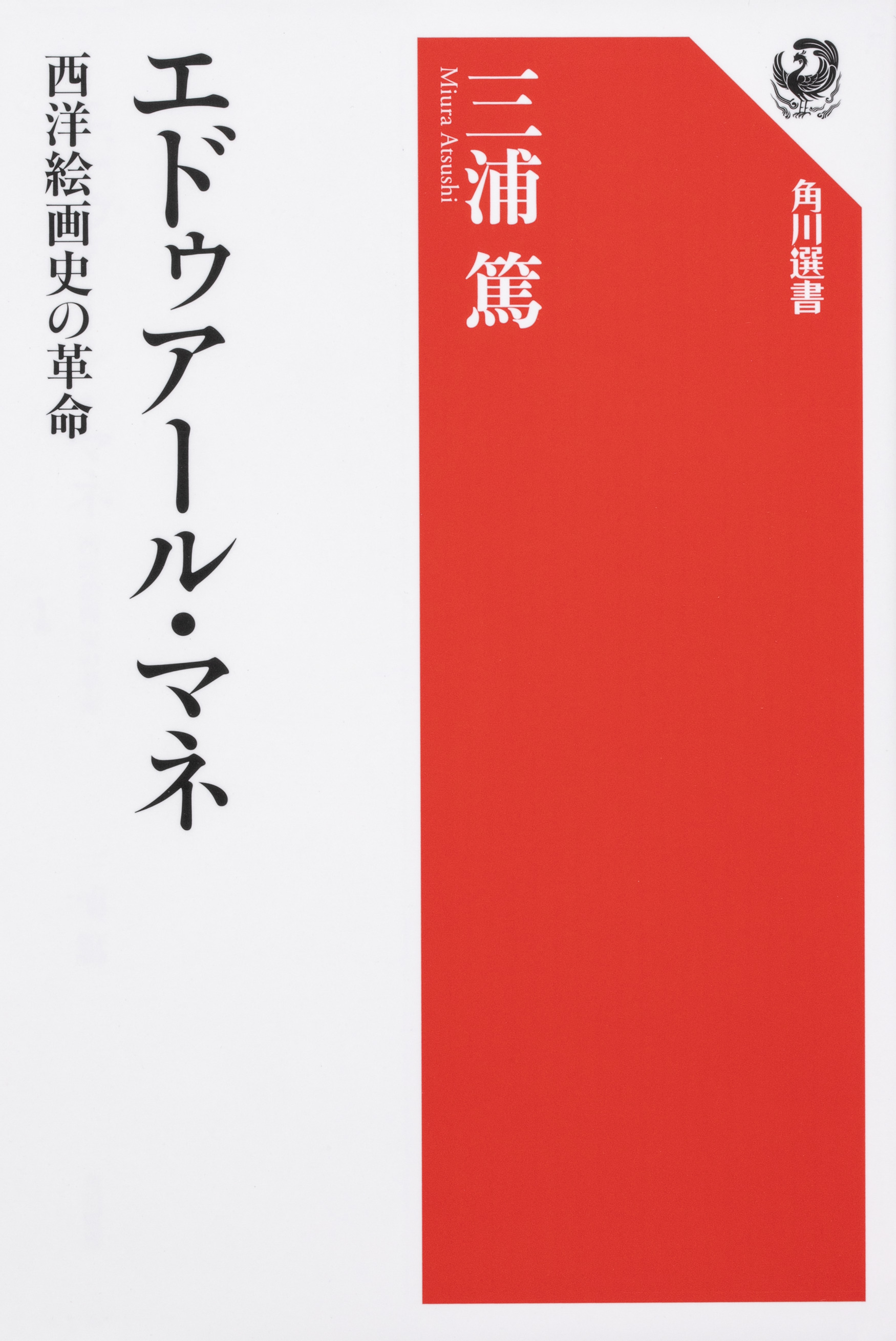
During the leisurely New Year's break, I'd decided to read Atsushi Miura's book, Édouard Manet: A Revolution in Western Painting History. When I picked up this book at the bookstore, the phrase "Well, you know..." slipped out of my mouth without thinking.
I know next to nothing about the painter Manet. Back in high school, I vaguely memorized Manet, Monet, and Renoir just by the sound of their names, in the same way I learned Rousseau and Montesquieu. And I bought a small case decorated with the silhouette from 'The Fifer' over ten years ago, which I still use today. That's about it.I bought that box because I liked Itoya's original brand 'COLOR CHART' back then, and thought the museum collaboration version was cool. But I'm not even sure I recognized the boy playing the flute as Manet's work. In that empty state, hearing "Manet" just made me think, "Imitation?" Now, it's "Well, yeah." Maybe I've made a little progress. Or maybe not.
◆
KADOKAWA / Kadokawa Sensho
The book opens with this line: "While the classical Western painting tradition converges within Manet, modern and contemporary painting—which began with Manet—still meanders within the territory he pioneered." What a romantic expression. Yet, after finishing its roughly 300 pages, I realized this passage isn't poetic at all—it's just rock-solid, unavoidably precise.
Manet is like an iPhone, I thought. Maybe because I'd just seen on TV: "19 years ago today, on January 9, 2007, the first iPhone was announced in the US." The impact when the iPhone hit the world, and modern people still under its influence. That structure. Then, during New Year's, I watched the theatrical anime version of 'AKIRA' on E-TV.Right after that, they reran "Urasawa Naoki's Manga-ben Neo: (20) Katsuhiro Otomo" – what a clever lineup. The phrase "before Otomo, after Otomo" exists because Katsuhiro Otomo's arrival apparently had such a huge impact on the Japanese manga world. If I were to relate it to myself, who knows nothing about Mannequin, it'd be like the iPhone or AKIRA. Comparing one great achievement to another is nonsense. But Mannequin is gradually drawing closer. I'm starting to feel a bit excited.
◆
Manet seems to have been revolutionary in both "what he painted (subject matter)" and "how he painted it (form and expression)". The former is detailed in books like 'Édouard Manet: Revolution in Western Painting History', but when describing Manet himself, "the painter who caused repeated scandals" seems to be a standard trope. Scandals. Hmm, that doesn't really click for me.Works like *Luncheon on the Grass (The Bathers)* and *Olympia* are often cited as prime examples, but what about Venus? Even in traditional Western art, female nudes appear all the time, right?The word "scandal" reminded me of contemporary artist Makoto Aida's book Sex and Art, so I decided to reread it after a long time. I didn't follow the events at the Mori Art Museum back then, so I don't know the exact details, but I wonder if the backlash against Manet was like this. The winds of opinion change so often; it's really hard to understand them properly.
How he painted it—that's what really piques my curiosity. As if this reaction were engineered, the National Museum of Western Art in Ueno was hosting the exhibition "Impressionism: Stories Around the Room" featuring works from the Musée d'Orsay.Works like Manet's "Émile Zola" and Edgar Degas's "Portrait of Manet and Madame Manet," both featured in "Édouard Manet: Revolution in Western Painting," were on display! Pieces usually housed in Paris, and I could see the real thing right now! And they were open even in the early days of the New Year. I had to go.As the title "Stories Around the Interior" suggests, an incredible number of portraits were lined up. Surrounding them were hordes upon hordes of visitors. Glancing at the buzzing crowd, I recalled an episode from a previous column about seeing floral works (my amazement at contemporary artist Teppei Takeda), making me especially curious about how Manet's 'Peony Branch and Pruning Shears' would appear.Ah, found it. It stood apart from any other floral works by contemporaries in the same exhibition space. Is this what they call "highly abstract"? But I've seen meticulously detailed abstract paintings too, so perhaps "low resolution" is more accurate? No, saying "low resolution" makes me, a pixel generation kid (if such a thing exists), think of jagged images like old Mario games, so that's not quite it.Manet's peonies weren't painted in minute detail. You could clearly tell he'd just roughly brushed them on! Or maybe his brushstrokes were just coarse. But seeing the actual painting, I realized again how much I like this lively, object-like presence, this way of painting flowers with such a strong sense of existence. Man, it's great to be able to confirm things like this at an exhibition. Still, even though it's right after New Year's, the Impressionists are already this crowded.
◆
It suddenly hits me. Manet was indeed revolutionary. But without the book 'Édouard Manet: A Revolution in Western Painting History', I wouldn't have known Manet was a revolutionary figure. And I certainly wouldn't have known 'how' he was revolutionary. For me, this New Year, Manet's actual presence and Mr. Miura's book became simultaneously and equally valuable. Furthermore, I perceive "this very structure is revolutionary."
The strength of living in the same era is being able to hear people speak directly, or even collaborate with them. The coincidence of sharing the same time is quite a privilege. Conversely, people often look back at the past with envy.Thoughts like, "I wish I could have lived in Sakamoto Ryoma's time," or "I envy the era of the Drifters." That feeling. Moreover, being able to accurately grasp the atmosphere of that era firsthand might also be one such privilege. However, this book taught me that later generations have their own strengths too—that there's a power unique to those who come after. It allows us to truly assess whether something was revolutionary in the fullest sense.With time on our side, we can grasp phenomena with a broader perspective. Beyond what an author questions the world through their work, I could sense the true value that comes precisely because others mention it. The threads of causality and dynamism across vast scope. And the events after the author's death. This overwhelming strength as an outsider, able to accurately depict things the author themselves could never know. Perhaps that's what the academic world fundamentally is.
More extraneous thoughts cross my mind. Is the straight man funny? Is the comedian funny? Is the straight man creative? Is the comedian creative? If Manet was an innovative comedian, then is this book an overly sharp straight man?Watching more comedy shows than usual over the New Year holidays might be why I'm spouting such mundane references. Sorry about that. More than Manet's achievements, I felt the greatness of this book. Abstracting that thought, since I too am an outsider to everyone, perhaps there's a role only I, as an outsider, can fulfill. It's the start of the year, and somehow, I feel a surge of courage.
◆
Shogakukan
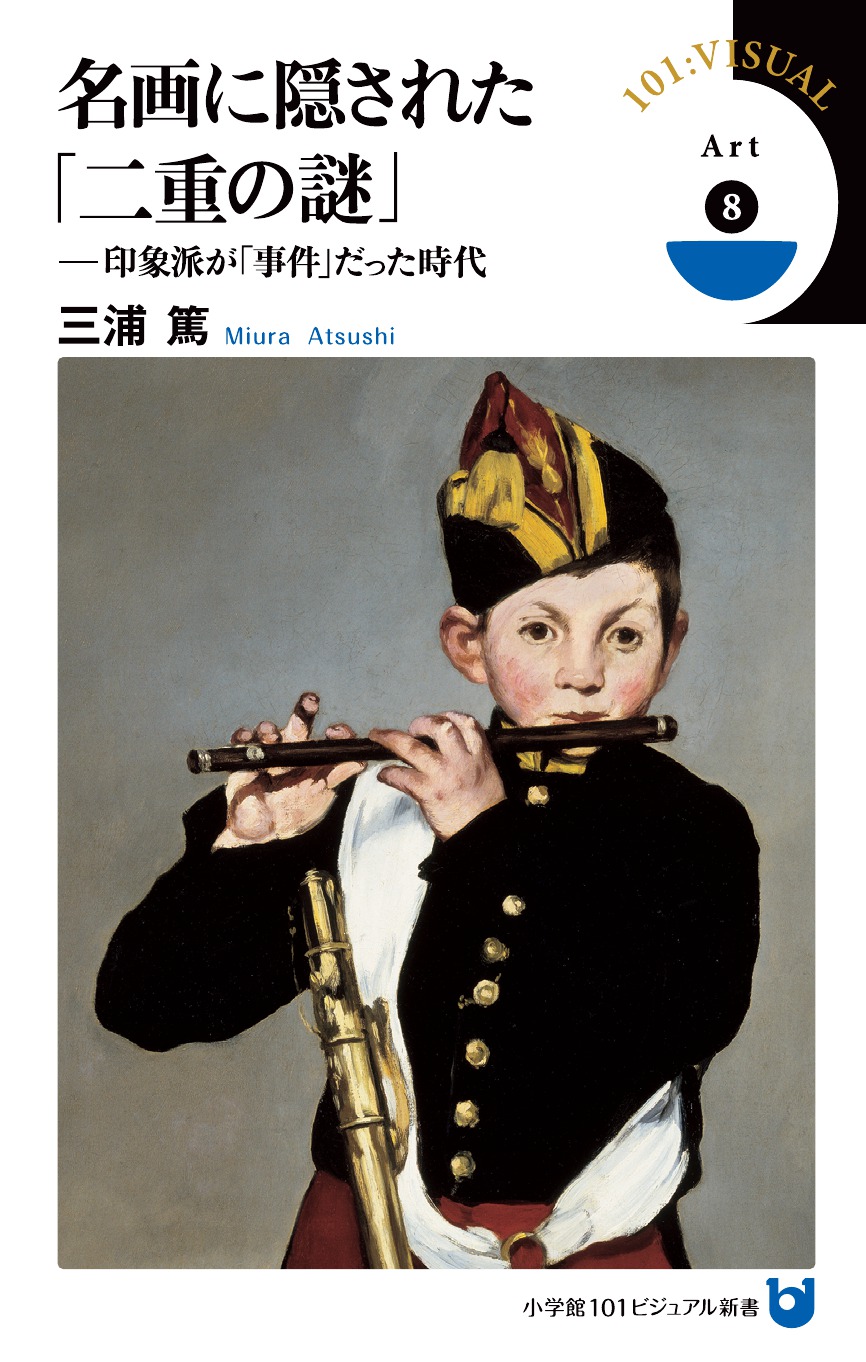
This wonderful opportunity has made me want to read more of Miura's books. I think it's fairly common for people to get hooked on Dazai Osamu in their youth, or to get deeply into Miyabe Miyuki, but unexpectedly, I'm sensing that same spark in art-related works? Looking it up online, I discover Miura has written quite a few books. I wonder if there's one that's accessible even for someone like me who doesn't usually read art-related books.A book with Manet's 'The Piper' on the cover catches my eye. 'The Double Mystery Hidden in Famous Paintings: The Era When Impressionism Was an "Incident"'. This angle, or rather the title, feels challenging and somehow appealing.I searched for it at bookstores. Being a 2012 publication, I couldn't find it anywhere, but luckily, I discovered it at the Chiyoda Ward Hibiya Library and Cultural Center, quite close to my office. It was my first time using this library, and I was amazed at how incredibly well-stocked it was with art-related books – I felt like I'd struck gold!
This book is thrilling. The first case file, "Manet's Hesitation: The Two Signatures Left Behind"... I'm so eager to share it that I almost want to write about the core here, but spoiling a book titled "Mystery" or "Incident" is tacky. I really hope you'll pick it up at a library somewhere.
However, allow me to quote the "Afterword." It states: "I put considerable effort into the narrative style to spark interest among the general public, but [...] there is absolutely no compromise in the content. This book reflects my interests over the past few years, and I made no concessions to lower the level." It continues: "My conviction remains unshaken: truly fascinating art books can only be written by specialists, and it is precisely specialists who should write them."Miura's words sink in. They prove that without "digging deep," the fascination simply doesn't emerge. Reflecting on my actions over the New Year holidays: I binged on TV. I read books. I dove headfirst into museums. I dove headfirst into libraries. Transcending time, I was still finding courage, after all.
This year, if I turn that courage into action and happen to be praised for something, I want to say aloud, "Well, yeah." Imagining that version of myself, I've already written this piece without a hint of embarrassment.
Image Production: Satoshi Iwashita
Was this article helpful?
Share this article


Newsletter registration is here
We select and publish important news every day
For inquiries about this article


Author

Yutaka Miyakawa
Dentsu Inc.
Marketing Division 5
Consultant
After the Great East Japan Earthquake, I began to feel a desire to reflect on Japanese culture and future generations.