Category
Theme

Note: This website was automatically translated, so some terms or nuances may not be completely accurate.

Published Date: 2023/10/24

The shift from "product proposals" to "experience proposals." Key points for operating a D2C Inc. site, learned from Ajinomoto's "GOOOD GOOOD TABLE" case study (Part 2)

D2C Inc. enables manufacturers to sell directly to consumers while communicating with them digitally. It's gaining attention as a business model that facilitates two-way communication, not just information dissemination, by soliciting and sharing consumer feedback and ideas.

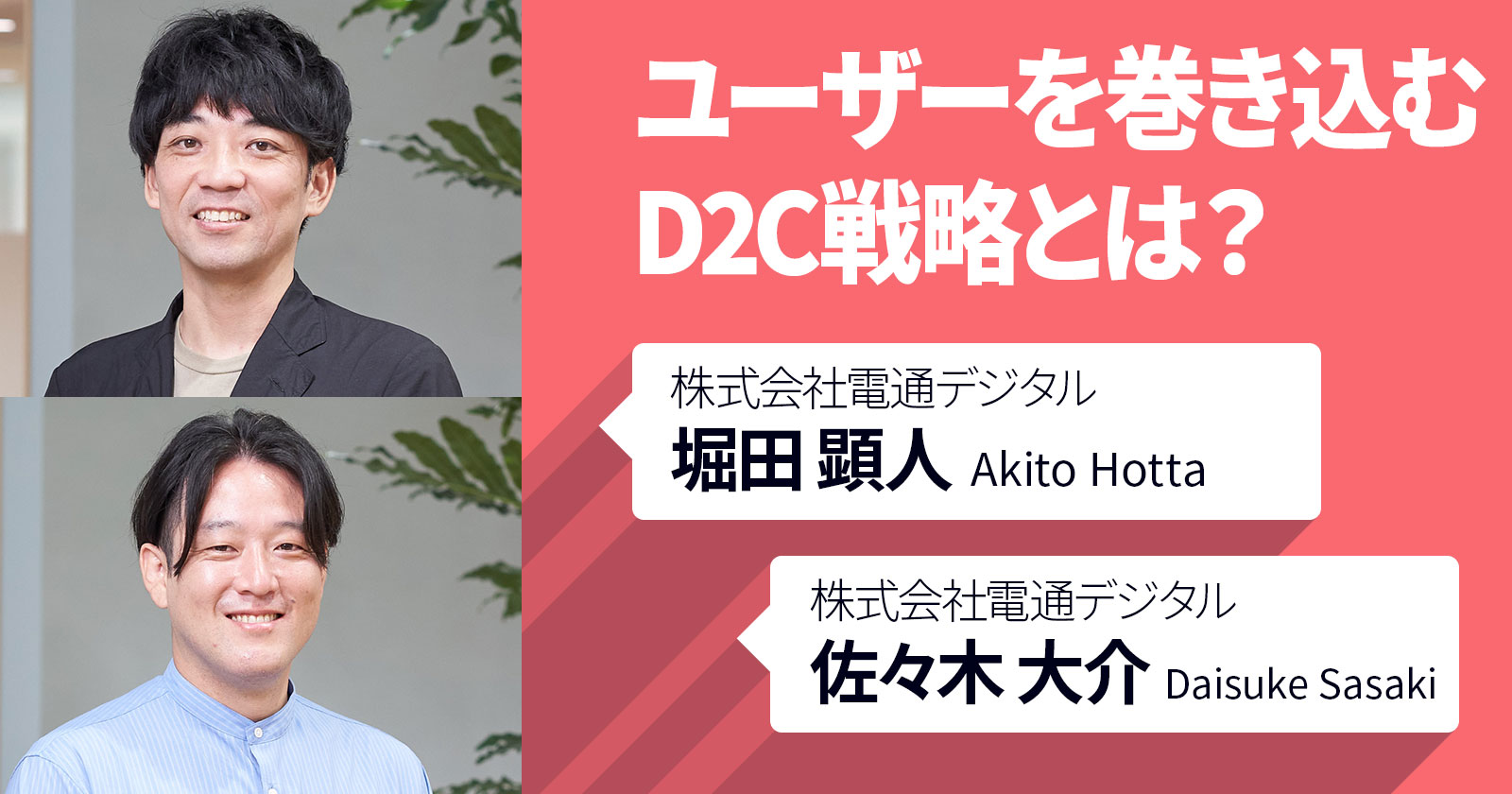
This is the second part of our interview with Mr. Akito Hotta and Mr. Daisuke Sasaki of Dentsu Digital Inc., who were involved in planning and operating the D2C site " GOOOD GOOOD TABLE " launched by Ajinomoto Co., Inc. in January 2023. This time, we focused on key points companies should consider when launching D2C and the significance of D2C itself.

From Flow-Based to LTV-Based: The Ideal Form of a Company's Own E-Commerce Site

Q. When building a company's own e-commerce site, what kind of communication do you specifically have with client companies?

Hotta: The starting point is always clearly defining "what we fundamentally want to achieve." Do we want to increase sales? Expand product placement? Or deepen customer communication? The approach changes based on the goal. It's not about saying "we want to launch our own EC site," "we want to renew it," or "we want to sell on an EC mall." Instead, we clarify the objective using different words. If the sole aim is simply to boost sales, opening a store on an EC mall is often the faster route.

Q. So why do many manufacturers still choose to implement their own e-commerce? While it might expand sales channels, they already have distribution networks. What are the most common reasons they still pursue D2C Inc.?

Hotta: When we first consult with them, they often mention things like "We want to change our over-reliance on retailers" or "Digital is growing." But when we dig deeper, we often find underlying desires like "We want to communicate directly with customers who buy our products, using digital tools like messaging apps or email."Indeed, in today's era, "how to communicate with customers" is becoming increasingly crucial. Simply building a website and getting people to register as members isn't particularly meaningful. It's necessary to design the entire approach to customer interaction and engagement, so merely collecting contact information is insufficient. That said, it's also true that some communication does begin once customers register their contact details. So, it's a point that requires careful consideration, balancing both quantity and quality.

Sasaki: I believe we should shift business from a one-off, flow-based model to a LTV (Life Time Value) model. By connecting with customers through their member IDs, understanding their characteristics, and providing personalized service, we can encourage repeat purchases and build loyalty. Creating this flow, which ultimately increases LTV, is what our company's e-commerce should achieve.

Dentsu Digital Inc. Daisuke Sasaki

Focusing on the magazine to align with customer usage scenarios

Q. "GOOOD GOOOD TABLE" feels like an e-commerce site that puts significant effort into its magazine section.

Sasaki: Yes. Fundamentally, it's based on the concept of "shifting from product proposals to experience proposals." If it were solely about product proposals, such a magazine section wouldn't be necessary; just featuring development stories would suffice. However, we want to offer proposals that align with lifestyles.

Therefore, "GOOOD GOOOD TABLE" features content aligned with specific scenes and styles, such as "Recipes for making delicious miso soup even on weekday mornings" or "How to enjoy great coffee under the blue sky." We believe presenting these suggestions in a magazine format that immerses readers in usage scenarios is more accessible and easier for customers to visualize than doing it on product pages.

Furthermore, analyzing site data revealed that Ajinomoto offers a wide range of products. A certain number of customers, for example, might try Soup A and then become curious about Soup B, leading them to purchase it. While many sites might simply offer coupons saying "Get this product at a discount," there are other approaches beyond relying solely on coupons. By featuring magazine content about the product's development background or creative recipes, we can show customers ways to enjoy it even more deliciously.Following that flow, we can also recommend other related products. Rather than just making an impression with coupons or discount campaigns, we can naturally create a state where customers think, "I'm also curious about this product," within the flow of their interest.

Hotta: This site focuses more on slightly higher-end product lines than what you'd typically find in regular supermarkets. Therefore, we believe it's crucial to effectively communicate value to users beyond just the product pages. Consequently, I think the significance of the magazine is very high.

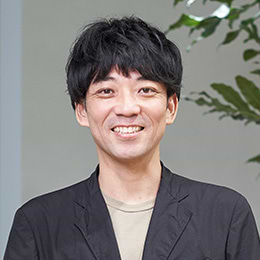
Mr. Akito Hotta, Dentsu Digital Inc.

Key Points for D2C Inc. Sites to Survive

Q. I see. On the other hand, e-commerce directly shows results like "how many visitors" and "how much was sold," which can sometimes create a disconnect from the goal of "conveying value." This can lead to project difficulties, right?

Hotta: That's correct. Even in budget allocation, we avoid leaning too heavily toward either immediate results or gradual progress.

Sasaki: That struggle is very real. For our site, since we already have a large base of "Ajinomoto customers," we engage across various channels, including Ajinomoto Direct, and leverage the power of owned media to identify the site's winning formula.

It also changes depending on the timing. Until we can launch special products, we're consulting from diverse angles—like building momentum for upcoming campaigns while keeping customer acquisition investments low, or assisting right from the product planning stage.

Our creative team can be involved from product development, and we can have conversations only possible because we're deeply immersed with the users. Many in our commerce team come from business companies, so we truly understand the real challenges our client companies face. Building on that, we believe our strength lies in not rushing into short-term measures, but instead proposing, "As a mid-term plan, let's grow the numbers like this."For client companies, if the person in charge lacks the ability to explain effectively within their own company, the site won't survive. In fact, this might be the most crucial point for the success of a D2C Inc. site.


A D2C site isn't just a mechanism for manufacturers to sell directly to consumers; it's also a space for continuous, mutual communication with consumers. By clearly presenting values that resonate and sometimes even involving users in product development, it's possible to deliver better products and the best customer experience. To achieve this, enriching content that closely aligns with users' usage scenarios appears to be a crucial point.

The information published at this time is as follows.

Was this article helpful?

Share this article

Author

Akito Hotta

Akito Hotta

Dentsu Digital Inc.

Commerce Production Division

Producer, Project Manager

After gaining experience managing large-scale projects across diverse industries such as real estate and sports marketing at a specialized project management firm in marketing and communications, I worked at a design product company handling all aspects of operations—from customer acquisition through PR, e-commerce management, and social media—to post-purchase communication. Currently, I oversee a wide range of responsibilities for D2C Inc. businesses, including launch planning, business strategy development, website construction, and growth support.

Daisuke Sasaki

Daisuke Sasaki

Dentsu Digital Inc.

Commerce Design Division

Group Manager, Consultant

After gaining experience building, operating, and managing platforms for his own company and Rakuten EC, he worked in the skincare industry handling marketing and CRM for a long-established brand. He specializes in e-commerce consulting centered on deep customer understanding and experience in implementing strategies that directly drive results.

Also read

The shift from "product proposals" to "experience proposals." Key points for operating a D2C Inc. site, learned from Ajinomoto's "GOOOD GOOOD TABLE" case study (Part 2)