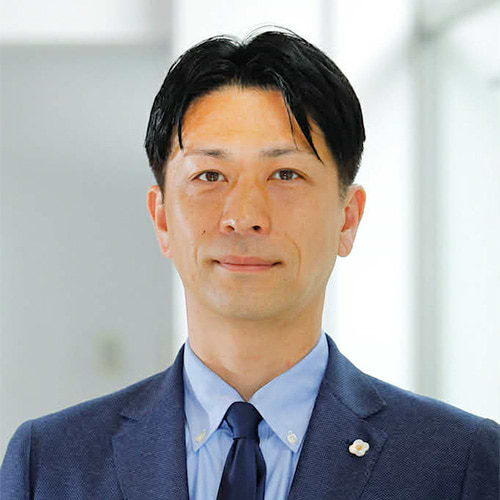
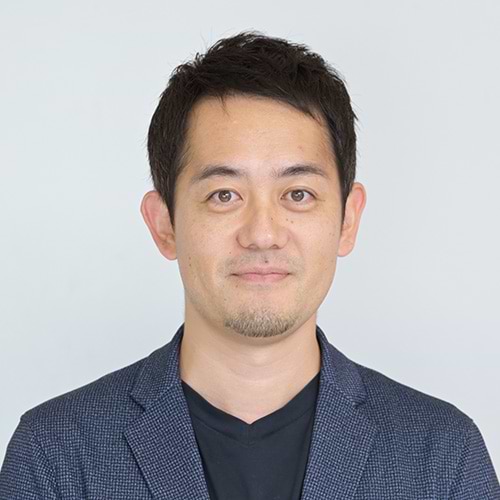
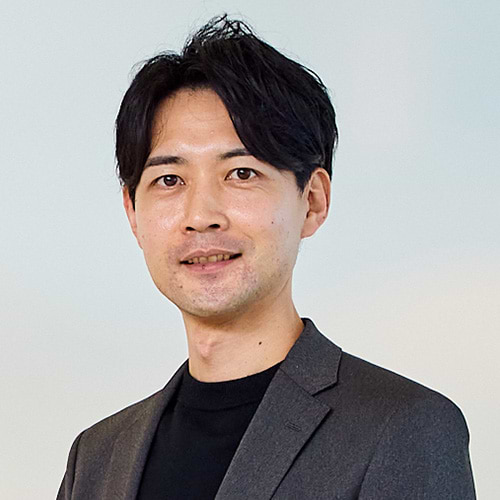
"Sports Future Research Notes" explores the value of sports through qualitative and quantitative analysis. This time, we feature Professor Shintaro Sato of Waseda University and Associate Professor Daichi Oshimi of Tokai University. They will discuss the value and potential of sports from a researcher's perspective. The interviewer is Yuki Nakatsuka of the Sports Future Research Institute.
Sports Future Research Institute Launched in July 2025 with the slogan "Let's expand sports." Leveraging Dentsu Inc.'s accumulated expertise in sports business while incorporating the knowledge and perspectives of diverse sports enthusiasts, the institute explores the true value of sports.
Nakatsuka: At the Sports Future Research Institute, we conducted joint research with Waseda University's Sports & Entertainment Management Laboratory, Tokai University's Sports Management Strategy Laboratory, and Dentsu ScienceJam Inc. (now Dentsu Digital Inc.) on the theme of "Visualizing the Experiential Value of Sports Viewing" ( release here ).
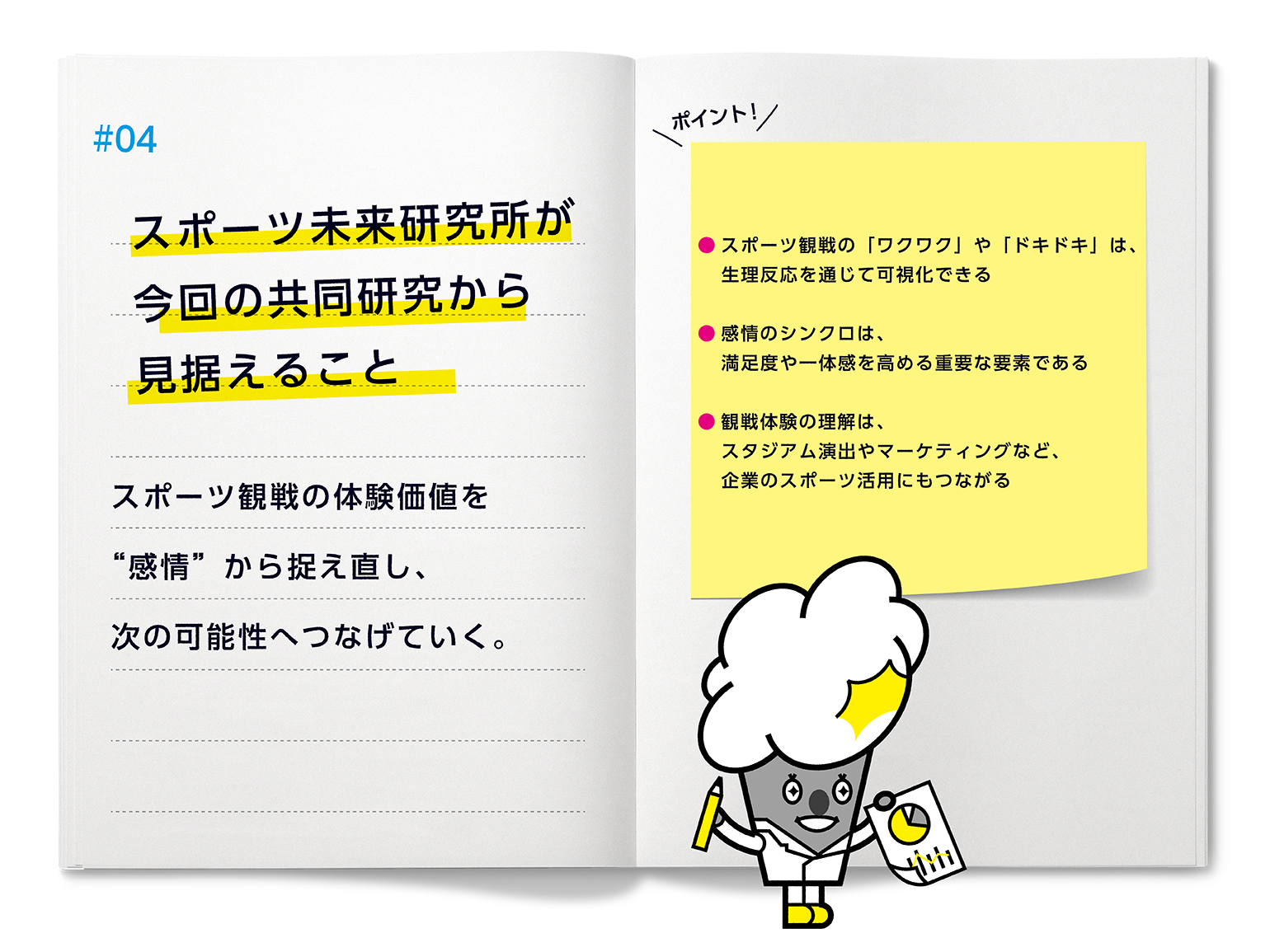
This research measured spectators' biological information, such as brain waves and heart rate, in real time during matches of the Japan Men's National Soccer Team. It aimed to quantitatively capture emotions like "excitement" and "thrill" during viewing, scientifically visualizing the essential value of the spectator experience and "emotional synchronization."
Today, we speak with Professor Sato from Waseda University and Professor Oshimi from Tokai University, who jointly advanced this project, about the appeal of sports and its business potential, incorporating their research findings.
First, could you both tell us what sparked your interest in sports and how you came to be involved with sports as researchers?
Oshimi: As a child, I loved both playing and watching sports. I wasn't seriously involved in any particular sport competitively, but I remember getting excited watching TV and cherishing the time spent playing sports with friends above all else.
The turning point came during my university days when I served as a trainer for the rugby club. Although I wasn't playing myself, being part of an organization aiming to be the best in Japan exposed me to the intense passion and dedication poured into the sport. This broadened my perspective on how to engage with sports.
After graduating, I worked at a regular company for about three years. Then I suddenly thought, "If I'm going to work anyway, I want to be deeply involved with the sports I love." That's when I decided to go to graduate school. Initially, I wasn't aiming to become a researcher. But studying in grad school made me realize how much I didn't know. A desire to learn more deeply just naturally grew within me. That led me to pursue a PhD program, which ultimately brought me to where I am now.
Sato: In my family, my grandfather, mother, and sister all played basketball for generations, but for some reason, I was the only one playing soccer. However, in fifth grade, I encountered the manga "SLAM DUNK." I was completely captivated by the character Sendō Akira's line, "Alright, let's go!" I immediately quit the soccer club and switched to the basketball team (laughs).
I continued competitive basketball seriously enough to enter university on a sports recommendation. Now, being involved in sports as a researcher personally feels deeply meaningful. While there wasn't a single turning point that led me to research, the professors I met during my undergraduate and graduate studies had a significant influence. Spending a lot of time with them outside of class, I naturally started thinking, "Being a researcher is great."
Shintaro Sato (Professor, School of Sport Sciences, Waseda University)
Unraveling the Social Efficacy and Value of Sports Through Science
Nakatsuka: Next, could you tell us about your current research areas and themes?
Oshimi: My research primarily follows two axes. One focuses on visualizing and quantifying the impacts of sports and sporting events on society and individuals. For example, I aim to clarify the positive changes that occur in people when they "participate" in sports.
The other focuses on the mechanisms behind the emotional impact of watching sports. We examine which moments move people emotionally and what behavioral changes result. This includes analyzing spectators' unconscious reactions using physiological indicators like brainwaves, as in this joint research. While connecting with other fields like sports marketing and consumer behavior theory, we emphasize the unique aspect of sports: "the ability to simultaneously ignite passion worldwide in unpredictable situations."
Nakatsuka: What problem awareness initially sparked your interest in this field?
Oshimi: Initially, I started from a belief that "sports are wonderful" and a desire to prove their value.But I also came to realize that excitement confined to sports fans alone has limited reach. So now, I'm exploring how to communicate value that makes even people with little interest in sports think, "Hmm, this seems pretty good." For example, showing scientifically, and as visibly as possible, changes like reduced loneliness or increased friendships. I continue research that carefully uncovers these "social benefits of sports."
Nakatsuka: Thank you. Professor Sato, what about your own research?
Sato: I run a seminar titled "Sports & Entertainment Management." While the theme isn't limited to sports—I encourage students to freely explore entertainment fields they're interested in, like music, theater, comedy, or fandom activities—I personally keep my research grounded in sports.
Within that, I frame my research subjects across "six layers": Super-Micro, Micro, Mezo, Mezo+, Macro, and Super-Macro. Super-Micro deals with physiological responses like brain waves and heart rate, as in our current joint research.Micro covers areas like marketing and consumer behavior, exploring how individuals make decisions and perceive value. Mezo is the layer dealing with the "middle layer" of organizations and communities, examining how entities like sports clubs, companies, and leagues operate. Mezo+ focuses on the interactions and ecosystems between various organizations, while Macro expands to perspectives encompassing society as a whole, systems, and policies.This includes how sports impact society as a whole or how they are positioned as policy. Super-macro is still an unexplored area, but we aim to tackle large-scale questions like "Sports and Space."
We value exploring each of these six layers three-dimensionally, selecting the appropriate "knife" (research approach) for each layer and determining how to cut into it. We prioritize choosing the right layer and knife according to the research subject and context.
Daichi Oshimi (Associate Professor, Faculty of Physical Education, Tokai University)
Visualizing the Moment the Heart Moves: Integrating Physiological Responses and Subjective Data!
Nakatsuka: In this joint research, we've progressed through repeated discussions centered on the theme of "visualizing the experiential value of watching sports." Could you share your expectations and impressions about this project?
Oshimi: Frankly, I found this initiative extremely exciting.As I mentioned earlier, my research has consistently focused on themes like "emotional experiences in sports" and "the societal impact of sports." This project's theme was right at the heart of my area of interest. Moreover, the opportunity to collaborate with organizations like Waseda University and the Dentsu Group, each bringing distinct expertise and resources, was incredibly stimulating. I distinctly remember feeling very excited, anticipating the chance to tackle approaches that might be limited at the laboratory level.
Sato: I also felt, "This is going to be interesting." While I had experience with corporate collaborations before, what particularly impressed me about working with Dentsu Inc. was that they brought up "data" right from the initial stages. I believe it's crucial to build research around data, so I found Dentsu Inc.'s networks and information assets extremely appealing. I had high hopes that this would lead to new developments in our research.
Nakatsuka: In our initial discussions with the professors, "integrating physiological indicators with data from asking surveys like questionnaires" emerged as one key challenge, didn't it?
Sato: Yes. Historically, physiological indicators and questionnaires were often treated separately, and an integrated analytical approach was rarely practiced. This time, we adopted a two-stage design: first capturing unconscious reactions through biometric data, then using that as a basis to re-examine subjective perceptions. This aligns with Tokai University's EEG measurement initiatives, and we sensed the potential to gain new perspectives by overlaying data previously viewed in isolation.
Oshimi: For me, capturing physiological indicators—especially "live reactions" like brainwaves and heart rate—as data was a fresh discovery not possible in previous research. Unlike asking surveys, the ability to observe changes over time and pinpoint "when, to what, and how they reacted" was incredibly valuable.
Indeed, conducting measurements in the real-world space of a stadium allowed us to capture how heart rate and brainwave responses changed in detail for each specific scene. While we couldn't film the subjects' actions themselves with cameras this time, I sensed the potential to delve deeper into the causal relationship of "what they were seeing and how they were reacting" in the future.
Nakatsuka: I understand that attempts like this one to "measure brainwaves and heart rate in a stadium" are quite rare even in prior research. How would you assess its novelty from the perspective of on-site implementation?
Sato: Due to technical hurdles, research collecting physiological data in environments like stadiums remains extremely rare, both domestically and internationally. Issues like noise and communication constraints lead many researchers to opt for laboratory settings.
Amidst this, we strongly focused on designing this study around the premise of "how to collect and analyze data on-site while accepting noise." For example, we divided participants into "groups of friends watching together" and "groups of strangers watching together," and carefully arranged seating. This design allowed us to verify the impact of different viewing styles on physiological responses.
Applying this to business could create new spectator experiences
Nakatsuka: I'd like to ask how you envision the findings from this research being applied to future spectator experiences and business. For instance, how do you think they could be utilized in "designing spectator experiences," encompassing both stadium attendance and remote viewing?
Oshimi: It's difficult to cover everything based solely on the insights gained from this research, but I still feel it represents an important step forward. Visualizing spectators' "timing of reactions" and "types of reactions" through brainwaves was particularly significant.
For instance, if spectator reactions were particularly pronounced during a certain scene, replicating similar structures or productions could potentially evoke similar emotions next time. I believe this research serves as a foundation for exploring "emotional triggers" within the spectator experience.
Additionally, while this study compared "groups of friends" and "groups of strangers," future applications could explore spatial design and production techniques from the perspective of "how to foster a sense of unity." There is scope to examine how various elements—beyond participant relationships, including the spectator gear worn—influence the viewing experience.
Looking ahead, I believe this research could offer hints for designing spaces and productions that foster empathy and a sense of unity.
Nakatsuka: If we were to pursue further research, what directions might be possible?
Oshimi: Soccer, our current subject, features 45-minute halves with minimal intervals. In contrast, sports like basketball, which have more intervals and abundant production elements, might allow for more precise observation of how emotional fluctuations change before and after production elements.
Additionally, differences in reactions based on spectator "attributes" is an intriguing theme. Even in the same situation, emotional responses might differ between first-time attendees and long-time core fans. Measuring and analyzing such attribute-specific reaction differences could also lead to insights for enhancing the quality of the spectator experience.
Nakatsuka: Professor Sato, how do you think this research could be applied to corporate sports marketing?
Sato: The value of the spectator experience itself has been somewhat clarified through surveys and questionnaires in the past. However, such surveys are limited to what respondents can consciously recognize and verbalize, and they don't necessarily align with actual feelings or unconscious reactions.
By measuring spectator experiences using physiological variables like heart rate and brain waves—essentially "hard-to-falsify indicators"—as we did this time, we can reveal more real and nuanced emotional movements. This should enable companies to achieve more precise targeting and timing adjustments in their marketing designs.
Furthermore, within marketing, the concept of "information fluency" suggests that people tend to respond more positively to natural flows rather than rapid changes, both emotionally and physically.If we can understand the subtle shifts in viewers' emotions and physiological responses during viewing, as we did in this study, it becomes possible to "smoothly" insert sponsor messages in sync with that flow. This should ultimately have a positive impact on message receptivity and memory retention. For example, new approaches like live commercials synchronized with emotional shifts could prove effective.
Nakatsuka: I also believe "emotional synchrony," one of our research themes this time, is a concept with significant business implications. How do you think moments of emotional alignment influence behavioral change or increased purchasing intent?
Oshimi: Our survey revealed a positive correlation between emotional synchronization and customer satisfaction. While we haven't fully determined if brainwave-level responses directly translate to purchasing behavior, we did find evidence suggesting that when "emotional alignment" occurs, satisfaction increases, potentially leading to repeat visits and positive word-of-mouth.
Sato: We observed a tendency for spectators' heart rates to synchronize, particularly during moments like "when a goal was scored" or "the climax of the match." Moreover, this phenomenon occurred to a certain extent not only among friends but also between spectators meeting for the first time. This suggests the possibility that "emotional synchrony" or "synchronization" functions as a shared experience generated by the match itself, transcending the presence or absence of a pre-existing relationship.
However, since this particular match ended in victory, it was a situation conducive to sharing positive emotions. Sports don't always result in wins. Moving forward, I believe we need to capture the multifaceted nature of the spectator experience, incorporating perspectives like "what remains after a loss" and "what emotions are shared," not just focusing on "empathy during victory."
Continuing to challenge the visualization of sports' "invisible value"
Nakatsuka: Could you share themes you wish to explore further?
Sato: As I mentioned earlier, sports are a world where if one side wins, the other must lose. Despite this, research has tended to focus disproportionately on reactions to "winning," while studies on "losing" have lagged behind.
Yet, the experience of losing likely holds significant value and meaning. For instance, winning can heighten emotions, sometimes leading to riots or extreme behavior. Conversely, the losing side might exhibit more ethical conduct. Testing such hypotheses is one theme I'd like to pursue in future research.
Moreover, for passionate fans, defeat can be a significant source of stress. How to alleviate that unhappy feeling is also an important question. Philosophically speaking, one could argue that it is precisely because painful experiences exist that the joy of victory can be felt more deeply.
Shifting perspective slightly to the meso level—the layer of organizational and social structures—I wish to reevaluate the significance of "corporate sports." While professionalization advances across various sports, we also see a trend of corporate-owned teams being disbanded one after another. Non-professional categories and minor sports cannot achieve financial self-sufficiency; their survival depends on corporate support.Engaging with sports isn't solely about pursuing profit. I want to explore the meaning for companies in participating in sports, including values like employee motivation, pride, and points of connection with society. Sports also serve as a symbolic force that energizes society. By focusing not just on monetary value, but on the value that enriches the hearts of those involved, I envision a future where sports are more deeply rooted in society.
Oshimi: I've long envisioned an "Emotional Heatmap." Visualizing the hotspots during a match—the moments and locations where spectators react most emotionally—based on metrics like heart rate, brain waves, or facial expressions. For example, if we could show in real-time "where the hottest area is right now" within a stadium, it could be utilized for spatial design and stadium operations.
I believe this heatmap concept could extend beyond stadiums to entire neighborhoods. Consider how the establishment of a sports club in a community might ripple out, building social capital like trust and connections in the surrounding area. Such movements could potentially be expressed as emotional or network heatmaps.
Furthermore, when we presented this initiative at a research meeting, a lively discussion arose: "Does visually knowing 'this spot is currently buzzing' make people even more excited?" In other words, the idea is that when heat sources become quantifiable and visible, surrounding people resonate with them, creating a chain reaction that accelerates the excitement. This could generate a "loop of excitement."Already, in places like stadiums, "cheering meters" quantify audience behavior and reactions to enhance the entertainment experience. When these metrics move beyond mere volume to capture deeper responses like emotions or heart rate, it could add a new dimension to the spectator experience.
Nakatsuka: Thank you. Finally, could you each share what you see as the "value of sports"?
Sato: I believe the fundamental value of sports lies in its "purity." This unadulterated, pure quality holds a universal power to move people. While many criticize this "purity" as a constraint, I personally believe it is the core appeal of sports.
Oshimi: For me, the value of sports is "inspiration." This is the very foundation of my research. Since my graduate school days, I've been thinking about what happens to people when they are inspired by sports. I want to continue exploring the potential for sports to make people think, "Sports are great," not just those who already love them, but also those who aren't particularly interested.
Upcoming Schedule
Next time, Professor Shintaro Sato of Waseda University and two international researchers from the Sato Laboratory will discuss the value of sports and Japanese sports culture.
Professor, School of Sport Sciences Director, Sport & Entertainment Management Lab.
消費者行動分析を主要な研究トピックとし、Journal of Sport ManagementやSport Management Reviewなど国際主要学術誌に多くの論文を発表している。スポーツやエンターテインメントの力を社会に還元することをライフワークに掲げている。
Daichi Oshimi
Tokai University
Associate Professor, Faculty of Physical Education
After graduating from Waseda University, worked at JTB Corporation. After leaving the company, completed a PhD at Waseda University's Graduate School of Sport Sciences. Held positions as Assistant and Assistant Professor at Waseda University, then Visiting Researcher at the University of Ottawa, before assuming the current role. Focuses on visualizing the social impact radiating from sports, such as inspiration and connection, and has a strong interest in collaborative research and social implementation with private companies and local governments, including partnerships with researchers from different fields.
Yuki Nakatsuka
Dentsu Inc.
Sports Business Solution Division, Growth & Solutions Department 2
Senior Producer/Planner
After joining the company, he worked in the Direct Marketing and Sales departments before transferring to the Soccer Business Office in 2020. He worked on sports sponsorship strategy development and activation planning. Since 2024, he has been promoting projects focused on creating value for sports content, including new business development, centered on "solving challenges through sports" in his current position.
Also read
Scientists are studying the "thrill" of spectating. Researchers are tackling the visualization of sports' value.

 Visualizing the value of sports. "Sports Future Research Notes" [4/4]