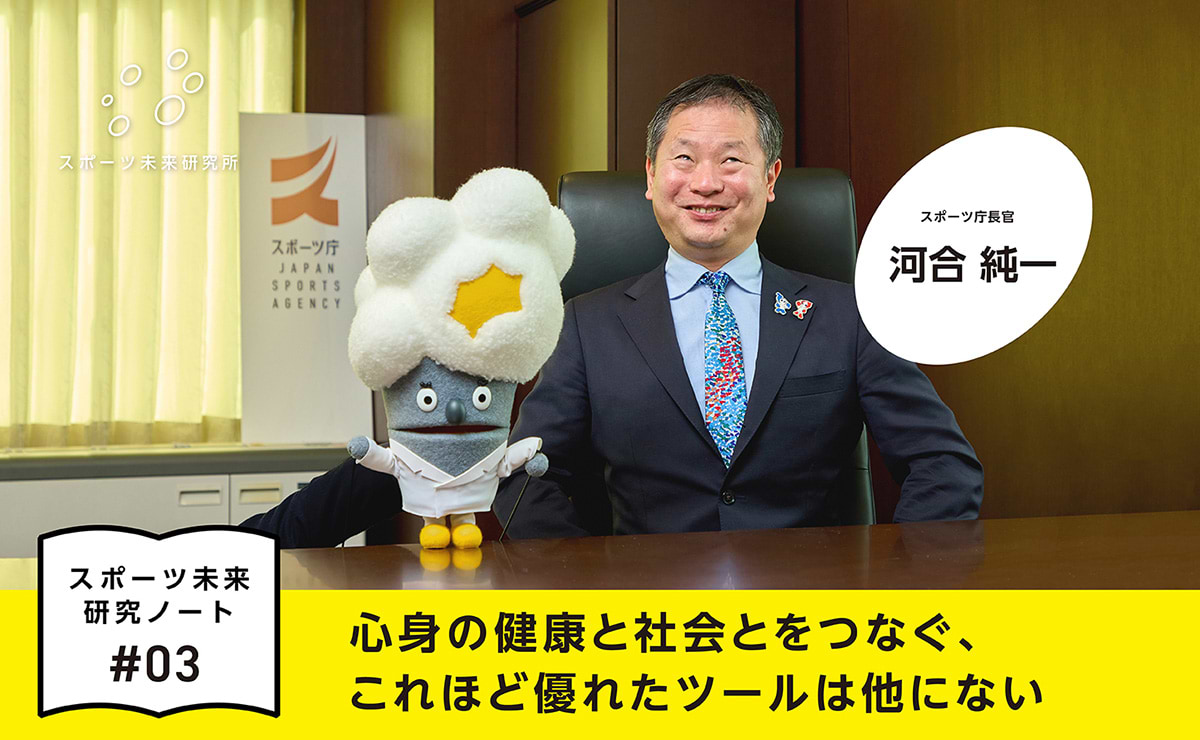
"Sports Future Research Notes" explores the value of sports through qualitative and quantitative analysis. This time, Kuniko Ohinata, Director of the Sports Future Research Institute, and researcher Bunichi Katsumi visited Junichi Kawai, who connected with the world through swimming and now stands at the forefront of policy as Commissioner of the Japan Sports Agency. They asked him what his accumulated sports experiences since childhood have brought him, why competitions transform people, and how Japanese society should engage with sports moving forward.
In the water, everyone is equal. Swimming saved me and opened up my world
Katsumi: What led you to discover sports?
Kawai: It started when I began swimming lessons at age 5. Despite having low vision, I was accepted, and that's how I discovered swimming. I enjoyed physical activity and tried gymnastics, softball, and karate, but swimming was the only thing I stuck with despite my tendency to lose interest quickly. There were times I questioned its monotony, but improving my times and the emotional impact of winning and losing became the driving force to keep going.The frustration of missing the prefectural tournament by just a fraction of a second in the 50-meter race, and the shared joy with teammates when we won. Those experiences from elementary school remain vivid in my memory.
Katsumi: So those experiences led you to pursue higher education and eventually the Paralympics.
Kawai: I lost my sight in my third year of junior high. Wanting to become a teacher, I moved to Tokyo when I entered high school. My fourth-grade homeroom teacher was the swimming club instructor, and he taught both lessons and swimming with such genuine enjoyment. I admired that. Back then, it wasn't easy for visually impaired people to go to university, so with that goal in mind, I entered the high school division of the Tsukuba University School for the Blind (now Tsukuba University School for the Visually Impaired) and began dorm life.
Dai-Nichi Co., Ltd.: And then you joined the swimming club in high school too.
Kawai: Yes. Right after losing my sight, I couldn't fully accept being disabled. But in the pool, I was just like before.In the water, everyone competes solely with their body; the conditions are the same anywhere in the world. That feeling saved me. Besides my peers at the school for the blind, I also had opportunities to train alongside athletes with prosthetic limbs and in wheelchairs at the Tokyo Metropolitan Sports Center. I was surprised by the weight of prosthetic legs and experienced pushing wheelchairs. The very act of swimming, transcending physical differences, became a stimulus that greatly expanded my world.
Katsumi: At age 17, you competed in the Barcelona Paralympics and won silver and bronze medals.
Kawai: While I felt joy at achieving results as one of the youngest competitors, the frustration of not winning gold remained strong. That drove me to aim for the Atlanta Paralympics next. At the same time, I had a strong dream of becoming a teacher and continued studying for university entrance exams.
Dai-Nichi Co., Ltd.: What were your feelings about swimming at that time?
Kawai: Swimming became my anchor and a hub connecting me to society. While competing in domestic and international events, I also had the opportunity to train alongside Olympic athletes at Waseda University's swimming club after enrolling there. I think the reason I could head to the pool even on tough days was that my desire to get stronger and win always prevailed. After graduation, I became a teacher at a public junior high school. I felt grateful to be able to balance my teaching with competition while also being able to engage with swimming, which I loved, on a daily basis in the school pool.
The importance of conveying the appeal, value, and challenges of the sport in the athletes' own words
Katsumi: Around 2000, you were also involved in establishing the Japan Paralympians Association, right?
Dai-Nichi Co., Ltd.: Several athletes gathered and had many passionate discussions. I remember Kawai-san speaking with strong conviction about "what we should convey as athletes."
Kawai: Serving as captain of the Japanese team at the Sydney Paralympics at age 25 was a major turning point. As interview opportunities increased, I felt the need to speak not just about swimming or visual impairment, but from a broader perspective.At the same time, I felt frustrated that, while working as a teacher, I wasn't fully conveying my experiences to visually impaired children. So, I started an annual swimming class for visually impaired children with my mentor. Continuing this activity for about ten years sparked my interest in overseas work. Thinking, "If my experience and know-how can be useful, I want to go," I joined the JICA Overseas Cooperation Volunteers (short-term dispatch) in 2006.
Katsumi: So you gained teaching experience overseas as well.
Kawai: Having a seminar colleague from university who had been a JICA volunteer also encouraged me. In Malaysia, where I was assigned, I taught swimming not only to advanced athletes but also to children at a school for the blind. When I set slightly challenging goals tailored to their abilities, they tackled them with all their might. Seeing that, I felt the joy of achieving something is universal.
Katsumi: What kind of activities did you do at the association?
Kawai: Back then, there were many ambiguous areas, like the transparency of athlete selection. That's why I valued having the athletes themselves speak out about improving the environment and communicating with society. Even with different types of disabilities and sports, there were many shared challenges. What was significant was that voices that couldn't reach society individually could now be conveyed as "the voices of people in the same situation." We continuously explored the appeal and value of our sport, and forms of social contribution, precisely because we were the ones who could convey them.
Dai-Nichi Co., Ltd.: We discussed the need to demonstrate issues like the competitive environment, athlete selection, the quality of coaches, and training conditions based on data, didn't we? It was a voluntary, highly motivated effort.
Legacy endures as long as people live, driving change in action
Katsumi: How do you perceive the value and legacy surrounding the tournament?
Kawai: I feel the legacy is the people themselves. With major domestic events continuing, the experience stays in the hearts of not just the athletes, but everyone involved in preparation and operations, spectators, and even those who wanted to attend. While physical facilities like stadiums remain, I believe the legacy lies more in what accumulates within people.
Dai-Nichi Co., Ltd.: The Tokyo 2025 World Athletics Championships and the Tokyo 2025 Deaflympics generated tremendous excitement, didn't they?
Kawai: I think what they shared was the desire to "see it live." For the Deaflympics, the preparations and outreach by the deaf athletes themselves were a huge driving force. Also, the psychological barrier to watching disabled sports has lowered since the 2021 Paralympics, which helped push things forward. Overall, I think a positive momentum was building.
Dai-Nichi Co., Ltd.: It was also striking how the audience demographics varied by venue—some had more participants with disabilities, others more able-bodied spectators.
Kawai: Some people probably came not just because it was the Deaflympics, but because world-class athletes were competing. Others might have stopped by while visiting Komazawa Park. The combination of the intensity of the competitions, the fun of cheering, the food and drink, and the pleasant seasonal weather all came together. I think the success factor was that the entire venue functioned as a complete entertainment experience.
Katsumi: How do events and competitions leave a lasting impression on people?
Kawai: I've seen many people change through their involvement in hosting events. For the 2025 National Sports Festival and National Para Sports Festival in Shiga Prefecture, staff members repeatedly said, "Being involved made me understand the value of the event." The experience of creating it together with the community itself becomes a source of joy. The many high school students who sang with artists at the closing ceremony will likely never forget that emotion. It's these extraordinary experiences that stay in people's memories and inspire them.Whether an event remains a fleeting experience depends on how we design the journey from preparation through to its conclusion. If we can create a cycle where participants think, "I want to be involved again," the value of sport will expand even further.
Katsumi: Did you have any encounters that made you feel the legacy?
Kawai: At a leaders' conference in Oita Prefecture, I met someone who said their experience volunteering at a local Para sports event as a child inspired them to become a physical therapist.At the 2024 Kobe World Para Athletics Championships, someone who watched the 1989 FESPIC Games (Far East and South Pacific Games for the Disabled) in Kobe as a school event is now involved as a sponsor company representative. They also look forward to their own child attending through the spectator program. Both were moments that made me feel this was truly legacy.Memories and emotions spark new actions, and as long as people live, legacy endures. We just need to keep expanding that chain. That belief has now turned into conviction.
The Future of Japanese Society and Sports: Taking Responsibility for the Next Decade
Katsumi: How do you view the role sports should play in Japanese society?
Kawai: School physical education and club activities, characteristic of Japan, are a culture we must cherish and protect. At the same time, there are things to learn from Western systems like community sports clubs. It's crucial to leverage the strengths of each and combine them in ways that address Japan's social challenges. What I strongly feel since becoming Sports Agency Commissioner is the necessity to have the resolve to "bear responsibility for the next 10 years" while tackling immediate issues. I believe my role is to clearly communicate this to society through discussions with experts.
Dai-Nichi Co., Ltd.: What vision do you have for sports ten years from now?
Kawai: Even amid declining birthrates, I envision a society where people genuinely feel their lives are enriched through sports. Whether through competitive sports, jogging, weight training, or any other form, people can create connections with society and foster physical and mental health through various ways of engaging: participating, watching, supporting, gathering, and connecting. There is no better tool for this than sports. I want to convey this value to all generations.Even those indifferent to sports share the common desire to be healthy and happy. Sport can absolutely contribute to that. That is my unshakable belief.
Katsumi: Finally, what is the "most important value of sports" for you, Mr. Kawai?
Kawai: It's the ability to confront your own emotions head-on—whether frustration or joy. Those surging emotions only exist at the end of giving your all, completely absorbed in the moment. By continuing, you can discover enjoyment and happiness. I believe that's where the great value of sports lies.
Upcoming Schedule
Next time, we will introduce the joint research project "Shared Experiences in Sports Viewing" by Professor Shintaro Sato of Waseda University and Associate Professor Daichi Oshimi of Tokai University.
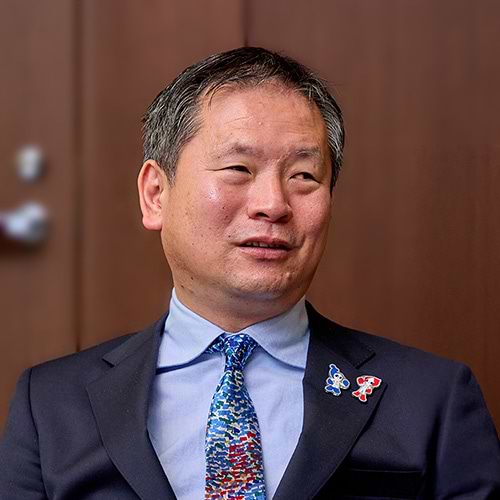
Born in Shizuoka Prefecture in 1975.Lost his sight at age 15. Competed in para swimming, participating in six consecutive Paralympic Games starting with Barcelona 1992. Won a total of 21 medals (the most by any Japanese athlete), including 5 gold. Inducted into the International Paralympic Hall of Fame in 2016, the first Japanese athlete to receive this honor. Served as a bridge between sports and society across diverse fields. Appointed as the first Paralympian to become Commissioner of the Japan Sports Agency in October 2025.
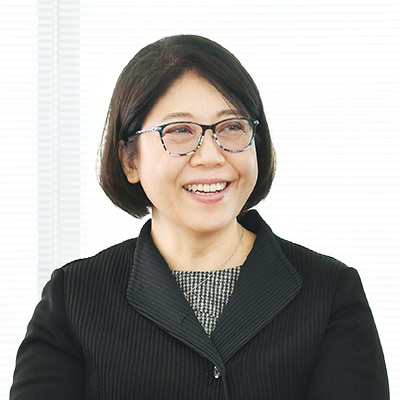
Dai-Nichi Co., Ltd. Ohinata Kuniko
Director, Japan Paralympians Association / Fellow, Dentsu Inc.
Former Japanese Paralympic Alpine Ski Team member. Began his skiing journey in his second year of high school after encountering chair skiing. Competed in five Winter Paralympic Games from Lillehammer 1994 to Vancouver 2010. Won a total of 10 Paralympic medals, including Japan's first-ever Winter Games gold medal at Nagano 1998.Served as Team Leader for the Japanese delegation at the Milano-Cortina 2026 Winter Paralympics. Joined NHK in 1996 as a director, working on educational programs and Paralympic broadcasts. Joined PR Consulting Dentsu Inc. in 2007. Became a Dentsu Group Fellow in 2022 and assumed current position in 2025. Holds numerous public positions including Director of the Japan Para Sports Association and Director of the Japan Paralympians Association.
Since 2015, he has been dedicated to the Tokyo 2020 Olympic and Paralympic Games, producing sponsor activations, the torch relay, and SPP (Spectator Performance Production). He is currently engaged in visualizing the value of sports and exploring new values, launching the Sports Future Research Institute in July 2025. He is a member of the Japan Society of Sports Industry and is currently enrolled in the Graduate School of Sport Sciences at Waseda University. Born in Okinawa, raised in Venezuela, South America.

 Visualizing the value of sports. "Sports Future Research Notes" [3/4]