Category
Theme

Note: This website was automatically translated, so some terms or nuances may not be completely accurate.

Published Date: 2025/04/22

Bringing a sense of specialness to the shopping experience. "Hacobachi," a custom bento brand that reflects the customer experience in its product.

Amid growing attention on initiatives aiming for sustainable regional development, Transformation SHOWCASE introduces case studies in its serialized series "Future Map of Regional Economies." These showcase the creation of unique business models leveraging area characteristics and activities contributing to regional economic revitalization.

This installment features the case of " Shiodome Salon," a business creative team within dentsu Japan (Dentsu Group) that leverages the creative perspective and assets cultivated through advertising production to develop new ventures in collaboration with companies.To address challenges faced by Fujisaki Co., Ltd., operator of Fujisaki—Tohoku's largest department store by sales—a new venture emerged in the bento and deli category. They planned and implemented the "Hacobachi" project, where customers select preferred deli items and customize their bento like a hotel buffet, creating a distinctive customer experience.

We interviewed Seiichi Kanda, Director and Executive Officer at Fujisaki; Tatsuo Suzukawa, Executive Officer at DentsuEast JapanInc.; and Shinji Muto, Creative Director at Dentsu Inc. We asked them about creative-driven new business development, the project's outcomes, and future prospects.

Leveraging Dentsu Inc.'s Assets Cultivated in Advertising Production to Support New Business Development

Q. Fujisaki operates the "Fujisaki" department store in Sendai City, Miyagi Prefecture. What challenges did the business face?
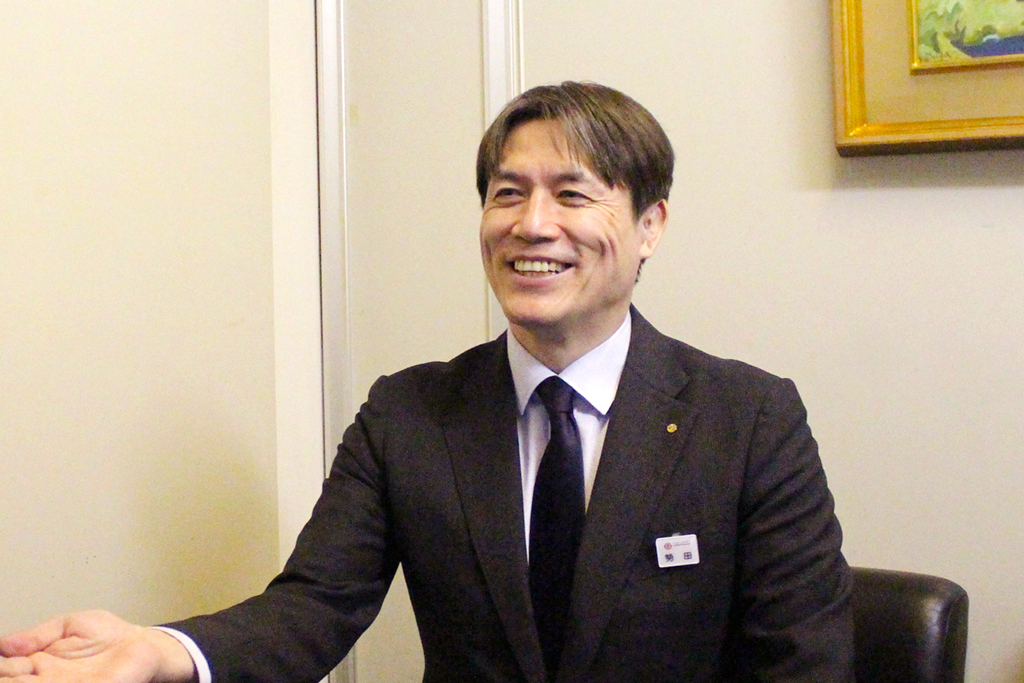
Tanaka: Founded in 1819, Fujisaki is now entering its 206th year. Broadly speaking, its business model has transformed every 100 years to align with customer needs: the first century focused on kimono sales, followed by a century as a department store.We are now at a turning point, seeking a new business model for the next 100 years. Amid the rise of shopping centers and the shift of consumer behavior to the internet, we must leverage the strengths of department stores—such as the trust of the local community and customers in our products and services—to increase our points of contact with local customers. We approached Mr. Suzukawa of Dentsu East Japan Inc., wondering if we could collaborate on creating content that could become a new business model, deepening synergies not only within the department store but also with affiliated group companies.

Suzukawa: Fujisaki is a company with which Dentsu East Japan Inc. has had a very long relationship. We had previously heard about their desire to "evolve the department store business into a content industry," and we undertook this project as one means of realizing that vision.

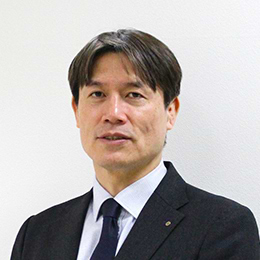
Mr. Seiichi Fujisaki, Fujisaki Co., Ltd.

Muto: Dentsu Group's creators possess skills and know-how cultivated over time in idea generation, planning, copywriting, design, and more. We leverage these assets to collaborate with companies across Japan on new business development. When Mr. Kanda from Fujisaki approached us, we considered whether our creators could accompany them, identifying and solving various challenges to develop new business ideas.

Providing customers with the discerning eye of sales associates. Creating customer experiences that leverage the strengths of department stores.

Q. How did the "Hacobachi" concept come about?
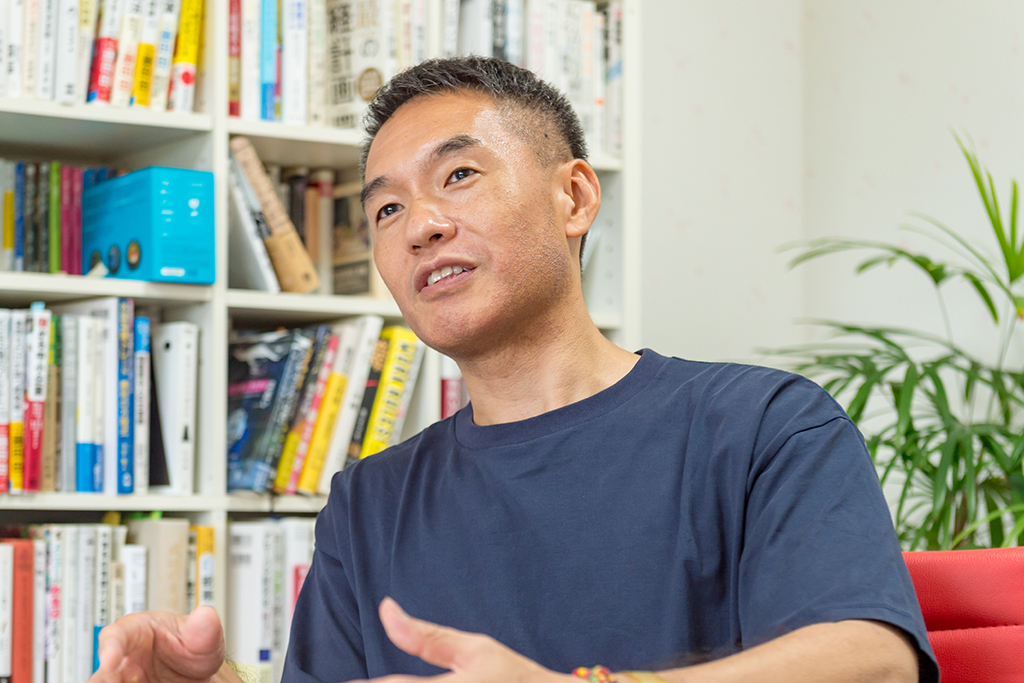
Muto: Mr. Oda stated, "Consumer behavior is changing, and simply waiting for customers within the department store building is no longer a viable business model." He was exploring a business model where Fujisaki would take its brand directly to customers.

That's where the new venture "Hacobachi" came from. One thing customers expect from department stores is face-to-face sales—the experience of choosing products while conversing with sales staff. Inspired by this, we proposed an idea where customers could select their favorite side dishes while interacting with sales staff and customize their own personal bento. If we can leverage our creative power to brand "Hacobachi," we could later use this brand to open stores in station concourses and shopping centers.While this is our first initiative in the bento side dish category, we envision it as a stepping stone toward solving the challenges Mr. Fujisaki faces, potentially creating ripple effects across various areas.

Tanaka: We currently sell the "Sendai Small Box" gift, where customers can select several favorite items from Sendai and Miyagi's local specialties. This concept addresses the growing demand for smaller portions driven by an aging population and nuclear families. It transforms the need for gifts containing small quantities of diverse items—like beef tongue and other local delicacies—into a gift content with added value, using packaging inspired by traditional Japanese lacquered boxes.This also allowed us to materialize the experiential value of customers carefully selecting items while imagining the recipient's lifestyle. We also wanted to leverage Dentsu Inc.'s creative assets and collaborate with affiliated food companies to expand this successful model into daily needs.

Muto: "Hacobachi" has the potential to become a new platform. For instance, we could enable customers to select prepared foods from famous brands found in department stores, or invite participation from popular shops in local shopping districts and the Tohoku region.Furthermore, by soliciting prepared food recipes from young chefs and the general public, then commercializing selected entries, this venture holds the potential to contribute to regional revitalization and the discovery of new talent in the future! We're all dreaming about this and getting excited!

Shinji Muto, Dentsu Inc.

Building a system that grows through continuous iteration of hypothesis and verification

Q. Please tell us about the sales methods for "Hacobachi" so far and the feedback you received during sales.
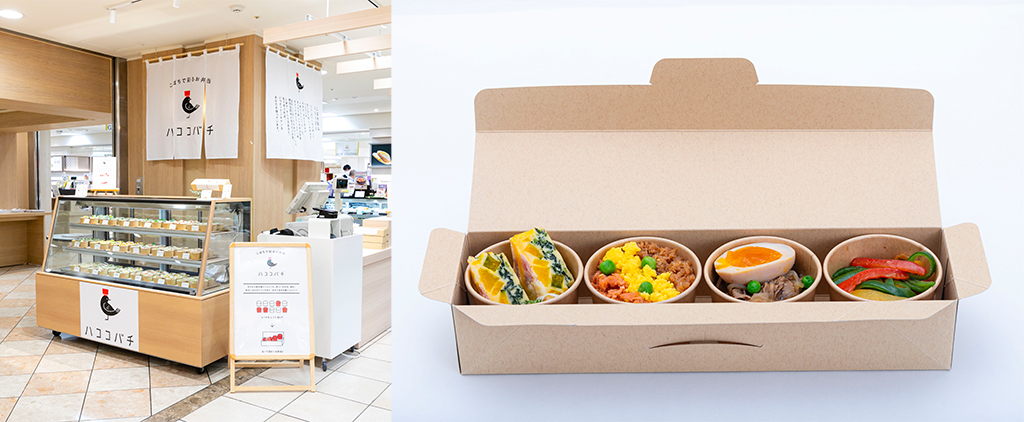
Tanada: We held four pop-up sales from October 2024 to February 2025. Our initial goal was to gain a certain level of customer approval and create a successful experience for our sales staff. The custom aprons designed by Mr. Muto's team boosted staff motivation, and many customers stopped to admire the meticulously designed details like the shop curtain, fixtures, and the font used on the price cards.Thanks to this, we received positive customer feedback and achieved sales of approximately double our target amount.

For subsequent events, we continued exploring menu options and promotional methods based on customer feedback. To appeal to customers in their 30s and 40s, we collaborated with cafes. To increase local engagement, we partnered with a craft brewery to propose pairings of their beer with our prepared dishes. Through these various experiments, we are advancing our planning towards establishing a permanent location.

Hahokobachi pop-up scene (left) Sample product combinations (right)

Q. You've taken on new challenges with each iteration. What insights have you gained?
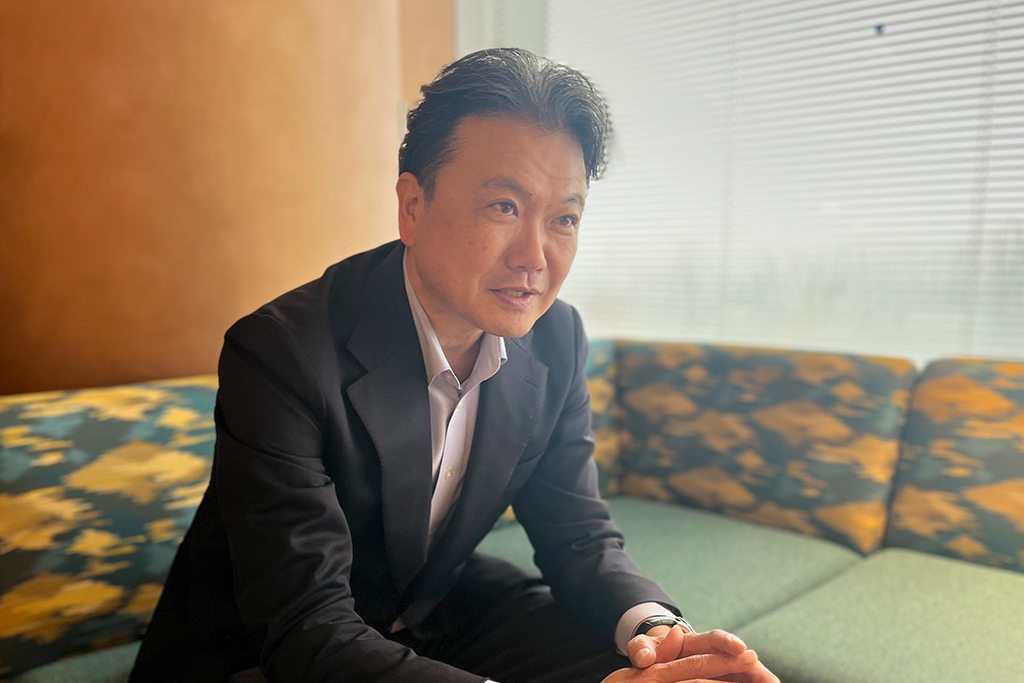
Muto: Because the prepared foods are sold in small portions, we can see how each item sells within the same day. This allows us to constantly formulate new hypotheses and test them in real time, which helps with next day's procurement and future menu development. It also reduces food waste and is environmentally conscious, which is a key advantage of this business.

We also learn a lot from our customers. When a salesperson approached a customer buying in bulk, they explained, "I have a gathering with family and friends, so we'll share it." This provided insight into unexpected usage scenarios and party demand, giving us a hint for our next move. Being able to hear customer feedback directly like this is possible because Fujisaki has maintained in-person sales for so long.

㔟田: At Fujisaki, we had areas where we weren't fully executing on rapid PDCA cycles after product releases or meticulous attention to creative details. Within this initiative, however, we shared daily insights within the team, enabling us to refine the product and accurately translate new ideas into reality. This became a valuable success experience for all members.

Suzukawa: Long lines formed at the sales counters, but every customer waiting was smiling. It was striking to see them standing in line, excited to see what others chose and pondering their own combinations. I felt that enjoying the time spent deciding what to buy, selecting products while conversing with sales staff—these core charms and experiential values of shopping—were what brought smiles to our customers' faces.

Tatsuo Suzukawa, Dentsu East Japan Inc.

Contributing to enhancing regional appeal through valuable customer experiences

Q. Please share your outlook for "Hacobachi" and Fujisaki's new ventures.

Tanada: We hope this project will serve as a new role model, increasing the number of members who experience its success firsthand. We believe regional department stores must now function as creators of urban vitality by transforming local resources—such as culture, climate, and history—into content for dissemination and provision. By expanding this initiative to involve many members, including those outside our company and region, we aim to become an indispensable presence in the local community.

Muto: Our vision is expanding to further develop the business. This includes ongoing initiatives like developing goods for the "Hacobachi" brand, establishing permanent stores, opening pop-up shops outside the building, and collaborating with the sales department on delivery and B2B services. We've also begun sharing this business model and know-how internally, challenging ourselves to spread it across Japan.We would be delighted if the Dentsu Group could contribute to the next stage of growth for regional department stores and serve as a bridge between local communities and the stores themselves.

Suzukawa: Through initiatives like this, we hope to enhance the appeal of the region in the future. Attracting people to the area can counteract population decline in rural areas and contribute to job creation. Above all, adding vibrancy to the region brings vitality. By supporting Fujisaki-san, the Dentsu Group also wishes to contribute to the local community, not only through economic value but also through social value.


Leveraging the unique strength of department stores in face-to-face sales, "Hacobachi" addresses customer needs for small quantities and diverse varieties, offers the experience of "choosing," and adds value through dentsu Japan's creativity. By creating a customer experience that transcends the framework of simply selling boxed lunches and side dishes, it seems poised to unlock further business potential and contribute to regional revitalization.

Was this article helpful?

Share this article

Author

Seiichi Seta

Seiichi Seta

Fujisaki Co., Ltd.

Executive Officer and Director, Head of Marketing Division

After working in sales operations and buyer roles for living goods and food, he took on responsibilities in corporate planning and sales planning. He became Executive Officer and Head Office Manager in 2017, and assumed his current position in 2020. He oversees all aspects of marketing, including CRM, content design, and digital promotions. He is dedicated to creating new value for this long-established department store, which will celebrate its 206th anniversary.

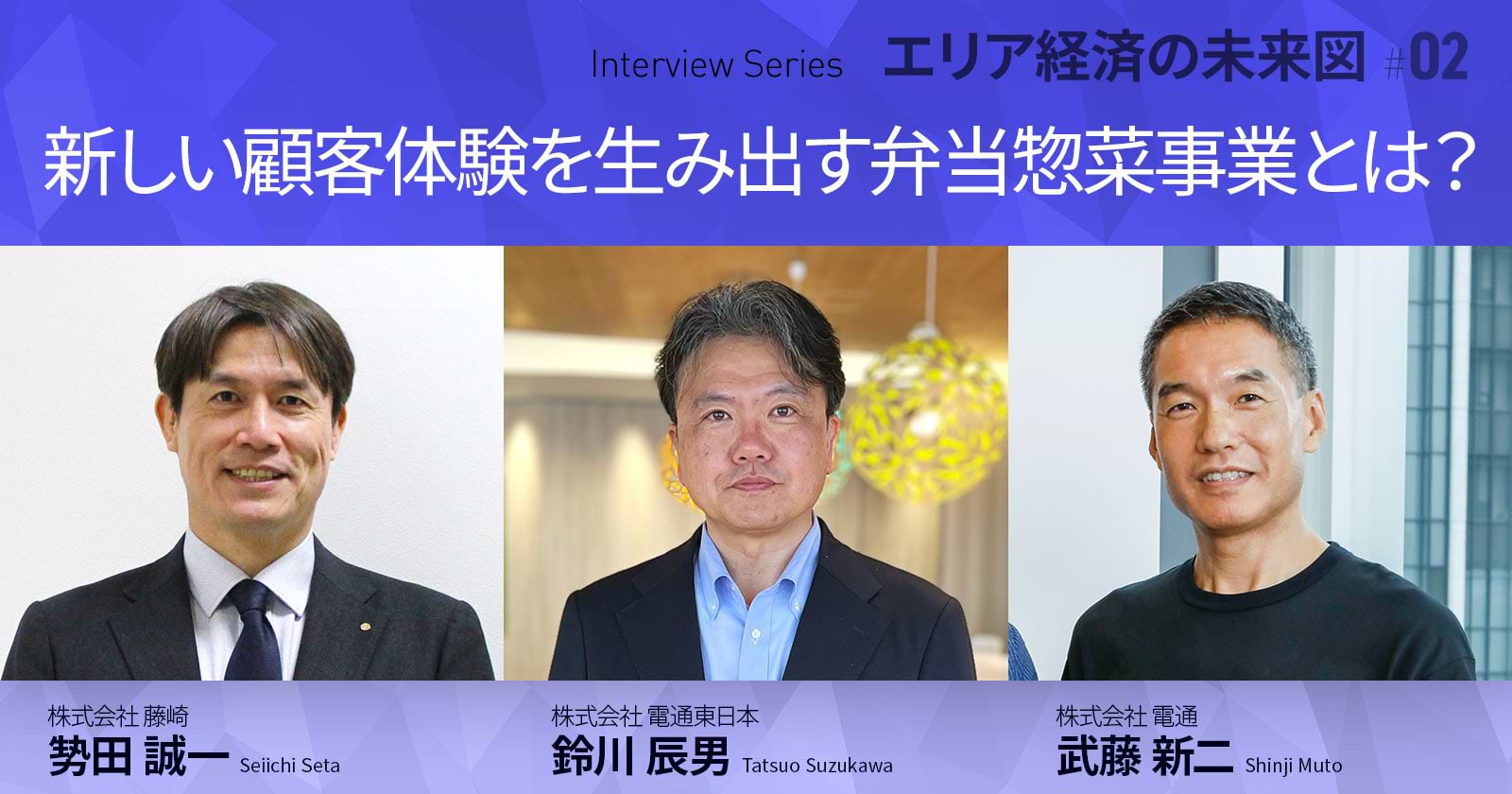
Tatsuo	Suzukawa

Tatsuo Suzukawa

Dentsu East Japan Inc.

Executive Officer

After serving as Shizuoka Branch Manager and Tohoku Branch Manager, I relocated to Tokyo in 2024 to oversee the Greater Tokyo Area Business Production Bureau and the Shizuoka office. During my regional assignments, I supported a diverse client base ranging from major corporations headquartered in regional areas to locally expanding SMEs and local governments. Currently, through a dual-base lifestyle in Sendai and Tokyo, I connect regional areas with Tokyo, working to revitalize local communities by fostering client business growth. On days off, he explores local izakayas, contributing to increased consumption of regional sake and locally produced goods.
Shinji Muto

Shinji Muto

Dentsu Inc.

SCC

Creative Director / Planner

Joined Dentsu Inc. in 1992. After three and a half years in sales at the Shizuoka branch, transferred to the Planning Department at Tokyo headquarters. Since then, work has spanned beyond advertising planning and production to encompass overall communication design, product and new business planning, and creative direction for content. Currently affiliated with CDC. Has also been active in educational institutions, including as a visiting researcher at Keio University's SFC Research Institute and as a lecturer at universities and elementary schools. In publishing, has been involved in planning for books such as Kiyoshi Shigematsu's "Dreams: Continuing the Pitch!" (Asahi Shimbun Publications), Hiroshi Shimizu's "Beyond the 'Solo Victory' Civilization" (Mishima Publishing), and Papaya Suzuki's "Kazufumi-kun" (Asahi Shimbun Publications), and also produces children's picture books. His authored books include <a href="http://www.dentsu.co.jp/knowledge/publish/concerned_creative/atama.html" target="_blank">"Improving Your Brain's Constitution"</a> (Nikkei Publishing) and <a href="http://www.dentsu.co.jp/knowledge/publish/concerned_social/ojii_obaa.html" target="_blank">"Grandpa and Grandma's Okinawan Rock 'n' Roll"</a> (Poplar Publishing).

Also read